Monday, May 22, 2024

How to Evaluate an Electric Vehicles Supplier in 2026
by
Published
Views:
Choosing the right Electric Vehicles supplier in 2026 requires more than comparing prices or production capacity. For business evaluation teams, the real challenge is testing whether a supplier can keep pace with changing battery architectures, software-defined mobility, ESG disclosure rules, and cross-border supply chain volatility. In a market where technical integrity and resilience matter as much as unit cost, a disciplined evaluation framework helps reduce sourcing risk, protect program timelines, and strengthen long-term competitiveness.
Why the Electric Vehicles supplier landscape is changing faster in 2026
The global mobility market is entering a new phase. In earlier years, many buyers focused on scaling capacity and securing battery supply. In 2026, the evaluation of an Electric Vehicles supplier is increasingly shaped by deeper questions: Can the supplier validate thermal safety across different climates? Can it support software integration and over-the-air updates? Does it have visibility into upstream minerals, electronics, and power semiconductor dependencies? These questions reflect a broader shift from volume-led sourcing to systems-level risk management.
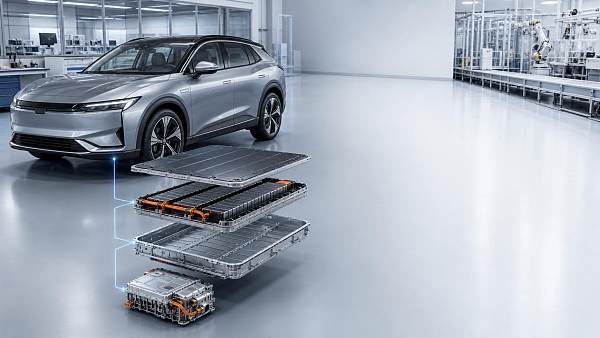
This shift is especially relevant across the broader industrial landscape. Electric mobility now intersects with semiconductors, advanced materials, charging infrastructure, industrial ESG targets, and digital manufacturing. As a result, selecting an Electric Vehicles supplier is no longer a narrow automotive decision. It has become a cross-functional decision involving engineering validation, quality assurance, compliance, lifecycle cost control, and geopolitical exposure assessment.
The strongest trend signals affecting Electric Vehicles supplier evaluation
Several market signals now define what a credible Electric Vehicles supplier looks like in 2026. These changes are not temporary fluctuations; they are structural indicators of how supplier screening must evolve.
What is driving the new standards for an Electric Vehicles supplier
The tighter expectations applied to any Electric Vehicles supplier come from converging technical, regulatory, and operational forces. Understanding these drivers helps separate short-term market noise from long-term sourcing criteria.
- Electrification complexity: EV systems combine battery packs, thermal management, power electronics, control software, connectors, lightweight materials, and high-voltage safety design. Supplier competence must be proven across interfaces, not only components.
- Global compliance expansion: Certification, recycling obligations, battery passport requirements, and environmental reporting are expanding. A qualified Electric Vehicles supplier must document compliance proactively, not react after launch.
- Supply chain fragility: Semiconductor constraints, mineral sourcing uncertainty, logistics disruptions, and regional trade controls have made continuity planning a core supplier metric.
- Lifecycle accountability: Buyers increasingly evaluate total cost of ownership, field reliability, serviceability, warranty exposure, and end-of-life recovery instead of headline purchase price alone.
- Data transparency expectations: Modern industrial benchmarking relies on verifiable data. Test records, PPAP discipline, failure rate trends, process capability, and audit history now shape trust more than sales claims.
How these changes affect sourcing, engineering, and operational decisions
The impact of these trends extends far beyond supplier onboarding. A weak Electric Vehicles supplier can introduce hidden delays during validation, software integration, safety testing, homologation, and after-sales support. Even if quoted pricing appears attractive, the downstream cost of engineering rework, launch slippage, and quality escapes can be much higher.
For industrial organizations operating across sectors, the implications are broader still. EV programs depend on upstream electronics, thermal materials, precision tooling, and digital quality systems. This means an Electric Vehicles supplier should be evaluated as part of an interconnected manufacturing ecosystem. The supplier’s strength in process control, traceability, and technical communication often predicts whether cross-border, cross-disciplinary collaboration will remain stable under pressure.
Key downstream effects to consider
- Design freeze confidence and prototype-to-mass-production transfer speed
- Warranty cost forecasting and field service readiness
- Regional compliance readiness for export markets
- Data availability for ESG disclosure and customer audits
- Resilience during component shortages or logistics disruptions
What to examine first when screening an Electric Vehicles supplier
A practical evaluation starts with a short list of non-negotiable criteria. These checkpoints help determine whether an Electric Vehicles supplier is genuinely investment-grade from a sourcing and technical standpoint.
- Quality system maturity: Look for robust alignment with IATF 16949, ISO 9001, APQP, PPAP, FMEA, MSA, and SPC practices, supported by actual records rather than marketing summaries.
- High-voltage and battery safety capability: Confirm abuse testing, thermal propagation mitigation, insulation design controls, and incident response protocols.
- Engineering collaboration depth: Evaluate DFM responsiveness, validation planning, simulation capability, ECN discipline, and speed of root-cause analysis.
- Supply chain visibility: Review sub-tier mapping, critical material exposure, inventory strategy, dual-source planning, and lead-time management.
- Compliance and ESG transparency: Check environmental reporting, labor compliance, recycling pathways, and audit traceability for materials and processes.
- Scalability with consistency: Capacity matters only when paired with stable yield, equipment maintenance discipline, operator training, and process repeatability.
A stronger way to compare Electric Vehicles supplier options in 2026
Simple scorecards often miss structural risks. A better approach is to compare each Electric Vehicles supplier using weighted criteria that blend technical performance with resilience indicators.
The most important watchpoints before making a final commitment
Before approving an Electric Vehicles supplier, it is worth pressure-testing several assumptions. First, verify whether the supplier’s best-case technical presentation matches plant-floor reality through audit evidence and sample review. Second, separate nominal capacity from stable qualified output. Third, confirm that sub-tier dependencies do not create single points of failure in cells, chips, magnets, or thermal materials.
It is also important to review how the Electric Vehicles supplier behaves when problems occur. The speed and rigor of containment, 8D reporting, design feedback, and corrective action execution often reveal more than perfect KPI slides. In 2026, adaptability under disruption is a major indicator of long-term supplier value.
How to move from supplier shortlist to a risk-aware sourcing decision
A sound next step is to combine technical benchmarking, document review, pilot validation, and supply chain mapping into one decision model. For each Electric Vehicles supplier, compare not only current performance but also future readiness for chemistry changes, digital diagnostics, compliance evolution, and regional manufacturing shifts. This approach supports a more durable sourcing decision in a market that is still changing rapidly.
Organizations seeking clearer visibility can benefit from cross-sector benchmarking that connects automotive performance with electronics reliability, ESG evidence, and manufacturing process discipline. That broader perspective makes it easier to identify whether an Electric Vehicles supplier is simply competitive today or structurally prepared for 2026 and beyond.
If the goal is to reduce uncertainty, the practical move is to build an evaluation matrix that prioritizes verified data, resilience indicators, and lifecycle value. With the right framework, selecting an Electric Vehicles supplier becomes less about short-term pricing and more about securing a technically credible, risk-aware, and future-ready industrial partnership.

The Archive Newsletter
Critical industrial intelligence delivered every Tuesday. Peer-reviewed summaries of the week's most impactful logistics and market shifts.