Monday, May 22, 2024

How to choose powertrain systems for new EV platforms
by
Published
Views:
Choosing powertrain systems for new EV platforms demands more than comparing active components or selecting an electric motor manufacturer. It requires a systems-level view of PCB fabrication, automotive safety, driver assistance, smart grid technology, and emissions reduction to support future mobility. This guide helps evaluators, buyers, and engineering teams align technical performance with real industry applications and long-term platform success.
For OEM planners, Tier-1 suppliers, procurement teams, and financial approvers, the powertrain decision shapes far more than acceleration or range. It affects battery packaging, software architecture, thermal loads, production tooling, serviceability, supplier risk, and the ability to meet target cost over a 5- to 8-year platform lifecycle.
In a cross-industry environment, EV platform design also intersects with semiconductors, PCB reliability, charging infrastructure, and environmental compliance. That is why organizations using technical benchmarking platforms such as GIM increasingly evaluate powertrain systems as part of a broader manufacturing and sourcing strategy rather than as an isolated drivetrain purchase.
Define the platform mission before comparing powertrain architectures
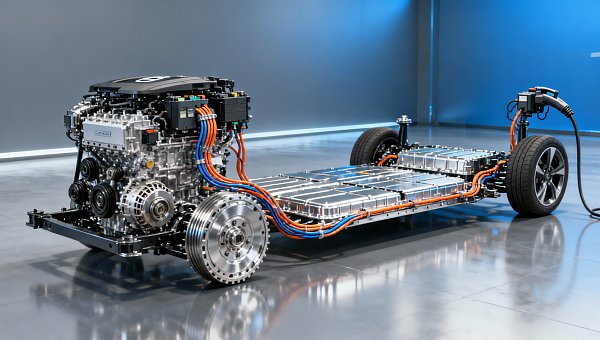
The first step in choosing a powertrain system for a new EV platform is to define the platform mission with measurable targets. A city delivery van, a compact passenger EV, and a premium SUV may all use electric propulsion, but their torque curves, thermal duty cycles, battery discharge patterns, and duty hours can differ by 2x to 4x.
A useful starting framework is to set six target categories: peak power, continuous power, range window, vehicle mass, charging profile, and lifetime durability. For example, a light urban EV may prioritize 60–120 kW peak power and high efficiency below 80 km/h, while a heavier dual-purpose platform may require 180–300 kW with stable performance under repeated hill climbs or towing loads.
This is also where platform strategy matters. A dedicated skateboard EV platform can accommodate e-axles, large battery packs, and centralized thermal routing more easily than a converted internal combustion architecture. If battery, inverter, gearbox, and control electronics are being retrofitted into a legacy body structure, packaging compromise usually increases cable length, weight, and cooling complexity.
Engineering and sourcing teams should align target use cases with realistic operating conditions. Standard certification cycles alone are not enough. Fleet applications may see 8–12 hours of daily use, repeated DC fast charging, and high stop-start frequency. Consumer vehicles may see more variable ambient temperatures, lower average load, and stronger demand for NVH refinement and digital features.
Core mission inputs to lock before supplier screening
- Vehicle segment and curb weight target, such as 1.4–1.8 tons for compact crossover platforms or above 2.2 tons for commercial applications.
- Primary drive cycle, including urban, mixed highway, grade climbing, towing, or off-road duty.
- Required range under expected payload, not only nominal laboratory range.
- Electrical architecture target, commonly 400 V or 800 V, with charging and thermal implications.
- Regional compliance and service environment, including winter operation, dust exposure, and charging infrastructure maturity.
The table below shows how platform mission changes the preferred powertrain direction. It is not a brand ranking; it is a system-level comparison to help technical evaluators and buyers avoid selecting an overbuilt or underperforming configuration.
The key takeaway is simple: the best EV powertrain system is the one that matches the platform mission with minimal compromise. Many sourcing errors occur because teams compare headline kW figures while ignoring duty cycle, controllability, cooling burden, and integration cost across the complete vehicle program.
Evaluate motors, inverters, and transmission layouts as one integrated system
A modern EV powertrain usually includes the motor, inverter, reduction gearbox or e-axle, control software, and thermal interface. In many programs, the motor is selected first because it is the most visible component. In practice, inverter efficiency, switching strategy, gearbox losses, and control tuning can materially affect the vehicle’s real-world range and drivability.
When comparing motor types, permanent magnet synchronous motors often offer strong power density and efficiency, while induction motors may reduce dependence on rare-earth materials. Wound-field solutions can improve sourcing flexibility in some cases, but they introduce control and packaging trade-offs. The right answer depends on the platform’s cost ceiling, sourcing geography, and efficiency target across the most common operating window.
Inverter design is equally strategic. Silicon IGBT solutions remain relevant for cost-sensitive 400 V platforms, while silicon carbide can improve efficiency, switching performance, and fast-charging support, especially in 800 V systems. Even a 2% to 4% efficiency improvement at system level can be commercially meaningful when multiplied across fleet energy consumption and thermal downsizing opportunities.
Transmission layout also deserves disciplined review. A single-speed reduction gearbox is common, but gear ratio selection affects launch feel, top speed, hill climbing, and inverter current demand. In higher-load or performance-focused platforms, e-axle integration can reduce packaging volume but may change service strategy and supplier concentration risk.
Technical comparison points that matter in procurement reviews
The table below can support cross-functional reviews between engineering, purchasing, and finance teams. It focuses on practical trade-offs rather than idealized specification sheets.
One frequent mistake is to compare only peak efficiency. A more useful approach is to study efficiency islands across the speed and torque range where the vehicle will spend 70% or more of its operating time. This matters for commuter vehicles, delivery fleets, and mixed-use mobility platforms where partial-load efficiency often has greater commercial value than extreme peak output.
Practical screening checklist
- Verify continuous power at target ambient conditions such as 35°C to 45°C, not only laboratory values.
- Check inverter cooling requirements and PCB reliability under vibration and thermal cycling.
- Compare gearbox efficiency, lubricant interval, and bearing life assumptions.
- Review software update path, fault diagnostics, and cyber-secure communication interfaces.
This integrated view is especially important for organizations navigating electronics sourcing, semiconductor lead time, and automotive quality requirements at the same time. Powertrain selection is no longer purely mechanical; it is tightly linked to electronics manufacturability and supply continuity.
Match voltage architecture, thermal management, and charging strategy to real deployment conditions
The choice between 400 V and 800 V architecture is one of the most visible decisions in a new EV platform, but it should be based on system economics rather than market fashion. A 400 V system can remain highly competitive for many mainstream vehicles, especially where charging infrastructure, vehicle price targets, and duty cycles do not justify the additional component cost of an 800 V design.
An 800 V architecture can reduce current for a given power level, which helps cable sizing, heat generation, and fast-charge performance. This becomes attractive when vehicle mass is high, charging time is a differentiator, or repeated high-load operation creates strong thermal stress. However, insulation coordination, component validation, and parts availability often become more demanding.
Thermal management should be evaluated with the same rigor as motor power. Battery, inverter, motor, onboard charger, and cabin climate loads interact across the full vehicle. If the cooling system is undersized, the platform may fail to sustain target performance after only 1–3 aggressive drive cycles or repeated DC charging events. If oversized, cost and packaging penalties rise quickly.
Teams should model at least three operating cases: normal commuting, sustained highway load, and adverse environment operation such as hot weather, steep grades, or cold starts below 0°C. For fleet and infrastructure-linked deployments, coordination with smart grid and charging software is also essential because charging profile affects battery aging, peak demand charges, and thermal soak conditions before departure.
Voltage and thermal decision guide
The following table helps translate platform conditions into an architecture direction for cross-functional teams.
The conclusion is not that one voltage class is universally superior. The stronger choice is the architecture that balances energy efficiency, charging performance, component availability, thermal robustness, and commercialization timeline. In many sourcing programs, one missed thermal assumption can create more downstream cost than the original motor selection.
Questions to test deployment fit
- Will the vehicle require repeated fast charging within a 24-hour operating window?
- Can the platform sustain rated output for at least 10–20 minutes under high ambient temperature?
- Are cooling circuits shared or separated among battery, power electronics, and cabin HVAC?
- Is the charging environment mature enough to monetize higher-voltage capability?
Assess safety, reliability, and supply chain resilience early in the program
A technically attractive EV powertrain can still be a poor platform choice if it creates quality escapes, validation delays, or fragile sourcing. New EV platforms increasingly depend on coordinated performance across semiconductors, connectors, PCB assemblies, sensors, and software. If one tier in that chain is unstable, the powertrain program inherits schedule and warranty risk.
Safety evaluation should include functional behavior, thermal fault response, electrical isolation, and service conditions. Teams should examine whether the system design supports fail-safe torque reduction, high-voltage isolation monitoring, and controlled derating under abnormal temperatures. These issues influence not just homologation but also field recovery and dealer service burden.
Reliability analysis should go beyond nominal lab testing. A practical validation plan often covers vibration, thermal shock, salt exposure where relevant, EMC behavior, and endurance cycling. For electronics-rich drive units, PCB fabrication quality, solder integrity, and enclosure sealing can be as important as the mechanical rotor-stator design. Weaknesses in these areas often appear only after cumulative cycles, not in short acceptance tests.
Supply chain resilience is now a board-level issue. Motor magnets, power modules, microcontrollers, bearings, and precision-machined housings may come from different regions with different lead-time and trade-risk profiles. Procurement teams should compare at least 2–3 sourcing pathways for critical parts and identify where dual sourcing is realistic versus where technical lock-in is unavoidable.
Common program risks and control points
- Single-source semiconductors that extend lead times from 8 weeks to 26 weeks during market disruption.
- Rare-earth dependence that creates cost volatility in motor manufacturing.
- Insufficient PCB or connector validation for vibration-heavy commercial use.
- Overlooked service tooling needs that increase repair turnaround time and warranty cost.
- Software calibration changes that affect efficiency, regenerative braking, or drivability after SOP.
For decision makers, this is where cross-sector benchmarking adds value. By comparing powertrain hardware against international production and quality frameworks such as ISO, IATF, and IPC-related electronics practices, teams can identify where a supplier’s strengths are real and where hidden manufacturing or quality risk may still exist.
What quality and sourcing teams should request
Request validation summaries, traceability logic, component change notification procedures, and known derating behavior under extreme conditions. Also verify expected service intervals, spare parts logic, and software support period. On a platform with a 7-year market life, weak aftersales support can undermine an otherwise competitive launch specification.
Build a procurement and implementation roadmap that supports launch and long-term platform economics
Once the target architecture is selected, the next challenge is operational execution. The most successful EV platform programs treat powertrain sourcing as a staged process, not a one-time RFQ event. Early concept alignment, prototype testing, PPAP-related preparation, ramp-up planning, and aftersales support should all be mapped before final award decisions are made.
A practical roadmap usually includes 5 stages: requirement definition, technical screening, prototype validation, sourcing and industrialization review, and launch support. Depending on vehicle complexity, the full cycle may span 6–18 months. Compressing this schedule without disciplined gates often shifts risk into late calibration, thermal redesign, or supplier change management.
Commercial evaluation should include total cost of ownership rather than unit price alone. A lower-cost drive unit may increase harness complexity, cooling cost, tooling requirements, or energy consumption over the fleet life. For procurement and finance leaders, even a small efficiency improvement or service simplification can justify a modestly higher initial component cost if annual operating volume is large enough.
Implementation planning should also account for software maturity, diagnostics compatibility, training needs, and field service readiness. Distributors, dealer networks, and fleet operators benefit when service logic, parts strategy, and safety procedures are ready before the first 100–500 vehicles enter operation.
Recommended decision roadmap
The table highlights a key reality: powertrain selection is not finished when hardware is chosen. It is finished when the system can be sourced, validated, manufactured, serviced, and improved across the full commercial life of the platform.
FAQ for buyers and evaluators
How do we choose between a single motor and dual motor setup?
Choose based on traction need, performance target, and cost envelope. Single motor systems generally simplify packaging and reduce BOM cost. Dual motor layouts are more suitable when AWD traction, performance differentiation, or load distribution matters enough to justify higher control and thermal complexity.
What is the most common mistake during EV powertrain sourcing?
The most common mistake is comparing catalog specifications without checking system integration, continuous-duty behavior, and component lead-time risk. A high-output motor paired with an inadequate inverter or marginal cooling loop can underperform in real deployment.
How long does a typical evaluation cycle take?
For a new platform, initial technical screening may take 6–12 weeks, while prototype validation and industrial readiness can extend the process to 6–18 months depending on vehicle class, sourcing geography, and compliance scope.
Choosing powertrain systems for new EV platforms is ultimately a multi-variable decision that spans engineering performance, electronics reliability, charging strategy, supplier resilience, and commercial execution. Teams that evaluate the motor, inverter, gearbox, PCB quality, thermal design, and sourcing path as one integrated system are better positioned to reduce risk and launch platforms that remain competitive over time.
For organizations seeking deeper benchmarking across automotive, electronics, infrastructure, and industrial quality requirements, GIM can support a more transparent decision process with cross-sector technical insight. Contact us to discuss your platform goals, request a tailored comparison framework, or explore more EV powertrain and manufacturing intelligence solutions.

The Archive Newsletter
Critical industrial intelligence delivered every Tuesday. Peer-reviewed summaries of the week's most impactful logistics and market shifts.