Monday, May 22, 2024

IATF Certification Explained: What It Really Changes in Production
by
Published
Views:
For manufacturing leaders, IATF certification is not just a customer requirement or a procurement checkbox. It changes the operating system of production. In practical terms, it forces tighter process control, stronger supplier discipline, better traceability, clearer accountability, and a more preventive approach to quality. For decision-makers, the key question is not whether the standard sounds rigorous. It is whether the change it drives in production is worth the cost, effort, and organizational disruption.
The short answer is yes—if your business serves automotive customers, plans to enter automotive supply chains, or wants to run production with less variation and fewer quality escapes. IATF certification often raises the management maturity of the factory floor. But it also demands deeper cross-functional coordination than many companies expect. The real impact is operational, commercial, and strategic at the same time.
This article explains what IATF certification really changes in production, where the business value comes from, what executives should expect during implementation, and how to judge whether the investment aligns with your growth and risk profile.
What business leaders are really asking about IATF certification
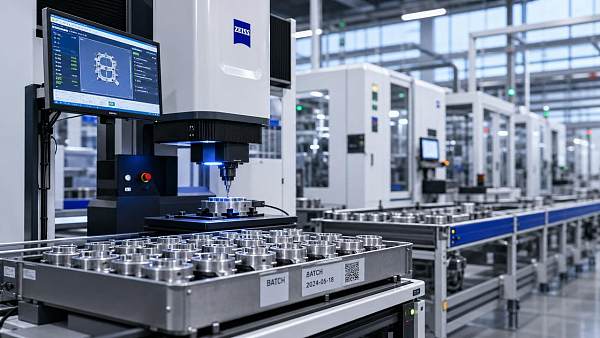
When executives search for information on IATF certification, they are usually not looking for a generic definition. They want to understand four practical issues: what changes on the shop floor, how it affects cost and throughput, whether it improves access to customers, and how difficult it is to sustain.
That is because the decision to pursue certification is rarely made by quality managers alone. It affects capital planning, supplier strategy, production governance, engineering discipline, and customer positioning. For a leadership team, the important question is not “What does the standard say?” but “What operational behaviors will this force us to adopt?”
In automotive and adjacent manufacturing sectors, IATF certification matters because customers expect consistency at scale. A plant may already produce acceptable parts, but certification tests whether quality is embedded into the process rather than inspected at the end. That distinction is where the biggest production changes begin.
IATF certification shifts production from reactive quality to preventive control
The biggest operational change driven by IATF certification is a move away from reactive firefighting. In many factories, problems are addressed after defects appear, customer complaints arrive, or scrap rates become visible. IATF pushes production teams to design controls that prevent those failures earlier.
This means process risks must be identified systematically. Failure Mode and Effects Analysis, control plans, layered process audits, reaction plans, and documented work standards become far more than paperwork. They become the framework for daily production control. If a dimension drifts, a machine parameter changes, or a supplier material behaves differently, the organization is expected to detect and respond before the problem reaches the customer.
For decision-makers, this matters because prevention changes the cost structure of quality. It often increases discipline, documentation, validation effort, and internal audits. But it can reduce much more expensive outcomes: line stoppages, warranty claims, premium freight, customer escalations, and emergency containment actions.
In other words, IATF certification usually adds controlled effort upstream so the business spends less on uncontrolled failure downstream. That is one of the clearest reasons it changes production in a meaningful way.
It strengthens process discipline at the workstation level
One of the most visible effects of IATF certification is tighter process discipline in daily operations. Production no longer relies on tribal knowledge, operator memory, or informal shortcuts. Instead, the standard expects defined process parameters, documented instructions, validated tooling conditions, measurement control, and evidence that the process is being run as intended.
For many companies, this is where the real cultural shift happens. Operators, supervisors, engineers, maintenance teams, and quality personnel must work from the same process logic. Changes to settings, components, methods, or tools need evaluation and approval. Temporary fixes that once stayed invisible now become controlled deviations that require traceability and follow-up.
This can initially feel slower. However, over time it reduces variation between shifts, lines, operators, and facilities. The result is a production environment that is easier to scale, easier to troubleshoot, and less dependent on a few experienced individuals keeping everything together.
For executives managing growth or multi-site operations, that consistency is valuable. It lowers the risk that performance will collapse when volumes rise, new personnel are hired, or production is transferred between plants.
Supplier management becomes part of production control, not a separate purchasing issue
Another major change under IATF certification is that supplier performance is treated as a direct production variable. In less mature systems, procurement may focus heavily on cost and delivery while quality teams react to incoming defects. IATF requires a more integrated view. Supplier approval, risk classification, monitoring, development, and corrective action all become part of how production stability is protected.
This matters because many factory problems do not originate on the line itself. They start with inconsistent raw materials, uncontrolled process changes at suppliers, weak traceability in purchased components, or inadequate validation of outsourced operations. If those issues are not managed upstream, internal production teams absorb the disruption through sorting, rework, schedule instability, and quality escapes.
Under IATF, supplier quality management becomes more rigorous. Organizations are expected to define supplier criteria, evaluate performance trends, verify capability where needed, and escalate based on risk. For leadership, this often reveals whether the supply chain can support automotive-level expectations or whether hidden fragility exists beneath acceptable price and on-time delivery metrics.
From a business perspective, the benefit is not only better incoming quality. It is also improved confidence in launch readiness, lower disruption risk, and more resilient customer service performance.
Traceability becomes deeper, faster, and more actionable
For companies entering automotive supply chains, traceability is often underestimated until a problem occurs. IATF certification changes this by requiring organizations to maintain clearer control over product identification, lot history, process records, and containment capability.
In production terms, that means the business must be able to answer difficult questions quickly. Which material batch was used in which parts? Which machine, tool, shift, operator, or process condition was involved? Which customers received potentially affected product? How fast can the company isolate suspect inventory and stop further shipment?
These capabilities are not merely administrative. They directly affect the size and cost of a quality incident. Weak traceability can turn a localized issue into a broad and expensive containment action. Strong traceability can reduce exposure, protect customer trust, and support faster root cause analysis.
For executives, this is one of the strongest practical arguments for IATF certification. In a complex manufacturing environment, better traceability is not only about compliance. It is a risk containment tool that protects margin, reputation, and customer continuity.
Production planning becomes more evidence-based and less assumption-driven
IATF certification also changes how production planning and change management work. The standard places greater emphasis on planning quality into launches, modifications, maintenance activities, and process changes. This includes validation of new tooling, process capability review, contingency planning, and control of engineering changes.
In less structured environments, production planning can rely too much on confidence and past experience. Teams assume a tool will perform the same after refurbishment, a substitute material will behave similarly, or a process transfer will remain stable without formal revalidation. IATF reduces the room for those assumptions.
As a result, organizations often become more disciplined in pre-launch readiness, capacity review, run-at-rate preparation, and change approval. This can feel administrative at first, but it improves predictability. It reduces the chance that commercial commitments are made on a process that is not yet robust.
For leadership teams, this improves the quality of operational decisions. Instead of relying on optimism, production readiness is judged with more objective evidence. That matters when new programs carry large penalties for failure or when customer confidence is difficult to rebuild once lost.
What changes in performance metrics and management reviews
A certified IATF environment changes not only what happens on the line, but also what leaders review and how often they act. Metrics become more connected to process capability, nonconformity trends, supplier quality, audit findings, corrective action effectiveness, customer scorecards, and risks to continuity.
This is important because some factories manage production with output-heavy indicators alone: units produced, on-time delivery, machine utilization, and labor efficiency. Those are necessary, but they do not fully reveal whether the system is stable. IATF encourages management to watch leading indicators, not just lagging damage.
For example, a plant can hit shipment targets while quietly accumulating instability through repeated deviations, overdue calibration, weak reaction plans, or unresolved supplier escapes. A stronger IATF-driven review rhythm exposes these issues earlier. That gives management more control over performance before customer-facing failure occurs.
For business leaders, the practical takeaway is clear: IATF certification tends to make operational reviews more honest. It reveals whether production performance is truly repeatable or just temporarily surviving through overtime, inspection, and heroic intervention.
What executives gain beyond compliance: customer access, credibility, and risk reduction
Although the production impact is substantial, the value of IATF certification is not limited to internal operations. In many markets, certification is a signal of commercial readiness. It tells OEMs, Tier-1 suppliers, and procurement teams that the organization understands the quality expectations of automotive-style manufacturing and has systems to support them.
This can improve qualification opportunities, shorten credibility gaps in customer audits, and strengthen positioning in competitive sourcing discussions. For businesses serving multiple sectors, it can also elevate internal standards across product lines, creating spillover benefits in electronics, industrial equipment, mobility systems, and other precision manufacturing environments.
Just as important, the certification helps reduce strategic risk. It lowers the chance that growth will outpace process control. It helps identify weak suppliers before they become chronic disruptors. It can expose hidden dependence on informal knowledge, fragile inspection routines, or undocumented process changes.
That said, leaders should avoid viewing IATF certification as a marketing badge alone. If the implementation is superficial, the organization pays the cost without capturing the operational value. The real return comes when the standard changes production behavior, not just audit performance.
Common concerns: cost, complexity, and whether the effort is worth it
Senior decision-makers often hesitate for good reasons. IATF certification requires training, documentation effort, audit readiness, cross-functional alignment, and sometimes system upgrades in traceability, metrology, supplier quality, or maintenance control. It can expose uncomfortable weaknesses and consume management attention.
These concerns are valid. The transition is not lightweight. Companies with fragmented processes or weak discipline may find the implementation demanding. There can also be short-term friction as teams adapt to more formal controls and less improvisation.
However, the right question is not whether the standard creates effort. It does. The better question is whether your current operating model already carries hidden costs that are larger than the implementation burden. Frequent containment, unstable launches, scrap volatility, customer complaints, and supplier-related disruption are often signs that the business is already paying for poor system control.
If your customer base includes automotive requirements or your strategic direction points toward high-reliability manufacturing, IATF certification usually becomes less of an optional burden and more of a necessary operating investment.
How to judge if IATF certification is right for your operation now
For executives, timing matters. The strongest case for IATF certification exists when at least one of the following is true: key customers require it, your company is targeting automotive or mobility programs, product complexity is increasing, warranty or field risk is meaningful, supplier variation is hurting production, or growth is stretching process consistency.
It is also a strong fit when the organization wants to reduce dependence on final inspection and move toward more robust process assurance. If your current model relies heavily on sorting, experienced operators catching issues informally, or quality teams buffering unstable processes, certification can help reset the system.
On the other hand, if your market has no realistic connection to automotive-quality expectations and your production model is low-risk, low-complexity, and highly stable, the full certification path may not be the immediate priority. Even then, many of the underlying disciplines remain valuable as internal best practice.
The key is to evaluate IATF certification as an operational design decision, not just a compliance step. The best outcomes occur when leaders understand that the goal is not passing an audit. The goal is building a production system that performs reliably under pressure, scale, and customer scrutiny.
Conclusion: what IATF certification really changes in production
In the end, IATF certification changes production by making quality more systematic, process control more disciplined, supplier management more strategic, and traceability more actionable. It pushes the factory from detecting problems late to preventing them earlier. It gives leadership better visibility into operational risk and greater confidence in customer commitments.
For business decision-makers, that is the real meaning of certification. It is not simply about meeting an external requirement. It is about changing how production behaves every day—how decisions are documented, how changes are validated, how suppliers are managed, how nonconformities are contained, and how continuous improvement is sustained.
If your organization depends on consistent manufacturing performance, customer trust, and supply chain credibility, IATF certification is more than a standard. It is a management discipline that can materially improve competitiveness when implemented with seriousness and operational intent.

The Archive Newsletter
Critical industrial intelligence delivered every Tuesday. Peer-reviewed summaries of the week's most impactful logistics and market shifts.