Monday, May 22, 2024

VDE Sets New HV Connector Rule for Powertrain Systems
by
Published
Views:
The timing of the underlying event is not explicitly stated in the source input, but the regulatory move itself is clear: on June 30, 2026, Germany’s VDE released VDE-AR-E 2612-101:2026 for safety and durability verification of high-voltage connectors used in electric powertrain systems, and the rule is set to become mandatory in October 2026. For connector exporters, OEM sourcing teams, test and certification functions, and platform-related supply chains, this deserves close attention because the standard adds stricter mandatory verification items and is already appearing in new-platform procurement documentation.
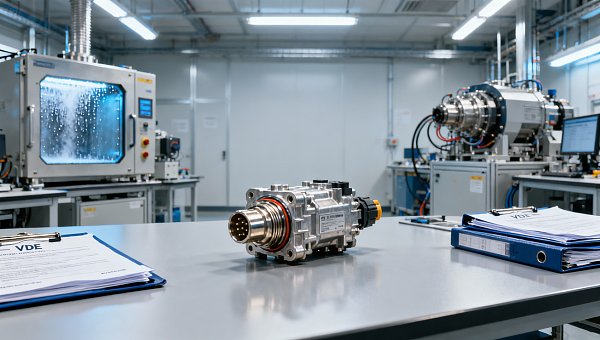
What the new VDE standard confirms
According to the provided information, VDE issued VDE-AR-E 2612-101:2026 on June 30, 2026. The document is described as a specification covering safety and durability verification for high-voltage connectors in electric powertrain systems.
The confirmed change is that thermal cycling life of at least 5,000 cycles and post-salt-spray contact resistance drift of no more than 10% are now included as mandatory test items.
The same input states that BMW and Volkswagen have already written this standard into the technical annexes of their Q4 2026 new-platform tenders. It also states that Chinese Powertrain Systems connector exporters need to complete their VDE certification upgrade by the end of September.
Where the immediate pressure may appear in the chain
Export-facing connector manufacturers may see the fastest impact
From an industry perspective, manufacturers supplying high-voltage connectors for powertrain applications may be the first group affected because the issue is no longer limited to a published standard; it has also been linked to OEM tender documentation. The business impact may show up in product validation, certification scheduling, bid eligibility, and delivery planning.
What deserves closer attention is whether existing product lines and current certification status can still match customer requirements once the October 2026 mandatory date approaches.
OEM procurement and sourcing teams will likely focus on compliance evidence
Analysis shows that procurement functions connected to new-platform sourcing may place more weight on verification documents, technical annex alignment, and supplier qualification timing. The relevance here is practical: once a standard enters tender attachments, compliance may affect supplier screening and documentation review, not only engineering discussion.
For sourcing teams, the key change to watch is the transition from general technical capability claims to evidence tied to the specified mandatory tests.
Testing, certification, and program coordination teams may face timetable compression
Observably, the gap between the June 30 release date, the end-of-September certification-upgrade requirement mentioned in the input, and the October 2026 mandatory point suggests a compressed execution window. For testing and certification service functions, as well as internal program managers, the operational issue may be timing: booking tests, updating technical files, and aligning customer submission milestones.
The main area to monitor is whether certification and supporting documentation can be completed in time for ongoing or upcoming platform-related commercial activity.
What companies should review now
Check whether current certificates and reports match the new mandatory items
Based on the provided facts, the most immediate task is to review whether existing VDE-related approvals, validation reports, and technical documentation already cover the newly mandatory thermal cycling and post-salt-spray contact resistance requirements. This is a documentation and qualification issue as much as a testing issue.
Separate published standard language from customer-specific execution requirements
Analysis shows that companies should distinguish between the formal standard release and the way individual OEMs apply it in tenders. The input confirms that BMW and Volkswagen have included the standard in Q4 2026 new-platform technical annexes, which means the commercial application may move through customer procurement processes before the broader market response is fully settled.
Reassess delivery rhythm for bids, samples, and certification upgrades
What deserves closer attention is the calendar risk. The input specifically notes that Chinese exporter companies need to complete the VDE certification upgrade by the end of September. For affected suppliers, this makes bid preparation, customer communication, and certification sequencing a practical management issue rather than a purely regulatory one.
Prepare customer-facing compliance communication early
Observably, suppliers may need a clearer external communication package covering test status, certification progress, and document readiness. Where new-platform sourcing is involved, the ability to explain readiness against the named standard may matter in parallel with the underlying engineering work.
Why this reads as more than a routine standards update
Analysis shows that this development should not be read only as a technical revision notice. The addition of mandatory test items, combined with direct use in OEM tender annexes, suggests movement from standards publication toward procurement enforcement. That does not by itself prove market-wide reshaping, but it does indicate that compliance expectations are becoming more explicit in commercially relevant documents.
It is more appropriate to understand this as both a short-term execution issue and a longer-term signal. The short-term issue is certification and tender readiness before the stated deadlines. The longer-term signal is that durability and post-environment performance metrics are being formalized more tightly in connector qualification for electric powertrain applications.
How this update is best understood at this stage
At this stage, the clearest industry meaning is not that every downstream outcome is already decided, but that a defined compliance threshold has been published and is already being referenced by major OEM procurement materials. For companies tied to Powertrain Systems connector exports, the practical significance lies in qualification timing, documentation readiness, and customer-facing compliance alignment.
From a neutral editorial view, this is best understood as an actionable standards development with immediate commercial relevance in specific supply relationships, while broader market effects still need continued observation.
About the basis for this article
This article is generated from the user-provided news title, event timing note, and event summary. The specific official source link was not provided in the input, so further verification remains necessary.
For this type of development, relevant source categories usually include official announcements, corporate procurement documents, industry association information, standards organization materials, and reporting from authoritative trade media. Follow-up attention should remain on any subsequent official wording, certification implementation details, and additional customer-side procurement requirements related to VDE-AR-E 2612-101:2026.

The Archive Newsletter
Critical industrial intelligence delivered every Tuesday. Peer-reviewed summaries of the week's most impactful logistics and market shifts.