Monday, May 22, 2024

Vehicle Technology Trends That Are Reshaping Powertrain Choices
by
Published
Views:
As vehicle technology accelerates, powertrain decisions are no longer shaped by performance alone. Manufacturers and buyers now weigh Manufacturing efficiency, Manufacturing standards, Procurement insights, and Verifiable data alongside emissions goals, Digital foundations, and supply resilience. This article explores how these trends influence real-world choices across mobility and connected industrial ecosystems, from industrial filtration and sustainable water solutions to broader CO2 removal priorities.
Why powertrain choices are now a cross-industry decision
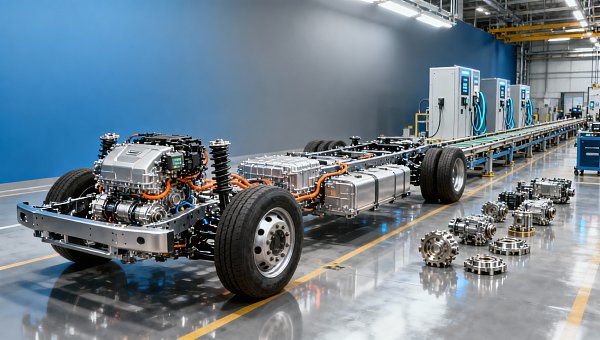
Powertrain selection used to focus on horsepower, fuel economy, and upfront cost. Today, the decision is broader. Engineering teams must align vehicle technology trends with electronics integration, software architecture, thermal management, material sourcing, and long-term compliance. For procurement officers and technical evaluators, this means the best option is often the one with the strongest systems fit rather than the highest isolated performance figure.
In practical terms, buyers are comparing internal combustion, hybrid, battery electric, fuel cell, and highly optimized specialized platforms across a 3-layer framework: application duty cycle, production readiness, and supply chain resilience. A city logistics fleet operating 8–12 hours per day faces a different decision path than agricultural machinery, industrial service vehicles, or heavy-duty regional transport units that run across wider temperature bands and less predictable charging access.
This is where a multidisciplinary intelligence platform matters. GIM connects Automotive & Mobility data with Semiconductor & Electronics, Smart Agri-Tech, Industrial ESG & Infrastructure, and Precision Tooling. That cross-sector visibility helps project managers and commercial evaluators understand not only which powertrain performs well, but which one can be benchmarked against manufacturing standards, serviceability constraints, and real procurement risk.
For many organizations, the hidden challenge is not choosing a technology but validating assumptions early enough. A delayed inverter source, a battery enclosure tooling issue, or a compliance gap in thermal interface materials can move a launch by 4–12 weeks. Strong powertrain strategy therefore starts with verifiable data, compatibility mapping, and a realistic implementation timeline.
What has changed in the evaluation process?
- Electrification is no longer assessed only at the vehicle level; teams now review cell chemistry, power electronics packaging, charging interface maturity, and software diagnostics.
- Hybrid strategies are increasingly used as transition tools where duty cycles are mixed and infrastructure is still uneven across regions or industrial sites.
- Procurement teams need 5 key checks before commitment: supplier depth, standards alignment, maintenance complexity, replacement component access, and lifecycle cost visibility.
- Quality and safety managers must look beyond nominal ratings and review traceability, test documentation, and validation pathways under ISO, IATF, and related sector norms.
Which vehicle technology trends are reshaping powertrain strategy?
Several vehicle technology trends are moving powertrain choices away from one-size-fits-all planning. First, software-defined vehicle architecture is changing how OEMs think about control layers, update cycles, and fault diagnostics. Second, battery system design is advancing alongside thermal management, lightweight structures, and safety containment. Third, manufacturing digitalization is tightening the connection between design choices and production yield, especially for high-voltage assemblies and precision-machined subsystems.
Another major trend is the convergence of mobility with wider infrastructure systems. Charging, water treatment, industrial filtration, grid reliability, and carbon management are no longer separate conversations. For example, the viability of electric fleets can depend on facility-level energy planning, cooling capability, wastewater treatment requirements, and the reliability of local infrastructure during peak production cycles. This is why cross-sector benchmarking produces better powertrain decisions than isolated product comparison.
Component density is also rising. Inverters, converters, battery management systems, sensors, and communication modules must operate in tighter packaging envelopes and often across typical industrial temperature conditions such as -20°C to 45°C, or wider in specialized equipment. That pushes buyers to evaluate powertrain architecture together with enclosure sealing, EMI control, connector reliability, and field service access.
For distributors and regional agents, this shift creates a new selling challenge. Customers do not only ask, “What powertrain do I need?” They ask, “How fast can it be integrated, what standards apply, what are the maintenance intervals, and how stable is the supply base over the next 12–24 months?” The answer requires technical benchmarking, not just catalog coverage.
Trend signals that matter most to B2B decision makers
1. Electrification maturity by use case
Battery electric powertrains are increasingly attractive in fixed-route, high-utilization, and depot-based operations. In these environments, charging windows can be scheduled within 2–6 hours and energy planning can be integrated with facility operations. The same model may be less suitable for remote, multi-shift, or infrastructure-constrained applications without careful system redesign.
2. Hybridization as a risk-managed transition
Hybrid systems remain relevant where payload variability, long operating range, or uncertain charging access create operational risk. For many fleets and industrial users, hybrid platforms reduce exposure during transition periods of 3–5 years while preserving some emissions reduction and data collection opportunities.
3. Standard-driven sourcing
More buyers are requiring documented alignment with recognized standards and process control practices. This does not mean every subsystem carries the same certification path, but it does mean auditability, traceability, and quality evidence are moving from nice-to-have to purchase-critical criteria.
How do major powertrain options compare in real procurement scenarios?
The most common procurement mistake is comparing powertrain technologies only by headline efficiency or emissions. A better approach is to compare them by deployment context, infrastructure dependency, service complexity, and ramp-up risk. The table below summarizes how different options are commonly assessed in mixed industrial and mobility environments.
This comparison shows why no single powertrain dominates all scenarios. Battery electric systems may lead in controlled urban and facility-linked operations, while hybrids remain useful where deployment speed and range flexibility matter. Advanced ICE platforms still appear in procurement pipelines when continuity of operations outweighs rapid transition goals. The right choice depends on operational boundaries, infrastructure readiness, and acceptable transition risk.
For technical assessment teams, the next step is to move from high-level comparison to measurable criteria. Instead of asking whether one technology is “better,” ask whether the system can meet target uptime, maintenance intervals, charging or refueling assumptions, and compliance obligations within the next 12 months. That is a procurement-grade question and it prevents expensive misalignment.
Procurement checklist for apples-to-apples comparison
- Define the true duty cycle: daily runtime, route variability, idle periods, payload shifts, and seasonal temperature range.
- Map infrastructure dependency: charging points, hydrogen supply, fuel continuity, electrical capacity, and site-level environmental controls.
- Validate maintenance support: technician training, spare parts lead time, remote diagnostics access, and service network coverage.
- Review standards and documentation: traceability records, production process consistency, and applicable ISO, IATF, or IPC-linked evidence.
What should engineers and buyers verify before selecting a powertrain?
A robust selection process should combine technical performance, manufacturability, and lifecycle control. In most industrial procurement settings, decision makers should evaluate at least 6 dimensions: energy system suitability, electronics integration, safety and compliance, serviceability, supply chain resilience, and total deployment cost. Missing even one of these can create downstream delays or higher field-support burdens.
Engineers often focus first on output, efficiency, and integration interfaces. Procurement teams often focus first on pricing, availability, and supplier reliability. Quality managers look at documentation and process repeatability. Project leaders look at launch timing. These viewpoints are all valid, but they must be synchronized. GIM’s value is in making those layers visible in one benchmarking environment so teams can reduce cross-functional blind spots before issuing final sourcing decisions.
A common example is thermal management. Battery electric and hybrid systems may appear acceptable on paper, but if cooling loop design, enclosure sealing, or local ambient conditions are mismatched, field performance can fall short. Similar issues arise in power electronics where PCB quality, substrate choice, and connector robustness influence both reliability and manufacturability. This is why cross-pillar benchmarking matters: the powertrain is only as stable as the surrounding system.
The table below provides a practical selection framework that technical evaluators, procurement teams, and quality personnel can use during early-stage comparison and supplier review.
Used properly, this framework helps organizations avoid a narrow price-led decision. It also supports more credible RFQ preparation because the buying team already knows which technical assumptions need supplier confirmation. In many cases, a 2-week internal benchmarking exercise can prevent months of rework later in the project.
A 4-step implementation path
- Screen the application environment, including utilization profile, climate conditions, route structure, and available infrastructure.
- Benchmark candidate powertrains against standards, subsystem dependencies, and manufacturing readiness.
- Run supplier and serviceability checks covering lead time, traceability, spare parts, and training support.
- Finalize total deployment planning, including pilot phase, acceptance criteria, and post-launch monitoring over the first 90–180 days.
Where do standards, sustainability, and infrastructure affect the final choice?
Vehicle technology trends increasingly intersect with sustainability reporting, industrial infrastructure, and broader environmental performance. That does not mean every buyer should choose the newest low-emission technology immediately. It means each powertrain choice should be tested against real compliance conditions, utility readiness, maintenance capability, and environmental impact across the operating system. In some cases, the limiting factor is not the vehicle itself but grid access, water management, or facility adaptation.
This is especially relevant for organizations operating across manufacturing, logistics, agri-tech, or environmental infrastructure. A fleet electrification program may require transformer upgrades, thermal management planning, and wastewater handling adjustments. Hydrogen projects may depend on storage protocols and regional fuel supply maturity. Even advanced ICE programs may need closer scrutiny of emissions pathways and future operational restrictions over a 5–10 year asset horizon.
Standards play a practical role here. ISO-linked management systems, IATF-oriented automotive quality processes, and IPC-relevant electronics manufacturing practices can influence supplier trust, documentation depth, and process consistency. Buyers should not treat standards as paperwork alone. They are decision tools that help assess whether the supply base can support repeatable production, safe integration, and acceptable field reliability.
For industrial strategists and business evaluators, sustainability is also becoming a commercial filter. Customers, investors, and public-sector stakeholders increasingly ask for verifiable data, not generic claims. That makes benchmark-backed reporting and cross-sector visibility more valuable than broad marketing language. GIM supports this by connecting technical data with procurement insights and infrastructure context.
Common misconceptions that distort powertrain decisions
“The newest technology is automatically the right one”
Newer architectures can deliver strong performance, but they also introduce integration, servicing, and sourcing complexity. Maturity level matters as much as innovation level, especially in procurement cycles with tight deadlines.
“Infrastructure can be solved later”
In many projects, infrastructure is the gating factor. Charging access, electrical load management, cooling, and site adaptation can take 6–20 weeks or longer depending on local conditions and approval steps.
“Compliance is only a final-stage task”
Late-stage compliance review often exposes design and sourcing issues that are expensive to fix. Standards should be built into the comparison stage, not left until the end of procurement.
FAQ: what do buyers and technical teams ask most often?
Below are the questions that usually surface when vehicle technology trends begin to reshape powertrain choices. These are not theoretical concerns. They come directly from the needs of procurement teams, engineers, operators, and project managers who must balance cost, compliance, and deployment speed.
How do I choose between hybrid and battery electric powertrains?
Start with duty cycle and infrastructure. If the vehicle operates on predictable routes, returns to base regularly, and can charge within a planned 2–6 hour window, battery electric may be a strong fit. If routes vary, shifts are extended, or charging access is uncertain, hybrid can reduce transition risk while still improving efficiency. The key is to compare real operating conditions, not brochure-level claims.
What are the biggest procurement risks in powertrain transitions?
The most common risks are component lead-time instability, incomplete service planning, and underestimating infrastructure requirements. Semiconductor availability, battery subsystem sourcing, and tooling readiness can affect delivery timing. Teams should also verify spare-part access, technician training needs, and documentation quality before awarding supply contracts.
Which standards matter during technical evaluation?
The exact list depends on application and region, but buyers commonly review alignment with ISO-based management practices, IATF-related automotive process expectations, and IPC-relevant electronics manufacturing controls where power electronics are involved. The goal is not to collect labels. The goal is to confirm process discipline, traceability, and integration reliability.
How long does a practical powertrain assessment usually take?
For many B2B projects, an initial benchmarking and selection phase takes 2–8 weeks, depending on the number of candidate platforms and the complexity of the use case. If infrastructure upgrades or multi-site rollout planning are included, the broader decision program can extend into a 2–4 month window. Early alignment across engineering, procurement, and operations shortens this cycle.
Why work with GIM when evaluating future powertrain options?
Powertrain choices are no longer isolated automotive decisions. They are linked to electronics sourcing, manufacturing quality, infrastructure readiness, environmental performance, and field-service practicality. GIM helps organizations navigate this complexity by connecting cross-sector benchmarks rather than viewing each subsystem in a silo. That is particularly useful for teams comparing vehicle technology trends across mobility, industrial equipment, smart agriculture, and ESG-driven infrastructure environments.
Our strength lies in technical benchmarking with procurement relevance. We support decision makers who need more than generic market commentary. We help clarify parameter confirmation, product selection pathways, supplier comparison logic, common compliance considerations, and realistic implementation checkpoints. Whether you are assessing EV powertrains, hybrid architectures, electronics integration, filtration-linked facility constraints, or broader sustainability-linked infrastructure dependencies, the objective remains the same: reduce uncertainty with verifiable data.
If your team is reviewing a new platform, planning a transition, or validating sourcing assumptions, GIM can help structure the next step. You can consult with us on 6 high-value topics: technical parameter confirmation, powertrain selection logic, expected delivery windows, tailored benchmarking scope, standards and documentation review, and quotation planning for pilot or scaled deployment. This approach supports engineers, procurement leaders, quality managers, distributors, and project owners who need practical decision support rather than broad theory.
To move faster with fewer blind spots, contact GIM with your target application, operating profile, standards requirements, and sourcing timeline. We can help you compare candidate solutions, identify risk points, and prepare a more defensible procurement path before budget and launch milestones are locked.
- electronics
- electronics manufacturing
- Mobility
- sensors
- vehicle technology
- Agri-Tech
- Industrial ESG
- wastewater treatment
- industrial filtration
- sustainable water solutions
- CO2 removal
- emissions reduction
- environmental impact
- EV powertrains
- Precision tooling
- Technical benchmarking
- Smart Agri-Tech
- Digital foundations
- Verifiable data
- Procurement insights
- Manufacturing standards
- Manufacturing efficiency
- Industrial strategists
- Industrial infrastructure
- Environmental infrastructure
The Archive Newsletter
Critical industrial intelligence delivered every Tuesday. Peer-reviewed summaries of the week's most impactful logistics and market shifts.