Monday, May 22, 2024

Which industry applications need custom motor solutions
by
Published
Views:
From powertrain systems and active components to PCB fabrication and smart grid technology, many industry applications demand custom motor solutions to meet strict performance, safety, and efficiency targets. For buyers, engineers, and decision-makers evaluating an electric motor manufacturer, understanding how customization supports future mobility, automotive safety, driver assistance, and emissions reduction is essential to selecting reliable, high-value systems.
In cross-sector manufacturing, standard motors often fail when duty cycles, mounting envelopes, environmental loads, or control requirements move outside typical catalog assumptions. A motor that works in a packaging line may not survive in an autonomous tractor, a wastewater blower, or a compact automotive actuator. Custom motor solutions close that gap by aligning electrical, mechanical, thermal, and compliance factors with the real application.
For industrial researchers, procurement teams, project managers, and technical evaluators, the key question is not whether customization adds value, but where it materially reduces risk. Across GIM’s focus areas—Semiconductor & Electronics, Automotive & Mobility, Smart Agri-Tech, Industrial ESG & Infrastructure, and Precision Tooling—the answer is clear: custom motors are most critical where performance windows are narrow, failure costs are high, and integration complexity spans multiple subsystems.
Why custom motor solutions matter in modern industrial systems
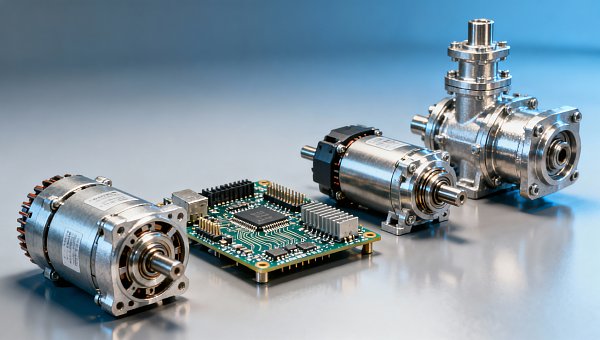
A custom motor solution is typically required when an application must meet 3 or more tightly linked constraints at once: torque, speed, space, temperature, noise, sealing, lifecycle, or control accuracy. In many global manufacturing environments, the target is not simply rotation. It is stable torque at low speed, repeatability within narrow tolerances, and predictable integration with drives, sensors, gear trains, and safety logic.
In practical terms, a catalog motor may cover 70% to 80% of the requirement, but the remaining 20% can decide whether a system passes validation. For example, an actuator in an ADAS-related subsystem may require compact packaging, low electromagnetic interference, and response time under 150 milliseconds. A water treatment blower motor may need corrosion resistance, IP55 to IP67 protection, and continuous operation for 8,000 to 12,000 hours per year.
Custom motor design also improves procurement clarity. Instead of forcing the OEM or integrator to redesign brackets, harnesses, cooling paths, and control logic around an unsuitable standard unit, engineering teams can define exact requirements upfront. That reduces rework, protects project timing, and lowers the hidden cost of field failures, retrofit labor, and quality claims.
For B2B buyers, the cost discussion should include total ownership over 3 to 7 years, not only purchase price. A motor that is 10% more expensive at sourcing can still reduce lifecycle cost if it improves system efficiency by 3% to 8%, cuts maintenance intervals from every 6 months to every 12 months, or reduces downtime during seasonal peak loads.
Common triggers for motor customization
- Restricted installation space, such as short axial length, non-standard flange design, or integrated brake and encoder requirements.
- Harsh operating environments including dust, moisture, chemicals, vibration, washdown exposure, or ambient temperatures from -20°C to 60°C.
- Precise control needs, such as positioning repeatability, low-speed smoothness, low cogging, or coordinated motion with PLC and inverter systems.
- Regulatory and industry compliance requirements tied to ISO, IATF, IPC-adjacent electronics environments, or safety-critical automotive validation paths.
Standard motors versus custom motors
The table below shows where standard products typically work well and where custom motor solutions create better long-term value.
The main takeaway is that custom motor solutions are not reserved for exotic applications. They are most useful whenever hidden system costs exceed the apparent savings of off-the-shelf sourcing.
Which industries most often require custom motor solutions
Across integrated manufacturing ecosystems, five industry groups repeatedly show the strongest need for electric motor customization. Each has its own operating profile, but all share one condition: system-level performance depends on exact motor behavior rather than generic rotation capability.
Automotive and mobility
In automotive systems, custom motors appear in thermal management modules, steering support, braking auxiliaries, seat motion, e-pumps, e-compressors, and actuator assemblies for driver assistance. These applications often require compact packaging, low NVH, and validated reliability over temperature ranges from -40°C to 125°C depending on subsystem location. In EV platforms, efficiency gains of even 1% to 3% can influence range, heat load, and battery management strategy.
Semiconductor and electronics
PCB fabrication, pick-and-place systems, wafer handling, test fixtures, and clean production lines often demand motors with controlled vibration, accurate indexing, and reduced particle generation. Here, precision and process stability matter more than raw power. Tolerance windows can be narrow, and even small thermal drift may affect alignment quality, cycle consistency, or downstream yield.
Smart agri-tech and autonomous equipment
Agricultural robotics, autonomous tractors, irrigation systems, sorting lines, and feed handling units require motors that tolerate dust, washdown, vibration, and variable load. Seasonal usage patterns can be intense, with equipment operating 10 to 16 hours per day during planting or harvest windows. Custom sealing, torque reserves, and duty-cycle tuning are often more important than nominal peak output.
Industrial ESG and infrastructure
Water treatment, MBR systems, ventilation, smart grid auxiliaries, pumps, and valve automation frequently use custom motors to manage energy efficiency, corrosion resistance, and continuous service. In infrastructure settings, replacing a failed unit can involve high labor cost, safety procedures, or process interruption. That makes reliability over 20,000 to 40,000 operating hours a major selection criterion.
Precision tooling and advanced machinery
Machine tools, spindles, robotic end-effectors, metrology units, and indexing systems need tightly managed speed, acceleration, and thermal behavior. Custom motor solutions help protect cut quality, positional accuracy, and repeatability, especially when the machine builder has unique form-factor or servo tuning requirements.
The comparison below helps identify which sectors typically benefit most from tailored motor engineering.
The pattern is consistent: when application conditions become system-critical, customization moves from optional enhancement to practical necessity.
Key engineering parameters buyers and evaluators should review
A custom motor project should start with measurable requirements, not general preferences. The most reliable sourcing outcomes come from a defined parameter sheet covering electrical input, target torque-speed curve, duty cycle, thermal limits, enclosure, control method, and expected service life. Missing just 2 or 3 of these inputs can delay technical clarification by several weeks.
For most industrial applications, the first engineering checkpoint includes rated power, peak torque, operating speed range, supply voltage, current draw, ambient conditions, and mounting constraints. Typical industrial ranges may span 24V to 480V, speeds from 300 rpm to 12,000 rpm, and output power from fractional kilowatt units up to multi-kilowatt drive packages. The right range depends on load profile, startup frequency, and whether the motor runs intermittently, cyclically, or continuously.
Thermal performance is especially important in enclosed or compact systems. If a motor sees frequent stop-start operation, high current peaks, or limited airflow, insulation class, winding design, and housing heat dissipation should be reviewed early. In practice, a thermal mismatch may not appear in a short bench test, but it can surface after 2 to 4 hours of sustained duty, causing derating, shortened bearing life, or controller trips.
Environmental protection is another common gap. Applications exposed to coolant mist, fertilizer dust, washdown procedures, or outdoor weather may need IP55, IP65, or IP67 protection, plus material choices that resist corrosion. Bearings, shaft seals, connector types, and coating options can materially affect field reliability.
Core specification checklist
- Define continuous and peak operating points, including torque, speed, acceleration, and duty cycle over a full work shift.
- Confirm installation constraints such as flange pattern, shaft geometry, cable orientation, and total envelope clearance.
- Align control requirements with the intended inverter, encoder, braking method, and communication architecture.
- Set environmental conditions including humidity, dust exposure, vibration level, washdown need, and operating temperature range.
- Document lifecycle expectations such as maintenance interval, target service hours, and acceptable failure modes.
Parameters that frequently change the design path
A motor intended for 5,000-hour light industrial use is engineered differently from one expected to run 24/7 in a utility installation. Likewise, low-speed torque stability for a valve actuator differs from the high dynamic response needed in a precision feeder or electronic assembly axis. For procurement and technical review teams, separating these use cases early reduces quotation ambiguity and comparison errors.
How to evaluate an electric motor manufacturer for custom projects
Choosing an electric motor manufacturer for custom applications requires more than checking whether the supplier can make a non-standard unit. The real question is whether the manufacturer can convert application data into repeatable production quality. That includes engineering review, prototyping discipline, validation support, process control, and supply continuity over the product lifecycle.
Buyers should assess at least 4 dimensions: technical communication speed, design-for-manufacture capability, quality documentation, and after-sales support. A strong supplier can usually provide initial feasibility feedback within 3 to 7 business days, followed by a clarified development plan covering drawings, sample timing, verification tests, and expected production transition.
For automotive, electronics, and infrastructure applications, cross-functional review is essential. Procurement may focus on lead time and cost, while engineering examines torque curves, insulation, encoder compatibility, and EMC sensitivity. Quality teams look for incoming inspection points, traceability, and failure analysis response. Finance wants to understand tooling cost, MOQ, and total payback period. A capable manufacturer can support all four views without reducing the conversation to unit price alone.
It is also wise to ask how design changes are controlled after pilot approval. If cable routing, magnet grade, bearing source, or housing finish changes in production, what review process applies? In custom motor programs, change management often matters as much as initial design quality.
Supplier evaluation matrix
The table below can be used by sourcing teams, project owners, and technical evaluators when screening manufacturers.
The most reliable partner is usually not the one promising the shortest timeline, but the one that can explain assumptions, risks, and verification steps with technical clarity.
Typical custom project timeline
- Requirement review and feasibility check: about 3–7 business days.
- Design clarification and commercial alignment: about 1–3 weeks depending on application complexity.
- Prototype build and initial testing: about 2–6 weeks.
- Pilot run and validation: about 2–8 weeks depending on standards and customer test plans.
- Volume release: follows approval, material availability, and production scheduling.
Implementation risks, common mistakes, and practical selection advice
One of the most common mistakes in custom motor sourcing is defining the target by nameplate values alone. Rated voltage and power are not enough. Without a real duty profile, integrators may receive a motor that technically meets the nominal point but overheats during acceleration, loses efficiency at partial load, or creates excessive noise under real operating conditions.
A second error is treating the motor as an isolated component. In reality, the drive, gearbox, cable harness, controller logic, thermal path, and mechanical load all influence the final result. In compact systems such as EV auxiliaries, electronics handling equipment, or smart actuators, minor mismatches in encoder feedback, current limit, or mounting stiffness can affect stability and service life.
A third issue is underestimating validation. If the application is exposed to dust, chemicals, cyclic shock, or high uptime expectations, laboratory confirmation should reflect those conditions as closely as possible. A 30-minute bench run rarely predicts 12-month field behavior. Procurement teams should therefore ask what tests are planned at sample stage and what conditions remain the customer’s responsibility to verify at system level.
Practical selection advice starts with internal alignment. Engineering, quality, sourcing, and operations should agree on the top 5 acceptance factors before requesting quotations. This prevents late-stage conflicts, especially when one team prioritizes efficiency and another prioritizes cost or delivery speed.
Risk control points before approval
- Verify the torque-speed curve under actual voltage and controller settings, not only theoretical calculations.
- Check thermal rise over a realistic runtime such as 2 hours, 4 hours, or a full representative duty cycle.
- Confirm ingress protection, connector sealing, and material compatibility with the operating environment.
- Review serviceability, spare strategy, and whether critical wear parts can be replaced without major disassembly.
- Document revision control so future component substitutions do not change field performance unexpectedly.
FAQ for sourcing and application teams
How do I know if my application truly needs a custom motor?
If your system requires unusual torque at low speed, limited installation space, environmental protection above standard indoor use, or precise control linked to safety or process yield, customization should be evaluated. A good rule is to review custom options when a standard motor forces redesign in 2 or more adjacent subsystems.
What is a reasonable MOQ for a custom motor project?
MOQ depends on complexity, tooling, and component sourcing. Some projects begin with prototype quantities of 2 to 10 units, while volume production may start at 100, 500, or 1,000 units. The important point is not the number alone, but whether the supplier can explain cost drivers and scaling assumptions clearly.
How long does qualification usually take?
Simple industrial applications may move from requirement review to approved sample in 4 to 8 weeks. More complex programs involving automotive, precision electronics, or infrastructure validation can take 8 to 20 weeks depending on test scope, revisions, and customer signoff procedures.
Which documents should buyers request?
Request a full specification sheet, outline drawing, electrical performance data, environmental assumptions, validation plan, inspection points, and revision control method. For strategic programs, also ask about component traceability, alternate source planning, and response process for nonconforming units.
Custom motor solutions are most valuable in industries where uptime, precision, safety, environmental resistance, and integration quality directly affect business outcomes. Automotive systems, electronics manufacturing, smart agri-tech, industrial infrastructure, and precision machinery all present operating conditions that often exceed the limits of standard motor selection. When buyers define parameters clearly and evaluate manufacturers on engineering depth as well as price, custom solutions can reduce lifecycle risk, improve system efficiency, and support more stable project delivery.
For organizations using GIM to benchmark suppliers and technical options across sectors, the best next step is a structured review of your application profile, validation needs, and sourcing constraints. Contact us to discuss your custom motor requirements, compare solution paths, and get a more informed specification strategy for your next project.
- electronics
- industry applications
- PCB fabrication
- electronics manufacturing
- active components
- Mobility
- powertrain systems
- ADAS
- sensors
- driver assistance
- automotive safety
- future mobility
- Agri-Tech
- autonomous tractors
- Industrial ESG
- emissions reduction
- smart grid technology
- electric motor manufacturer
- Precision tooling
- Smart Agri-Tech
- Global manufacturing
- Industrial infrastructure
The Archive Newsletter
Critical industrial intelligence delivered every Tuesday. Peer-reviewed summaries of the week's most impactful logistics and market shifts.