Monday, May 22, 2024
Yanbian Hydrogen Equipment Molds Certified for EU EN 13445-4
by
Published
Views:
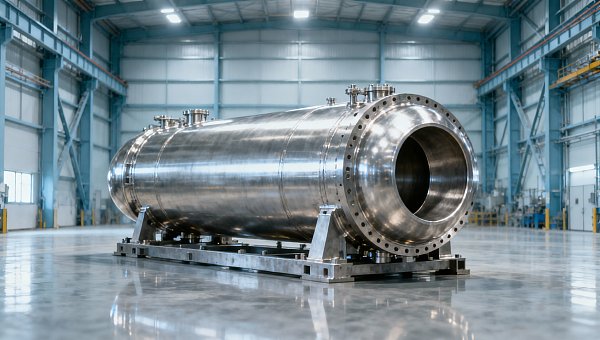
Jilin Yanbian Prefecture’s hydrogen equipment manufacturing base has accelerated the ramp-up of specialized tooling capacity for high-pressure hydrogen storage tanks, with related molds now certified to the European standard EN 13445-4. Though the exact timing of certification and production release is not publicly specified, this development signals a material shift in localized support for export-oriented hydrogen pressure vessel systems — particularly for markets including Germany and the Netherlands. Stakeholders in hydrogen system integration, international pressure vessel supply chains, and EU-compliant equipment trade should monitor implications for lead times, certification dependencies, and regional manufacturing coordination.
Event Overview
Jilin Yanbian Prefecture’s hydrogen equipment manufacturing base has begun releasing dedicated tooling capacity for high-pressure hydrogen storage tanks. The molds have passed conformity assessment under EN 13445-4, the European standard for unfired pressure vessels — specifically addressing design and fabrication requirements for high-integrity components used in hydrogen service. No official date for certification issuance or production commencement is disclosed in available public information.
Industries Affected by This Development
Direct Exporters of Hydrogen Storage Systems
Exporters supplying high-pressure hydrogen tanks or integrated mobility solutions (e.g., Powertrain Systems and Mobility Vision configurations) to EU customers may experience reduced time-to-delivery for custom-engineered units. The availability of locally produced, EN 13445-4-aligned molds enables faster prototyping and batch production of tank shells and end caps — provided final vessel assembly and full-system certification remain compliant with EU Notified Body oversight.
Hydrogen System Integrators
Integrators embedding hydrogen storage into mobility platforms or refueling infrastructure may gain flexibility in sourcing structural components from Yanbian-based suppliers. However, integration partners must verify whether mold-derived parts are supplied as raw blanks, semi-finished subassemblies, or fully certified pressure parts — as only the latter carry direct regulatory weight under EU framework conditions.
Supply Chain & Certification Support Providers
Third-party inspection agencies, technical documentation consultants, and CE marking support firms may see increased demand for verification services related to upstream component traceability — especially where Yanbian-sourced molded parts enter EU-certified final assemblies. This includes validation of material test reports, welding procedure specifications (WPS), and non-destructive testing (NDT) records aligned with EN 13445-4 Annexes.
What Relevant Enterprises or Practitioners Should Monitor and Act On
Track official updates on scope and validity of EN 13445-4 conformity claims
Confirm whether certification applies to specific mold designs only, or extends to all derivative tank components; check whether it covers full pressure part manufacturing (including heat treatment and NDT) or is limited to dimensional accuracy and material compatibility.
Assess exposure to EU market entry timelines for mobility-related hydrogen systems
For exporters targeting German or Dutch hydrogen mobility projects, evaluate whether Yanbian mold capacity shortens delivery windows for customer-specific geometries — particularly where rapid iteration of cylindrical shell thicknesses or dome profiles is required.
Verify alignment between mold output and downstream certification pathways
Determine if molds feed into ASME Section VIII Div. 3–capable lines or solely EN 13445-4–focused production. Divergent standards require separate QA/QC protocols — and mixing inputs risks nonconformance during final EU type examination.
Editorial Perspective / Industry Observation
Observably, this development is best understood as an enabling infrastructure milestone — not yet a de facto export channel. While EN 13445-4 compliance at the mold level reflects growing technical maturity in China’s hydrogen equipment supply chain, full regulatory acceptance hinges on consistent execution across material procurement, forming, welding, and inspection. Analysis shows that such tooling certification typically precedes, rather than substitutes for, full-system approval by EU Notified Bodies. From an industry perspective, this signals increasing readiness for Tier 2 supplier participation in EU hydrogen value chains — but does not eliminate the need for rigorous, end-to-end compliance governance.
Current more appropriate interpretation is that Yanbian’s mold certification strengthens regional manufacturing resilience for EU-facing hydrogen hardware, rather than indicating immediate scalability of certified finished tanks. It reflects progress in upstream capability — one prerequisite among many for sustainable export growth.
Conclusion: This milestone matters less as a standalone commercial signal and more as a structural indicator: it confirms maturation in a critical bottleneck segment — precision tooling for high-integrity hydrogen containment. For stakeholders, its value lies not in immediate sales impact, but in reduced technical risk for future EU-bound product programs — provided traceability, documentation, and post-molding processes meet EN 13445-4’s full lifecycle requirements.
Information Sources: Publicly reported event summary titled “Jilin Yanbian Hydrogen Equipment Mold Capacity Release, Aligned with EU EN 13445-4 Certification”. No further official documentation, regulatory filings, or third-party verification reports were cited or confirmed in the source material. Ongoing observation is warranted regarding formal scope statements from certifying bodies and evidence of actual export shipments incorporating these molds.
The Archive Newsletter
Critical industrial intelligence delivered every Tuesday. Peer-reviewed summaries of the week's most impactful logistics and market shifts.