Monday, May 22, 2024

Automotive technology features that age badly after five years
by
Published
Views:
Five years can turn once-impressive automotive technology into costly complexity, especially when electronic components, software ecosystems, and compliance demands evolve faster than expected. For buyers, engineers, and operators comparing lifecycle value against ISO standards, this guide examines which in-car features age poorly, why maintenance burdens rise, and how smarter benchmarking—similar to evaluating CNC milling machines, water purification, wastewater treatment, smart power grids, Sustainable agriculture systems, plastic injection molds, and carbon capture infrastructure—supports better long-term decisions.
In automotive and mobility markets, a feature that feels premium in year 1 can become a liability by year 5 if replacement parts are scarce, software support ends, or diagnostics require brand-locked tools. That matters not only to end users, but also to procurement teams, fleet managers, quality supervisors, distributors, and financial approvers who evaluate total cost of ownership over 48–72 months.
From a cross-sector benchmarking perspective, the issue is familiar. Complex systems often age badly when they depend on fragile supplier ecosystems, non-standard interfaces, or high failure-density electronics. In vehicles, that pattern is most visible in infotainment, driver assistance, connected services, touch-heavy controls, and niche electrification accessories that lose support faster than the chassis itself.
The practical question is not whether technology belongs in cars, but which automotive technology features continue delivering value after 5 years and which ones create hidden cost, downtime, and compliance risk. For industrial intelligence users and decision-makers, the answer begins with lifecycle thinking rather than showroom appeal.
Why some automotive features age faster than the vehicle platform
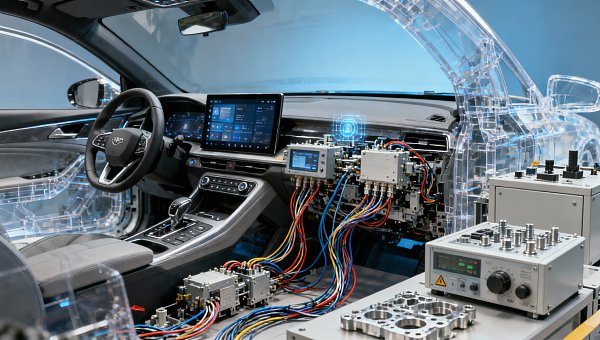
A modern vehicle is a layered system made of mechanical assemblies, embedded software, sensors, displays, wiring, and cloud-connected services. The body structure may remain serviceable for 10–15 years, but digital subsystems can become outdated in 3–5 years. That mismatch is the core reason many automotive technology features age badly after five years.
Three forces accelerate obsolescence. First, semiconductor turnover is rapid, and a control module using one chipset generation may be unsupported when production ends. Second, user-interface expectations shift quickly, especially in navigation, smartphone integration, and voice control. Third, cybersecurity and privacy requirements become stricter, making unsupported systems riskier to keep in service.
For procurement and engineering teams, a feature should be judged across at least 4 dimensions: serviceability, update pathway, spare part availability, and interoperability with standard diagnostic tools. A feature that scores well in performance but poorly in all four areas often becomes expensive between year 5 and year 8.
This is especially relevant in fleet and commercial contexts. A premium interface that adds 2% perceived comfort at purchase may also add 20% more downtime if failure diagnosis requires specialized software, display replacement, or calibration procedures unavailable in independent service networks.
Typical lifecycle mismatch in electronics-heavy vehicle systems
Mechanical wear tends to be gradual and predictable. Electronics-heavy modules often fail in a more abrupt way: dead pixels, touch layer delamination, sensor drift, gateway communication faults, or unsupported firmware. When failure occurs, replacement is not always modular. In some designs, one defective screen, camera, or controller requires paired coding, network authorization, or whole-unit replacement.
That is why long-term technical benchmarking should compare not only the feature itself, but the support architecture behind it. A good sign is when the system uses widely available interfaces, documented maintenance procedures, and update support for at least 5–7 years. A weak sign is when key functions depend on subscription servers or single-source modules with no refurbishing channel.
Procurement warning signs
- Feature relies on one proprietary display or controller with limited aftermarket supply.
- Core functions require cloud access or paid subscriptions after the initial 12–36 months.
- Calibration can only be performed with OEM-specific tools, increasing workshop dependency.
- Failure of one interface module disables multiple unrelated functions such as HVAC, audio, and safety settings.
The table below summarizes why certain feature categories often underperform in year-5 ownership reviews.
The key conclusion is simple: aging risk is usually not caused by innovation itself, but by weak lifecycle engineering. For long-horizon buyers, the best automotive technology is the one that remains diagnosable, repairable, and standards-compatible after the excitement of launch has passed.
Automotive technology features that often age badly after five years
Not every advanced feature becomes a problem, but several categories repeatedly show higher dissatisfaction, higher maintenance frequency, or lower retained utility after year 5. The pattern appears in both passenger vehicles and commercial fleets, although the financial impact is more visible in high-utilization assets running 20,000–60,000 km per year.
The first category is oversized infotainment ecosystems that centralize too many functions. When climate controls, seat functions, camera views, audio, navigation, and vehicle settings all sit behind one screen, a single hardware fault can compromise 5–8 user functions at once. Even when the module still works, software lag and outdated interfaces quickly reduce usability.
The second category is gesture, touch, and haptic-only control architecture. These systems look modern in a showroom, but after years of vibration, temperature cycling, and wear, users often prefer tactile controls for speed and reliability. In safety-sensitive scenarios, a physical knob or button usually remains more intuitive than searching through two or three digital layers.
The third category includes driver assistance packages with limited real-world robustness. Lane keeping, surround-view cameras, parking sensors, radar cruise, and driver monitoring can be valuable, but they also add sensor count, calibration steps, wiring complexity, and repair cost. One bumper repair can trigger several post-repair calibration tasks, increasing labor time from 1 hour to 3–5 hours.
Feature groups with the highest year-5 friction
- Embedded navigation systems that receive weak map support after 3–5 years and are less flexible than smartphone-based navigation.
- Panoramic camera arrays that degrade image quality over time and raise replacement cost after minor collisions.
- Electronic door handles, motorized trim elements, and power-operated accessories with more failure points than manual designs.
- App-dependent remote features that stop working when telecom modules, apps, or subscriptions are retired.
- Ambient lighting, digital mood interfaces, and novelty HMI features that add complexity but little operational value.
Why “premium” can become “problematic”
A feature ages badly when its utility curve drops faster than its maintenance curve. In practical terms, users may interact with a feature less each year while paying more to keep it functional. That imbalance is common in systems designed to impress at delivery but not optimized for modular replacement, backward compatibility, or independent servicing.
For operators and distributors, another concern is training burden. More digital functions mean more user confusion, more support calls, and more setup errors. A system with 15 configurable menus may appear sophisticated, yet it can also increase handover time, misconfiguration risk, and post-sale dissatisfaction if documentation and update support are weak.
The comparison below helps separate features that are likely to retain value from those that often lose value after the first ownership cycle.
In many cases, the best long-term vehicle specification is not the most feature-rich trim. It is the trim where convenience, safety, and maintainability stay balanced over a 5-year to 8-year operating window.
How maintenance, quality, and compliance costs rise over time
Aging automotive technology does not only create annoyance. It also raises direct and indirect costs across maintenance planning, quality control, safety management, and financial approval. For example, replacing a camera, radar, or windshield-mounted sensor may require glass work, alignment, software pairing, and road validation. What looks like one part replacement can become a 4-step service event.
For quality and safety managers, another issue is fault ambiguity. Mechanical failures are often easier to isolate than network-related or software-related symptoms. A driver complaint such as “lane assist behaves unpredictably” may stem from sensor obstruction, bumper geometry change, firmware mismatch, connector corrosion, or calibration drift. Diagnosis time can expand from 30 minutes to more than 2 hours.
Compliance pressure also increases. As vehicles integrate more safety and connectivity features, service records, software status, and calibration evidence become more important. Organizations benchmarking against ISO-aligned maintenance discipline increasingly need documented inspection intervals, controlled repair procedures, and traceable part substitutions to reduce operational and liability exposure.
This is where cross-sector thinking helps. Just as industrial water treatment systems or CNC assets are reviewed on uptime, spare availability, and service documentation, vehicle features should be evaluated on service continuity. A lower-cost subsystem with 95% parts availability may outperform a premium alternative with 60% availability and longer lead times of 3–6 weeks.
Cost drivers often missed during initial purchase
- Calibration dependency after routine body or glass repair.
- Software subscription renewal or feature reactivation fees after ownership transfer.
- Specialist labor rates for electronics diagnosis versus standard mechanical service.
- Module replacement instead of component-level repair, increasing parts cost.
- Downtime caused by region-specific sourcing delays for displays, sensors, or telematics units.
A practical review framework for year-5 risk
A useful review starts with 6 checkpoints: failure frequency, average repair lead time, calibration requirements, software support horizon, availability of alternative parts channels, and operator usability. If 3 or more checkpoints score poorly, the feature is likely to age badly in real ownership conditions even if it performed well when new.
Finance teams should also measure residual risk. Features that have low retained market value but high repair severity can erode resale economics. This is common in aging luxury electronics where the buyer of a used vehicle values reliability more than novelty. In that situation, a failed premium display or powered accessory can become a write-down trigger rather than a value enhancer.
A smarter selection framework for buyers, engineers, and fleet decision-makers
The best way to avoid badly aging automotive technology features is to build selection criteria before purchase. This is especially important for fleet tenders, distributor portfolios, corporate vehicle programs, and technical evaluations where decisions affect dozens or hundreds of units rather than one retail buyer.
Start by separating mission-critical technology from showroom technology. Mission-critical features improve safety, uptime, or operator efficiency across the full lifecycle. Showroom technology mainly improves first impressions. Both have value, but they should not receive the same weighting in a 5-year ownership model.
A robust evaluation matrix usually includes 5 categories: operational relevance, durability, service network support, update policy, and residual value impact. Each category can be scored from 1 to 5. Features with a total below 16 out of 25 should trigger extra review, especially if they depend on subscriptions or proprietary electronics.
For technical benchmarking platforms such as GIM, the value lies in comparing systems across standards, maintenance burden, and supply chain resilience, not only catalog specifications. That approach mirrors how industrial buyers assess pumps, filtration modules, HDI substrates, molds, and power systems: by lifecycle performance, documentation quality, and risk concentration.
Recommended pre-purchase questions
- Will this feature still function if the connected service is discontinued after 36 or 60 months?
- Can the module be repaired independently, or must the full assembly be replaced?
- How many calibration steps are required after common repairs such as bumper, windshield, or battery work?
- Is the user interface dependent on one screen, or are backup physical controls available?
- Are software updates available over at least 5 years, and what happens after support ends?
The procurement table below provides a practical long-term assessment model.
A strong buying decision often means selecting fewer but better-supported technologies. In year-5 reviews, this usually produces lower downtime, cleaner maintenance records, and better budget predictability.
FAQ: how to judge long-term value in automotive technology
Which in-car technology usually retains value best after five years?
Features with clear operational benefit and low support dependency generally age best. Examples include well-integrated safety systems with broad service coverage, durable physical controls, reliable reverse cameras, and smartphone-friendly connectivity that does not rely on expensive proprietary map or app ecosystems.
Are advanced driver assistance systems always a bad long-term choice?
No. Basic ADAS can remain valuable if the service network can recalibrate cameras and radar within 1–2 days and if replacement parts are readily available. The concern is not ADAS itself, but over-complex packages with high sensor count, weak diagnostic transparency, or poor tolerance to minor repair events.
How should procurement teams compare two vehicles with different technology packages?
Use a 5-year scoring model that includes purchase price, service intervals, expected repair complexity, software support horizon, and residual value sensitivity. If one package adds many connected or screen-based functions, estimate not only acquisition cost but also probable downtime and replacement exposure over 60 months.
What is the biggest mistake buyers make?
Many buyers evaluate technology by launch-year performance rather than support-year performance. A feature can feel superior in a test drive yet still be a poor long-term choice if service documentation is weak, subscriptions expire, or parts lead times extend beyond 2–4 weeks in normal market conditions.
When does benchmarking become especially valuable?
Benchmarking becomes critical when organizations buy at scale, operate mixed fleets, or must justify decisions to engineering, finance, and safety stakeholders at the same time. In those cases, a cross-sector, standards-aware review can reveal whether a feature behaves like resilient industrial equipment or like a high-failure consumer electronic embedded in a vehicle.
Automotive technology features that age badly after five years usually share the same weaknesses: high complexity, narrow service pathways, short software horizons, and poor modularity. For buyers and evaluators, the solution is not to avoid innovation, but to favor technology that remains useful, maintainable, and supportable across the real operating lifecycle.
Global Industrial Matrix supports this decision process by aligning automotive and mobility analysis with the same benchmarking discipline used in electronics, infrastructure, agri-tech, and precision tooling. If you need a more structured comparison of vehicle technology packages, maintenance risk, or cross-supplier lifecycle performance, contact us to get a tailored evaluation framework, consult technical details, or explore broader benchmarking solutions.
- electronics
- electronic components
- Mobility
- automotive technology
- ADAS
- sensors
- driver assistance
- vehicle technology
- Agri-Tech
- wastewater treatment
- water purification
- carbon capture
- smart power grids
- CNC milling machines
- plastic injection molds
- HDI substrates
- Precision tooling
- Technical benchmarking
- ISO standards
- Sustainable agriculture

The Archive Newsletter
Critical industrial intelligence delivered every Tuesday. Peer-reviewed summaries of the week's most impactful logistics and market shifts.