Monday, May 22, 2024

Electric Vehicles Manufacturer Comparison: Cost vs Reliability
by
Published
Views:
For financial decision-makers, choosing the right Electric Vehicles manufacturer is no longer just a technical question—it is a balance of upfront cost, long-term reliability, and supply chain resilience. This comparison examines how leading manufacturers perform across these critical factors, helping procurement and investment teams reduce risk, improve value, and support smarter mobility strategies.
For procurement leaders, fleet investors, and budget owners, the challenge is rarely about finding an EV supplier with attractive headline pricing. The real issue is determining whether a lower purchase price today will create higher operating costs, weaker uptime, or elevated sourcing risk over the next 3–7 years.
An Electric Vehicles manufacturer should therefore be evaluated across total cost of ownership, battery durability, warranty discipline, component standardization, service network maturity, and lead-time stability. In cross-border manufacturing and mobility programs, these factors often matter more than nominal unit price.
From the perspective of Global Industrial Matrix (GIM), the most useful comparison framework is not brand hype or consumer sentiment. It is a structured benchmarking model that connects vehicle cost, engineering reliability, and supply chain resilience to measurable procurement outcomes.
Why Cost vs Reliability Is the Core EV Procurement Decision
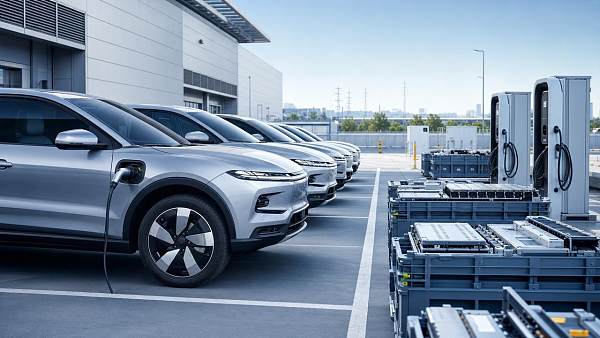
In EV sourcing, upfront acquisition cost typically represents only 45%–65% of the full economic picture for commercial or institutional buyers. Energy use, battery replacement exposure, maintenance intervals, software support, and residual value can materially change ROI within the first 24–60 months.
A financially attractive Electric Vehicles manufacturer is not necessarily the one with the lowest invoice. It is the supplier that keeps lifecycle cost predictable, minimizes downtime per vehicle, and maintains spare parts continuity across multiple production batches and geographies.
What Financial Approvers Should Measure First
Before comparing suppliers, finance teams should align on 4 baseline metrics: purchase cost, expected service cost per year, battery warranty scope, and lead-time reliability. Without these inputs, even a technically strong sourcing review can miss hidden cost exposure.
- Initial vehicle or fleet acquisition cost over 1, 3, and 5 years
- Battery retention expectations, often assessed at 70%–80% capacity thresholds
- Planned maintenance intervals, commonly every 10,000–20,000 km depending on use case
- Spare parts availability window, ideally 5 years or longer for critical assemblies
Common Financial Blind Spots
Many comparisons overemphasize list price and underweight reliability variance. A 6% lower purchase price can be erased quickly if the fleet experiences battery degradation ahead of schedule, software faults requiring repeated service visits, or imported parts lead times extending from 3 weeks to 12 weeks.
Another blind spot is assuming all warranties carry equal value. A nominal 8-year battery warranty may still include exclusions tied to charging practices, climate conditions, or commercial-duty usage. Financial reviewers should always request the exact coverage triggers and claim process timeline.
A Practical Screening Rule
If two suppliers fall within a 5%–8% acquisition cost band, the more reliable option usually creates better financial value when annual utilization is high. For low-usage fleets, the lower-cost manufacturer may still be viable, but only if parts support and battery traceability remain acceptable.
Comparing EV Manufacturer Profiles by Cost and Reliability
The market generally includes four broad Electric Vehicles manufacturer profiles. These are not rigid brand categories, but practical sourcing archetypes used by procurement teams to compare risk, economics, and implementation difficulty across programs of different sizes.
The table below summarizes how these manufacturer types often perform in B2B and institutional mobility procurement, especially when financial teams need to balance capex discipline with long-term operating reliability.
This comparison shows why financial approval should not rely on price bands alone. In many projects, established and high-maturity EV suppliers command higher capex, yet they reduce volatility in service cost, contract enforcement, and operational uptime over 36 months or more.
When Lower Cost Makes Sense
A lower-cost Electric Vehicles manufacturer can still be the right choice in three cases: limited annual mileage, controlled operating environment, and in-house technical support. For example, campus mobility, municipal short-route duty, or closed-site industrial transport may tolerate narrower service coverage.
- Annual utilization below 12,000 km per vehicle
- Charging infrastructure managed internally with standardized routines
- Clear access to replacement parts within 2–6 weeks
When Reliability Should Override Price
Reliability should dominate the decision when fleets support revenue operations, regulated service delivery, or safety-sensitive transport. In those cases, even 1–2 extra days of vehicle downtime per month can disrupt labor allocation, delivery schedules, or customer service commitments.
This is especially relevant for enterprise fleets, logistics support vehicles, airport or port mobility, and public-sector deployments where service continuity is contract-sensitive. A dependable Electric Vehicles manufacturer often protects value by reducing incident management and emergency substitution costs.
Key Technical and Supply Chain Indicators Behind Reliability
Reliability is not a marketing attribute. It is the result of engineering controls, manufacturing discipline, and supplier governance. Financial teams do not need to audit every subsystem in detail, but they should require clear evidence across a core set of technical and operational checkpoints.
Battery System Stability
Battery performance is often the single largest uncertainty in EV lifecycle economics. Buyers should examine chemistry maturity, thermal management design, pack traceability, and state-of-health reporting. For budget planning, capacity retention assumptions at year 3, year 5, and warranty threshold are essential.
A manufacturer that can provide consistent test documentation, service procedures, and serial-level battery records will usually present lower financial risk than one offering only general brochure claims. This becomes more important in hot climates, high-cycle use, or multi-shift operation.
Power Electronics and Software Support
In modern EV platforms, inverters, controllers, BMS logic, and firmware management can strongly influence uptime. A low-cost hardware package can become expensive if software updates require repeated service interventions or if diagnostics are not available to regional maintenance teams within 24–72 hours.
Minimum Documentation to Request
- Battery warranty terms and degradation threshold language
- Recommended maintenance schedule by operating condition
- Software update process, approval flow, and rollback method
- Failure-response SLA and typical spare parts replenishment cycle
Production and Supplier Consistency
An Electric Vehicles manufacturer with stable tiered suppliers, documented quality controls, and repeatable assembly processes is generally easier to scale. Consistency matters because fleets are often delivered in batches over 2–4 quarters, and specification drift between batches creates service and inventory complications.
Procurement teams should ask whether key components such as cells, semiconductors, onboard chargers, and thermal modules are single-sourced or dual-sourced. Single-source dependency may be manageable, but it should be visible in financial risk planning.
A Decision Matrix for Financial Approval
To move from technical evaluation to financial approval, companies need a scoring model that converts engineering and supply information into procurement logic. The following matrix helps compare each Electric Vehicles manufacturer using practical decision criteria rather than isolated product claims.
This matrix is most effective when paired with a 2-stage approval process. First, technical teams remove non-compliant options. Second, finance compares the shortlisted suppliers using weighted lifecycle criteria. That prevents low-price bids from distorting the final decision.
Recommended Approval Workflow
A disciplined workflow can shorten review cycles and improve decision quality. In many organizations, a 5-step process is sufficient to compare EV suppliers without slowing procurement unnecessarily.
- Define duty cycle, charging profile, climate exposure, and annual mileage.
- Pre-screen each Electric Vehicles manufacturer for compliance, service reach, and production stability.
- Model 3-year and 5-year total cost under base-case and stress-case assumptions.
- Run a pilot batch, often 3–10 units, before full-scale release.
- Approve the supplier with the best risk-adjusted value, not simply the lowest bid.
Pilot Programs Reduce Financial Surprises
For higher-risk or newer suppliers, pilot deployment is one of the best controls available. A 90-day to 180-day trial can expose charging issues, software instability, or parts bottlenecks before fleet-wide capital is committed. This is especially useful when evaluating an emerging Electric Vehicles manufacturer.
Procurement Risks, Common Mistakes, and Strategic Recommendations
Even well-structured sourcing programs can fail if the procurement team focuses too narrowly on unit economics. The most common errors are avoidable, but only if finance, engineering, and operations align on the same decision framework from the start.
Frequent Procurement Mistakes
- Selecting the cheapest supplier without validating local service capacity
- Ignoring battery replacement assumptions after year 4 or year 5
- Accepting broad warranty language without claim process details
- Overlooking component sourcing concentration in semiconductors or thermal systems
- Skipping pilot validation for a new or rapidly expanding manufacturer
Strategic Recommendations for Financial Decision-Makers
When comparing any Electric Vehicles manufacturer, decision-makers should prioritize predictability over optimistic assumptions. Stable cost curves, documented engineering controls, and clear service accountability usually outperform low-entry-price offers that depend on best-case operating conditions.
For larger cross-border programs, GIM recommends evaluating suppliers through a system-level lens: vehicle hardware, battery chain, electronics sourcing, quality standards alignment, and after-sales response. This integrated view is increasingly important as manufacturing ecosystems become more interconnected.
Who Should Favor Premium Reliability
Premium reliability is usually the better financial choice for logistics fleets, public institutions, infrastructure operators, and enterprise buyers managing 20 or more vehicles. These users face greater downtime penalties and benefit more from standardized service procedures and strong documentation.
Who May Accept Moderate Risk for Lower Cost
Smaller fleets, pilot deployments, and controlled-site operations may accept more supplier risk if budget pressure is high and technical support is accessible. In those cases, contracts should include milestone reviews, spare parts commitments, and clear escalation clauses within the first 6–12 months.
The best Electric Vehicles manufacturer for a finance-led procurement program is rarely the cheapest or the most advertised. It is the supplier that offers the strongest balance of acquisition discipline, engineering dependability, after-sales responsiveness, and supply chain resilience over the asset life.
For organizations navigating complex industrial sourcing decisions, GIM helps translate technical benchmarking into practical procurement intelligence across automotive, electronics, and infrastructure ecosystems. Contact us to get a tailored comparison framework, review supplier risk factors, and explore smarter EV sourcing strategies for your next program.
The Archive Newsletter
Critical industrial intelligence delivered every Tuesday. Peer-reviewed summaries of the week's most impactful logistics and market shifts.