Monday, May 22, 2024

Electric Vehicles Supplier: What to Compare First
by
Published
Views:
Choosing an Electric Vehicles supplier now requires more than checking unit cost or lead time. Market volatility, battery regulation, software integration, and regional sourcing pressure have changed how supplier value is judged.
For any organization comparing an Electric Vehicles supplier, the first review should focus on long-term performance, compliance strength, manufacturing discipline, and resilience across borders.
In a cross-industry environment, EV sourcing connects electronics, automotive engineering, tooling, ESG infrastructure, and digital quality control. That is why early comparison criteria now shape downstream risk far more than initial quotations.
Why Electric Vehicles supplier selection is changing faster than expected
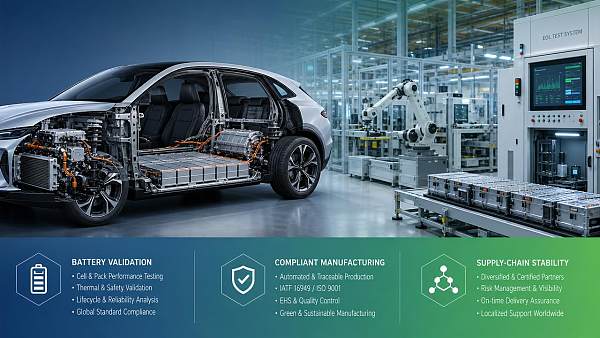
The global EV market is no longer driven by demand growth alone. It is being reshaped by battery chemistry shifts, regional industrial policy, charging compatibility, and stricter traceability expectations.
An Electric Vehicles supplier once competed mainly on assembly scale. Today, evaluation extends into thermal management, software update capability, component origin, and after-sales data transparency.
This change matters because EV platforms depend on tightly linked systems. A weakness in cells, power electronics, harness design, or certification can affect safety, serviceability, and market access.
As a result, the best Electric Vehicles supplier is often the one with the clearest technical evidence, not the lowest headline price.
The strongest trend signals appear in standards, batteries, and supply chain visibility
Several market signals show where comparison should begin. These signals help separate stable suppliers from those exposed to hidden execution risk.
- Battery passports and material traceability are becoming practical sourcing requirements.
- Vehicle software and battery management systems now influence supplier ranking.
- Regional localization is changing logistics, tariffs, and homologation strategies.
- Certification readiness affects launch speed in more markets than before.
- Powertrain efficiency is judged together with lifecycle emissions and service support.
For this reason, every Electric Vehicles supplier assessment should start with technical fit, compliance maturity, and continuity planning before commercial negotiation deepens.
What is driving the shift in how an Electric Vehicles supplier is compared first
The current shift is not random. It is the result of linked technical, regulatory, and economic forces across the broader industrial ecosystem.
A capable Electric Vehicles supplier should show measurable control across all five areas. If documentation is incomplete, risk usually appears later in validation or field performance.
The first comparison should center on technical credibility, not brochure claims
1. Battery system evidence
Battery systems remain the first technical checkpoint for any Electric Vehicles supplier. Compare chemistry type, usable energy, thermal protection, cycle life, and cold-weather behavior.
Ask whether validation data comes from internal tests, third-party labs, or field fleets. Verified degradation curves are more useful than nominal range claims.
2. Manufacturing process maturity
An Electric Vehicles supplier should demonstrate process control, not only installed capacity. Review welding consistency, torque traceability, end-of-line testing, and nonconformance handling.
Production quality is especially important when EV systems combine electronics, structural parts, and safety-critical software in one platform.
3. Compliance and homologation depth
The right Electric Vehicles supplier should already understand target-market compliance, not treat certification as a later add-on. That reduces redesign risk and launch delay.
Check documentation for ISO 9001, IATF 16949 where relevant, battery transport compliance, EMC performance, and road safety approvals.
4. Supply continuity under stress
A modern Electric Vehicles supplier must show resilience under material shortages, freight disruption, or policy shifts. Compare backup suppliers, localized content options, and critical component lead-time buffers.
The impact reaches beyond vehicles into broader industrial operations
Comparing an Electric Vehicles supplier properly affects more than the vehicle itself. It influences electronics sourcing, charging infrastructure compatibility, maintenance planning, and ESG reporting quality.
In integrated industrial environments, weak EV supplier selection can create ripple effects across tooling schedules, software interfaces, spare parts planning, and data governance.
- Electronics teams may face redesign pressure if connectors or control modules lack standardization.
- Infrastructure teams may need charging upgrades if vehicle communication protocols differ.
- Quality teams may lose traceability if battery serial mapping is incomplete.
- Sustainability reporting may weaken if material origin data is inconsistent.
That is why an Electric Vehicles supplier should be judged as part of a system, not as an isolated product vendor.
What deserves the closest attention during early-stage evaluation
The earliest screening stage should remove avoidable risk quickly. Focus on points that indicate whether deeper engagement is justified.
- Traceable bill of materials for battery, inverter, power electronics, and wiring systems.
- Evidence of PPAP-style discipline, process audits, and corrective action closure.
- Service network readiness, spare parts logic, and firmware update governance.
- Clear test protocols for safety, vibration, water ingress, and thermal performance.
- Regional manufacturing footprint and contingency production options.
- Data transparency on warranty trends, recall history, and root-cause response speed.
If an Electric Vehicles supplier cannot answer these points clearly, price comparisons become less meaningful.
A practical way to rank an Electric Vehicles supplier before final negotiation
This method helps compare each Electric Vehicles supplier using evidence that supports both technical acceptance and long-term operational continuity.
The smartest next step is building a data-led comparison framework
The market rewards fast decisions, but rushed selection often hides risk. A structured scorecard should rank every Electric Vehicles supplier against battery integrity, certification status, production maturity, and sourcing resilience.
Cross-sector benchmarking adds value because EV systems sit at the intersection of mobility, electronics, environmental reporting, and industrial manufacturing discipline.
To move forward effectively, define target use conditions, list non-negotiable standards, request auditable technical data, and compare every Electric Vehicles supplier on the same evidence base.
When early comparison starts with facts instead of sales language, supplier decisions become more resilient, scalable, and aligned with future market demands.

The Archive Newsletter
Critical industrial intelligence delivered every Tuesday. Peer-reviewed summaries of the week's most impactful logistics and market shifts.