Monday, May 22, 2024

Future mobility trends in 2026 that fleets should watch
by
Published
Views:
As future mobility accelerates toward 2026, fleets must track how powertrain systems, active components, driver assistance, and smart grid technology reshape cost, uptime, and automotive safety. From emissions reduction targets to sourcing from the right electric motor manufacturer, these shifts are creating new industry applications and operational risks. This article outlines the trends decision-makers should watch to stay competitive, compliant, and resilient.
For most fleet operators and industrial buyers, the key question is no longer whether mobility is changing, but which changes will materially affect total cost of ownership, compliance exposure, asset uptime, and procurement strategy by 2026. The most important trends are not just electric vehicles or automation in the abstract. They are the practical shifts in charging infrastructure, battery and electric motor sourcing, software-defined vehicle systems, advanced driver assistance, grid integration, and lifecycle risk management that influence fleet performance in real operating conditions.
For decision-makers, the best response is selective adoption. Not every fleet needs to move at the same speed, but nearly every fleet should be evaluating where electrification, connected operations, safety technologies, and supply chain resilience create measurable operational value. In 2026, the winning fleets will be those that treat mobility planning as a business system, not just a vehicle replacement cycle.
Which future mobility trends in 2026 will have the biggest impact on fleets?
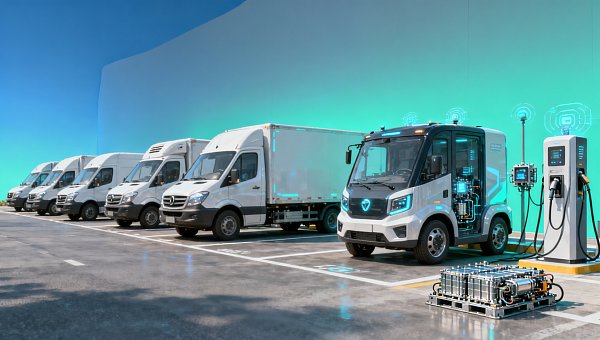
The most relevant future mobility trends in 2026 for fleets fall into six high-impact areas:
- Commercial fleet electrification moving from pilot to selective scale
- Battery, electric motor, and power electronics sourcing becoming a strategic procurement issue
- Advanced driver assistance systems expanding from safety feature to risk-control tool
- Smart charging and grid-connected energy management becoming essential for cost control
- Software-defined vehicles and telematics improving fleet visibility, but increasing cyber and integration demands
- Compliance, emissions reporting, and sustainability benchmarking affecting asset decisions and financing
These trends matter because they connect directly to the concerns of fleet managers, procurement teams, engineering evaluators, finance approvers, and safety leaders. A new mobility technology only becomes relevant when it improves route economics, reduces incidents, lowers maintenance volatility, or protects the fleet from regulatory and sourcing risk.
Why fleet electrification in 2026 is becoming more selective, not simply faster
Electrification will remain one of the biggest future mobility trends in 2026, but the market is shifting away from broad enthusiasm toward operational fit. Fleets are becoming more disciplined in identifying where battery electric vehicles create real value and where internal combustion, hybrid, or mixed-powertrain models still make more sense.
This means the right question is not “Should the fleet electrify?” but “Which duty cycles are economically and operationally viable for electrification now?”
Fleets are prioritizing electrification in scenarios such as:
- Urban and suburban delivery with predictable daily mileage
- Depot-based operations where charging can be centrally managed
- Low-emission zones or regions with tightening emissions reduction rules
- Use cases where regenerative braking improves efficiency
- Applications with strong brand or customer pressure for visible sustainability progress
They are moving more cautiously in scenarios such as:
- Long-haul or multi-shift operations with limited charging windows
- Regions with unstable grid access or poor charging infrastructure
- Heavy payload applications where battery weight affects productivity
- Cold-climate operations with range and charging performance challenges
For enterprise decision-makers, this selective approach improves ROI discipline. Rather than replacing vehicles on sustainability messaging alone, fleets are matching vehicle technology to route profile, service requirements, and infrastructure readiness.
How powertrain systems and component sourcing are changing fleet risk
By 2026, powertrain decisions will be tied more closely to supply chain resilience and technical benchmarking. Fleets are no longer just buying finished vehicles; they are indirectly exposed to the performance and availability of batteries, inverters, semiconductors, thermal systems, and the capabilities of the electric motor manufacturer behind the platform.
This matters for several reasons:
- Maintenance and uptime: Component quality affects failure rates, service intervals, and spare parts lead times.
- Warranty confidence: Poorly validated active components can create expensive fleet-wide reliability issues.
- Procurement continuity: Shortages in semiconductors, magnets, or battery materials can delay deliveries or raise replacement cost.
- Performance consistency: Real-world efficiency depends on the full system, not just the vehicle badge.
Technical evaluators and procurement teams should increasingly look at:
- Motor efficiency under actual duty conditions
- Thermal performance of battery and inverter systems
- Functional safety validation of critical electronic systems
- Supplier traceability and compliance with standards
- After-sales support depth across regions
For industrial buyers, this is where cross-sector benchmarking becomes valuable. Vehicle selection should be informed not just by brochure specifications, but by the maturity of the underlying electronics, materials, and manufacturing ecosystem.
Why advanced driver assistance and automotive safety will matter more than ever
In 2026, fleets should expect automotive safety technology to become a stronger operational and financial lever. Advanced driver assistance systems, driver monitoring, predictive alerts, and connected safety data are moving from optional upgrades to practical risk-management tools.
For many fleets, this trend is as important as electrification because accident frequency, insurance pressure, and duty-of-care expectations continue to rise. Safety technologies can help reduce collisions, improve driver behavior, and support compliance documentation.
The highest-value systems for fleets often include:
- Automatic emergency braking
- Lane departure and lane keeping assistance
- Blind-spot monitoring for urban and mixed-traffic routes
- Driver fatigue or distraction detection
- 360-degree visibility systems for larger commercial vehicles
- Integrated telematics-based incident analysis
However, fleets should avoid evaluating these features only at a checklist level. The more practical questions are:
- How accurate is the system in real operating conditions?
- Does it reduce false alerts that drivers may ignore?
- Can it integrate with safety training and incident review workflows?
- Will the data generated be usable by safety managers and insurers?
For quality control personnel and safety managers, the value lies in measurable reduction of preventable incidents. For finance and executive teams, the value appears in lower accident-related cost, improved insurability, and stronger operational governance.
How smart charging and grid integration will reshape fleet operating cost
One of the most underestimated future mobility trends in 2026 is the connection between fleets and energy systems. As more vehicles become electrified, charging strategy will influence operating cost almost as much as vehicle efficiency.
Smart charging is not just about plugging in vehicles. It includes:
- Charging vehicles when electricity prices are lowest
- Balancing charger loads across multiple assets
- Preventing demand spikes that trigger higher utility charges
- Coordinating on-site renewables, storage, and facility energy loads
- Using vehicle and route data to optimize charging schedules
For depot operators and project managers, this becomes an infrastructure planning issue. For procurement and finance teams, it becomes a cost predictability issue. For executives, it becomes a resilience issue.
Smart grid technology can deliver meaningful advantages when fleets:
- Operate high volumes of electric vehicles from central depots
- Have access to dynamic energy pricing
- Need backup power or energy resilience for critical operations
- Are pursuing ESG or emissions reduction targets with verifiable reporting
But this also introduces new risks. Poor charger selection, insufficient electrical capacity, weak software integration, or unrealistic utilization assumptions can turn electrification into an expensive bottleneck. In 2026, infrastructure readiness will be as important as vehicle readiness.
What software-defined fleets mean for operators, engineers, and buyers
Connected vehicles, over-the-air updates, telematics platforms, and software-driven performance management are redefining fleet operations. This shift can improve visibility and optimization, but it also increases complexity.
Software-defined fleet management can help organizations:
- Track asset health and predictive maintenance needs
- Monitor route efficiency and energy usage
- Identify unsafe driver patterns
- Optimize charging windows and dispatch planning
- Benchmark vehicle performance across locations and suppliers
However, many fleets underestimate three issues:
- Data fragmentation: Different vehicle brands, telematics tools, and infrastructure systems often do not integrate cleanly.
- Cybersecurity exposure: Connected systems create new attack surfaces across vehicles, chargers, and backend platforms.
- Vendor lock-in: Proprietary software ecosystems can limit flexibility in future sourcing decisions.
Technical assessment teams should evaluate not only feature sets but also data interoperability, security governance, reporting quality, and lifecycle support. A connected fleet system is only valuable if the data is reliable and actionable across departments.
How emissions, standards, and ESG pressure will influence fleet decisions in 2026
Another major future mobility trend in 2026 is the tightening link between mobility choices and corporate reporting. Emissions reduction is becoming part of procurement qualification, investor scrutiny, customer requirements, and public-sector eligibility.
This means fleets may need to justify decisions not only on vehicle price and fuel cost, but also on:
- Carbon impact across the operating lifecycle
- Local emissions compliance
- Supply chain transparency
- Alignment with internal ESG targets
- Safety and quality compliance against recognized standards
For commercial and industrial organizations, this does not mean every fleet needs rapid full electrification. It does mean every fleet needs a documented transition logic. Decision-makers should be able to explain why certain technologies are being adopted, delayed, or piloted based on application fit, cost profile, infrastructure readiness, and operational constraints.
This is especially relevant for organizations managing multiple regions, mixed fleets, or regulated tenders. Buyers increasingly need evidence-backed procurement decisions rather than broad sustainability claims.
How fleets should evaluate mobility investments before 2026
To turn trend awareness into action, fleets should use a structured evaluation model. The most effective approach combines business, engineering, safety, and infrastructure perspectives instead of leaving mobility planning to a single department.
A practical fleet evaluation framework should include:
- Duty cycle mapping: Identify routes, payloads, idle time, climate conditions, and daily mileage.
- Total cost of ownership analysis: Include energy, maintenance, infrastructure, downtime, incentives, and residual value.
- Supplier and component review: Assess the maturity of powertrain systems, active components, and service support.
- Safety assessment: Compare ADAS capability, driver usability, and risk reduction potential.
- Infrastructure readiness: Evaluate charging, electrical capacity, facility constraints, and smart grid options.
- Data and software review: Confirm telematics quality, interoperability, cybersecurity, and reporting usefulness.
- Compliance alignment: Match investments to emissions requirements, internal ESG targets, and quality expectations.
This type of evaluation is especially useful for project leaders, procurement managers, and business evaluators who must defend capital expenditure decisions across multiple stakeholders.
Practical priorities fleets should set now
For organizations preparing for 2026, the most sensible next steps are rarely all-or-nothing transformations. Instead, fleets should focus on practical priorities with measurable outcomes:
- Electrify vehicle segments where routes and charging conditions already support strong economics
- Review suppliers beyond the vehicle brand level, including battery, motor, electronics, and support ecosystem quality
- Expand driver assistance and safety technologies where collision risk and insurance pressure are highest
- Build an energy strategy for depots before scaling electric vehicle volumes
- Standardize fleet data collection to support procurement, maintenance, and compliance decisions
- Use pilot programs with clear KPIs instead of symbolic deployments
The fleets best positioned for 2026 will not be those chasing every trend. They will be the ones that separate high-value mobility investments from high-noise market messaging.
Conclusion: the fleets that win in 2026 will combine technology adoption with operational discipline
Future mobility trends in 2026 will create real opportunities for fleets, but the strongest results will come from disciplined execution rather than trend following. Electrification, advanced driver assistance, smart charging, software-defined operations, and emissions accountability are all becoming more important. Yet their value depends on matching the right technology to the right use case.
For fleet operators, technical evaluators, procurement teams, and business leaders, the priority is clear: make mobility decisions based on verified performance, infrastructure readiness, safety outcomes, and lifecycle economics. In a market shaped by shifting regulations, evolving automotive safety expectations, and increasingly complex supply chains, resilience will belong to fleets that benchmark deeply, source carefully, and invest where operational value is measurable.
By 2026, mobility strategy will be a core business capability. Organizations that treat it that way will be better prepared to reduce risk, control cost, and capture the next wave of industrial and transportation efficiency.
- electronics
- semiconductors
- industry applications
- active components
- Mobility
- Electric Vehicles
- powertrain systems
- vehicle performance
- ADAS
- driver assistance
- automotive safety
- vehicle technology
- future mobility
- emissions reduction
- energy management
- smart grid technology
- electric motor manufacturer
- Technical benchmarking
- Sustainability benchmarking
The Archive Newsletter
Critical industrial intelligence delivered every Tuesday. Peer-reviewed summaries of the week's most impactful logistics and market shifts.