Monday, May 22, 2024

How dash cams can help establish fault after a road collision
by
Published
Views:
How Dash Cams Help Establish Fault After a Road Collision
After a collision, the physical damage may be obvious, but the sequence of events often is not. One driver may say the light was green; another may insist that a vehicle changed lanes without warning. Witnesses can be helpful, yet their views may have been blocked or their recollections affected by the shock of the event. In that gap between impact and explanation, dash cams can provide a more reliable record of what happened.
A dashboard camera does not automatically decide legal liability. Fault is ultimately assessed by insurers, police, courts, or other relevant authorities under local rules. What it can do is preserve evidence that is otherwise easy to lose: traffic-light phases, lane markings, vehicle positions, speed changes, road surface conditions, and driver behaviour in the seconds before impact. For ordinary motorists, that evidence can make an insurance claim easier to explain and make false or incomplete allegations more difficult to sustain.
The best value of dash cams is not dramatic footage. It is the ability to replace a disputed memory with a time-stamped visual record.
What Video Can Show That a Damage Report Cannot
Post-collision photographs are essential, but they only show the final positions of the vehicles. They may reveal the point of contact, skid marks, debris, and surrounding road layout, yet they rarely explain why the vehicles met. A front-facing camera can fill in the missing sequence: whether traffic was slowing, whether a vehicle entered an intersection late, whether a driver drifted across a lane line, or whether an unexpected hazard appeared ahead.
Consider a common rear-end collision. The driver behind is often presumed responsible because motorists are generally expected to maintain a safe following distance. Footage may support that conclusion, but it may also show a different context: a vehicle cutting sharply into a narrow gap, a sudden obstruction in the road, or an abrupt stop connected to a hazard not visible in a still photograph. None of these details guarantees a particular outcome, but they give the claims handler a more complete basis for evaluating the event.
At junctions, video can be even more useful. The camera may capture signal heads, stop signs, pedestrian crossings, turning paths, and the approach of each vehicle. In a disputed lane-change incident, it may show whether the other vehicle was already established in the lane, whether an indicator was used, or whether the lane was ending. A wide-angle view can also reveal traffic flow around the vehicles, which may help explain why a manoeuvre was unsafe.
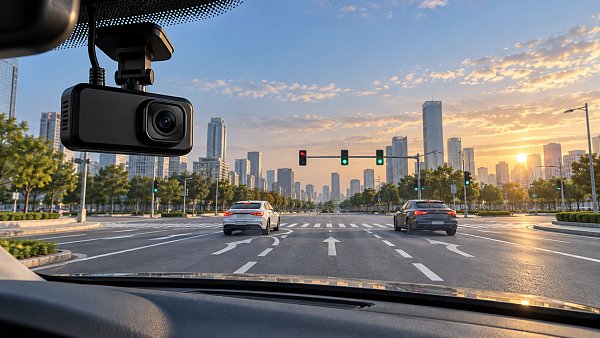
Road conditions matter as well. Rain, standing water, loose gravel, glare from a low sun, poor lane visibility, and roadworks can all influence what a reasonably careful driver could have seen or avoided. A camera is not a substitute for expert reconstruction where that is needed, but it can preserve conditions that may have changed by the time an investigator arrives.
The Most Useful Evidence Is Usually Recorded Before the Impact
Many people focus on the moment of collision. In practice, the most informative footage often begins 10, 20, or 30 seconds earlier. That period establishes context: the road type, traffic density, lane position, braking pattern, and developing hazard. It can show whether a driver had enough time to react, or whether another road user created a sudden conflict.
This is why loop recording and event protection are more important than they sound. Most dash cams overwrite older clips to conserve storage space. When the camera detects a significant impact through its G-sensor, it may lock the relevant file to reduce the chance that it will be overwritten. However, a sensor is not perfect. A light impact may not trigger it, while a pothole or hard braking event may create a false lock. After any collision, it is wise to check the recording promptly and manually preserve the relevant clip.
A strong evidence file normally contains more than one short video fragment. Where available, retain footage from before and after the incident, photographs of the vehicles and scene, contact details for witnesses, the police reference number if one exists, and notes made while the details are fresh. The dash cam footage should support this wider record rather than be treated as the only item that matters.
Camera Features That Affect Whether Footage Is Actually Useful
Not every recording is equally persuasive. A camera can be functioning perfectly and still fail to capture a number plate, signal phase, or lane boundary clearly enough to answer the disputed question. When choosing a device, motorists should think less about headline specifications and more about what the footage must prove in real road conditions.
Mounting position is often overlooked. A camera placed too low may be blocked by the dashboard; one placed behind tinted glass or close to a windscreen pillar may lose a critical part of the view. The device should not obstruct the driver’s vision, and installation should comply with local vehicle and road-use requirements. It is also worth checking recordings occasionally. A shifted mount, incorrect date, failed memory card, or dirty lens may only become obvious when the footage is needed most.
How to Handle Footage After an Accident
The immediate priorities remain safety, medical care where necessary, and the reporting steps required in the location where the collision occurred. Once it is safe to do so, avoid repeatedly reviewing or editing the video on the roadside. Preserve the original file first. If the camera uses a removable card, follow the manufacturer’s safe shutdown procedure before removing it; abrupt removal can corrupt a file on some devices.
Create a copy for viewing or sharing, while keeping the original recording unchanged. Note the date, time, approximate location, and camera involved. If there are several cameras, preserve all relevant files, even if one seems unimportant at first. A rear-facing clip, for example, may later clarify traffic movements that the front view does not show.
Do not add captions, music, speed overlays, or cuts before submitting evidence to an insurer or authority. Edited clips can invite questions about what was removed. If a shorter excerpt is useful for communication, provide it only alongside the complete original sequence. Honest footage can still be inconvenient; if it shows an error by the camera owner, altering or withholding it can create a more serious problem than the original driving mistake.
Limits: A Dash Cam Does Not See Everything
Video evidence has limits that drivers should understand. A camera records from one position, through one lens, with a limited field of view. It may not capture a vehicle in a blind spot, an indicator obscured by sunlight, a pedestrian stepping out from behind a van, or the exact distance between two moving vehicles. Perspective can make objects appear nearer or farther away than they were.
Speed data also needs careful treatment. GPS-based readings can be affected by signal quality and sampling intervals, while the apparent speed of another vehicle cannot reliably be calculated from casual viewing of video alone. Where speed, braking distance, vehicle condition, or road geometry is central to a serious dispute, insurers and legal representatives may need additional evidence or specialist analysis.
Privacy rules vary by jurisdiction. Recording for personal safety may be treated differently from publishing footage online, especially where identifiable faces, licence plates, conversations, or private property are visible. Before sharing video on social media or in a public group, motorists should consider whether doing so is lawful and whether it could complicate an active claim. Providing footage to an insurer, police officer, or legal adviser is a very different decision from posting it publicly.
Why Evidence Quality Matters Beyond the Individual Claim
Dash cams sit at the intersection of consumer electronics, vehicle engineering, data handling, and insurance processes. Their usefulness depends not only on a camera sensor but also on power stability, memory performance, firmware behaviour, lens design, installation, and the way evidence is managed afterward. That broader view is increasingly relevant as connected vehicles and advanced driver-assistance systems generate more data around everyday road events.
Global Industrial Matrix (GIM) approaches mobility technology through this connected systems perspective. Its work across semiconductor and electronics supply chains, automotive engineering, infrastructure, and technical benchmarking reflects a practical reality: dependable evidence systems are built from interdependent components, not from a single specification on a product box. For consumers, the equivalent lesson is straightforward. Choose equipment based on the conditions in which it must perform, maintain it, and understand the limits of the record it creates.
A well-installed dash cam will not prevent every collision or settle every disagreement. It can, however, preserve the facts that tend to disappear fastest: what the road looked like, how traffic moved, and what happened immediately before the impact. When those details are clear, discussions about fault can begin with evidence rather than competing recollections.

The Archive Newsletter
Critical industrial intelligence delivered every Tuesday. Peer-reviewed summaries of the week's most impactful logistics and market shifts.