Monday, May 22, 2024

Last Mile Delivery EVs: Cost per Route Compared
by
Published
Views:
For procurement teams evaluating fleet economics, Electric Vehicles for last mile delivery are no longer a future option but a measurable cost variable. Cost per route now depends on route density, stop frequency, payload, charging design, and maintenance exposure. A realistic comparison helps reduce total cost of ownership, improve sourcing resilience, and align fleet choices with actual delivery conditions.
Why route context changes the economics of Electric Vehicles for last mile delivery
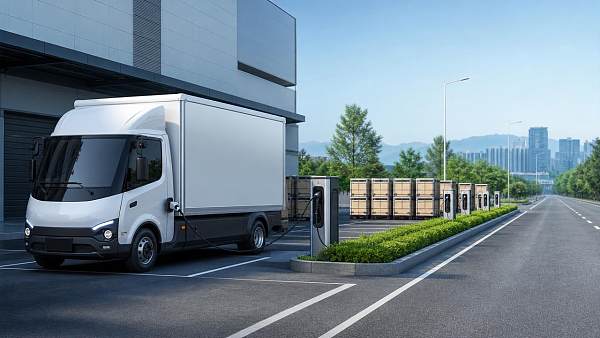
A van used in dense urban drops behaves differently from one covering suburban sprawl. The same battery size can deliver very different route costs under different operating patterns.
That is why Electric Vehicles for last mile delivery should be benchmarked per completed route, not only per vehicle purchase price or headline range.
GIM’s cross-sector benchmarking logic is useful here. Delivery EVs combine automotive engineering, charging infrastructure, electronics, thermal management, and digital fleet control into one measurable operating system.
A route-based lens also makes comparison easier across mixed fleets. It converts technical differences into unit economics that can support sourcing, budgeting, and network redesign.
The core route cost formula
A practical route model usually includes five variables:
- Energy cost per mile or kilometer
- Maintenance cost per route
- Driver time affected by charging or loading
- Payload utilization and cube efficiency
- Depreciation allocated across route volume
Electric Vehicles for last mile delivery often win on energy and maintenance. However, weak route fit can erase those gains through underutilized cargo space or charging-related downtime.
Scenario 1: Dense urban routes usually favor lower cost per route
City routes with many stops, low average speed, and daily return-to-base patterns are often the strongest case for Electric Vehicles for last mile delivery.
Regenerative braking improves efficiency in stop-and-go traffic. Overnight depot charging also reduces reliance on expensive public fast charging.
Maintenance can also fall because there are fewer oil changes, fewer brake replacements, and fewer transmission-related service events in many EV architectures.
Key judgment points for urban fleets
- Average route length below battery comfort range
- Predictable return-to-depot scheduling
- High stop density with low cruising speed
- Access to stable off-peak electricity tariffs
In this scenario, cost per route may decline even when upfront vehicle price remains higher. Utilization discipline is the deciding factor.
Scenario 2: Suburban and mixed routes require tighter battery-to-payload matching
Suburban delivery networks often involve longer drive segments, fewer stops, and wider daily mileage variation. Here, Electric Vehicles for last mile delivery need closer route engineering.
A larger battery can reduce range anxiety, but it also raises acquisition cost and vehicle mass. That can weaken payload efficiency and route profitability.
In mixed-use territories, weather and HVAC demand can materially change energy use. Cold-chain or temperature-sensitive loads make this more important.
What to validate before comparison
- Real loaded range, not brochure range
- Charging availability near route endpoints
- Seasonal energy variation across peak months
- Revenue loss from reduced cargo capacity
When these variables are ignored, the apparent savings from Electric Vehicles for last mile delivery may be overstated.
Scenario 3: Heavy parcel, grocery, and service routes depend on payload economics
Not all last mile work is light parcel delivery. Grocery distribution, beverage replenishment, field service support, and multi-temperature routes create different cost structures.
Electric Vehicles for last mile delivery can still perform well, but the route cost comparison must include weight, cubic volume, door cycles, and auxiliary power demand.
If the EV requires more trips to move the same daily volume, route cost rises quickly. That is especially true where labor cost dominates energy savings.
Core judgment points in heavier-use scenarios
- Net payload after battery pack weight
- Cargo cube utilization by route type
- Impact of refrigeration or liftgate loads
- Number of extra route turns required weekly
How different delivery scenarios change route cost outcomes
The table below shows where Electric Vehicles for last mile delivery usually gain or lose advantage when cost per route is the benchmark.
Practical ways to benchmark Electric Vehicles for last mile delivery
A useful benchmark should compare route completion cost, not just energy price per mile. It should also connect automotive data with charging infrastructure and operational constraints.
Recommended benchmark inputs
- Daily route distance by percentile, not average alone
- Stops per route and dwell time
- Gross vehicle weight and actual payload
- Electricity tariff by charging window
- Maintenance intervals and tire wear patterns
- Residual value assumptions over service life
This method reflects GIM’s system-level approach. Vehicle hardware, battery durability, charger uptime, and route analytics must be evaluated together.
Common misreads that distort cost per route analysis
Many comparisons fail because they use generic assumptions. Electric Vehicles for last mile delivery should be tested against actual route families and operational edge cases.
Frequent mistakes
- Using nominal battery range instead of loaded route range
- Ignoring charger queuing and site power limits
- Excluding seasonal HVAC and auxiliary loads
- Treating all routes as equally profitable
- Missing the cost of extra vehicles during peak periods
Another common issue is comparing an optimized diesel route against a poorly staged EV rollout. The fleet architecture must be redesigned, not merely substituted.
Scenario-based fit recommendations for stronger sourcing decisions
The best use of Electric Vehicles for last mile delivery comes from matching route classes to vehicle classes and charging design.
- Start with routes that return to base daily and stay within a reliable energy envelope.
- Separate light parcel routes from heavy or temperature-controlled work.
- Model cost per route under normal, peak, and winter conditions.
- Verify charger capacity against dispatch timing, not total vehicle count alone.
- Use technical benchmarks tied to standards, uptime, and long-term serviceability.
For broader industrial planning, this scenario-first method supports procurement transparency, infrastructure planning, and cross-functional risk control.
Next-step evaluation framework
A disciplined assessment of Electric Vehicles for last mile delivery begins with route segmentation. Group routes by distance, payload, stop pattern, and return behavior.
Then calculate cost per route for each segment using real energy data, maintenance assumptions, charger utilization, and asset depreciation. Compare these against current internal benchmarks.
Where data quality is uncertain, pilot the routes with the highest predictability first. That produces cleaner evidence for scaling decisions and reduces transition risk.
Electric Vehicles for last mile delivery are most valuable when evaluated as part of a connected industrial system. Route economics, charging readiness, and hardware benchmarking should move together.
The Archive Newsletter
Critical industrial intelligence delivered every Tuesday. Peer-reviewed summaries of the week's most impactful logistics and market shifts.