Monday, May 22, 2024

Public Transport EVs: Charging Downtime Risks
by
Published
Views:
As cities accelerate electrification, Electric Vehicles for public transportation promise cleaner streets, lower noise, and stronger climate alignment.
Yet charging downtime remains a critical operational risk.
When buses, shuttles, and municipal fleets wait too long for power, schedules slip, costs rise, and passenger trust weakens.
Across the broader industrial landscape, this issue now connects mobility engineering, grid planning, software control, depot design, and lifecycle benchmarking.
For resilient deployment, Electric Vehicles for public transportation must be evaluated beyond emissions headlines.
The real question is whether charging systems can support continuous service under peak demand, route variability, and infrastructure constraints.
Charging downtime is becoming the hidden bottleneck in fleet electrification
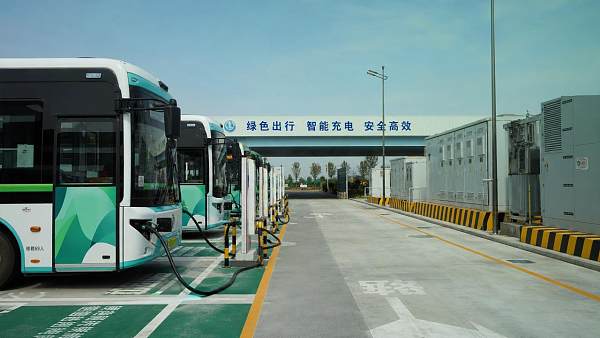
The first wave of electric transit focused on vehicle range, battery size, and tailpipe elimination.
Now the market is shifting toward uptime, charger availability, and power orchestration.
Electric Vehicles for public transportation often operate on fixed timetables with little room for delay.
That makes charging downtime more disruptive than in private passenger EV use.
A missed charging window can ripple across route frequency, depot turnover, driver allocation, and maintenance scheduling.
In integrated city systems, one weak node can affect the whole network.
This trend is especially visible where fleets scale faster than local grid upgrades.
Fast deployment creates a mismatch between vehicle ambition and charging reality.
Several trend signals show why downtime risk is rising
Three market signals stand out across transit modernization programs.
- Fleet sizes are increasing faster than charger redundancy planning.
- Grid congestion is intensifying near dense urban depots.
- Charging software and vehicle telematics remain unevenly integrated.
Together, these signals raise the probability of idle vehicles, queueing events, and underused assets.
Electric Vehicles for public transportation are therefore no longer judged only by route feasibility.
They are increasingly judged by charging resilience under real operating stress.
Why the risk profile is changing
The root causes go beyond charger count alone
A common planning mistake is to treat downtime as a simple hardware shortage.
In practice, charging downtime emerges from interacting technical and operational variables.
Electric Vehicles for public transportation depend on an ecosystem, not a standalone charging post.
- Uneven arrival times create simultaneous charging demand spikes.
- Seasonal temperature swings reduce usable battery performance.
- Transformer limitations cap real charging throughput.
- Connector faults and maintenance lapses reduce charger availability.
- Data silos obscure state of charge, route energy use, and charge priority.
This is why benchmarking matters across automotive systems, power electronics, digital controls, and industrial infrastructure.
The issue sits at the intersection of several sectors, not one.
Operational impacts spread across the full transit value chain
Charging downtime affects more than vehicle readiness.
It changes service economics, maintenance rhythms, and infrastructure utilization.
For Electric Vehicles for public transportation, the consequences usually appear in four layers.
Service layer
Delayed departures and reduced route frequency directly weaken service reliability.
Backup diesel deployment can erase part of the intended environmental benefit.
Asset layer
Vehicles may spend too many hours parked at chargers instead of moving passengers.
That reduces effective fleet productivity and increases capital intensity per route.
Energy layer
Unmanaged charging can trigger expensive peak demand charges.
Grid stress can also limit expansion plans for future Electric Vehicles for public transportation.
Maintenance layer
Frequent fast charging may accelerate battery degradation if thermal management is weak.
Downtime then shifts from charging queues to battery replacement cycles.
What deserves closer attention in the next planning cycle
The most resilient programs focus on system coordination rather than isolated equipment purchases.
Several factors deserve continuous tracking.
- Charger-to-vehicle ratio under real peak operations, not average assumptions.
- Grid upgrade timelines versus fleet rollout timelines.
- Interoperability between charger software, vehicle BMS, and depot control systems.
- Battery health trends by route profile, weather pattern, and charge strategy.
- Redundancy planning for charger outages, utility events, and emergency dispatch needs.
Electric Vehicles for public transportation perform best when these variables are treated as one optimization problem.
This approach aligns with cross-sector intelligence models used in advanced industrial benchmarking.
Practical responses are shifting from capacity expansion to smart orchestration
Adding more chargers can help, but it is rarely sufficient on its own.
The stronger response combines hardware, software, and scenario planning.
The next competitive advantage will come from verified system-level visibility
As electrified transit matures, decision quality will depend on trusted data across engineering layers.
Electric Vehicles for public transportation cannot be optimized using vehicle specifications alone.
The more useful view combines charging efficiency, uptime behavior, infrastructure bottlenecks, and lifecycle durability.
That is where cross-disciplinary benchmarking becomes valuable.
A platform such as Global Industrial Matrix supports this perspective by linking mobility hardware, electronics performance, infrastructure readiness, and standards-based comparison.
When transit electrification is treated as a system of systems, downtime risks become easier to predict and reduce.
A grounded next step is to test resilience before scale
Before expanding fleets, evaluate charging operations under worst-case conditions.
Simulate peak route returns, cold weather performance, charger failure, and power constraints.
Review whether Electric Vehicles for public transportation can still meet timetable obligations under those scenarios.
Then align infrastructure investment with verified operating data, not ideal assumptions.
This step reduces stranded assets, improves service confidence, and creates a stronger foundation for long-term electrified mobility.
In the current market, resilience is no longer optional.
It is the metric that determines whether Electric Vehicles for public transportation deliver lasting value.
The Archive Newsletter
Critical industrial intelligence delivered every Tuesday. Peer-reviewed summaries of the week's most impactful logistics and market shifts.