Monday, May 22, 2024

Where Vehicle Technology Is Adding Cost Without Clear Value
by
Published
Views:
As vehicle technology grows more complex, not every added feature delivers measurable value. For procurement insights, technical evaluators, and project leaders, the real question is how innovation affects manufacturing efficiency, manufacturing standards, and long-term operating risk. Using verifiable data and cross-sector benchmarks—from manufacturing tools to industrial filtration, CO2 removal, sustainable water solutions, and digital foundations—this analysis examines where cost is rising faster than practical performance.
For most buyers, engineers, and operators, the answer is not that vehicle technology has become “too advanced.” It is that some technologies now add cost faster than they improve reliability, safety, uptime, or lifecycle economics. The real issue is not innovation itself, but whether a feature creates measurable operational value, reduces risk, supports compliance, or simply increases system complexity. That distinction matters in procurement, technical benchmarking, and platform planning.
What Buyers and Technical Evaluators Actually Need to Know
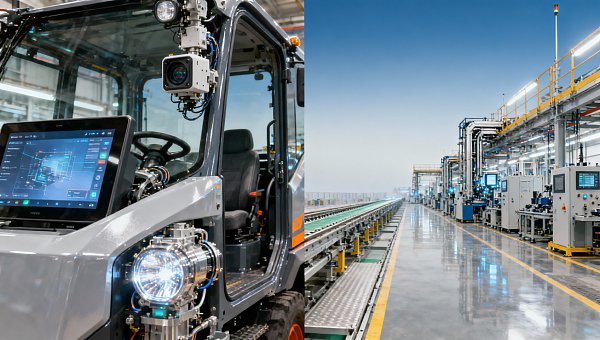
When people search for where vehicle technology is adding cost without clear value, they are usually trying to answer a practical question: which features are worth paying for, and which ones mainly raise purchase price, repair burden, software dependency, and supply chain exposure?
For the target audience—procurement teams, technical assessment personnel, quality managers, project leads, distributors, and operational users—the main concerns are typically:
- Total cost of ownership, not just initial vehicle price
- Serviceability and downtime risk when advanced systems fail
- Manufacturing consistency and quality variation across suppliers
- Standards compliance and integration with existing systems
- Replacement part availability and software support over time
- Whether a feature solves a real operating problem or mainly serves marketing differentiation
In other words, the most useful evaluation framework is not “new versus old.” It is value created per layer of added complexity. If a technology improves measurable safety performance, energy efficiency, emissions compliance, fleet uptime, or operator productivity, the added cost may be justified. If it mainly adds interface novelty, difficult-to-repair electronics, or low-use automation features, the value case becomes much weaker.
Which Vehicle Technologies Often Add Cost Faster Than They Add Practical Value
Not all modern features are poor investments. Many are essential. But several categories frequently create debate because their cost curve rises faster than their everyday utility.
1. Overextended infotainment and display systems
Large digital screens, multi-layer infotainment ecosystems, embedded subscription services, and touch-only controls often increase bill of materials, software validation burden, and warranty complexity. Yet in many professional, industrial, or fleet-use cases, they do not proportionally improve safety or productivity.
Common issues include:
- Higher replacement cost after minor damage
- More software bugs and update dependencies
- Poor usability for operators wearing gloves or working in motion-sensitive environments
- Increased distraction compared with physical controls
For many users, a simpler human-machine interface with durable physical controls and targeted digital functions delivers better real-world value than a premium screen package.
2. Low-utility driver assistance packaged as premium differentiation
Advanced driver assistance systems can provide substantial safety benefits when properly engineered, calibrated, and matched to the operating environment. However, not every packaged feature justifies its cost. Some systems perform well in ideal conditions but offer inconsistent value in poor weather, mixed infrastructure, off-road work zones, or congested urban operations.
Examples where skepticism is often justified include:
- Lane-centering systems in environments with inconsistent road marking quality
- Automated parking functions with low use frequency in fleet contexts
- Sensor-heavy convenience features that require expensive recalibration after minor repairs
If a feature increases sensor count, calibration time, insurance cost, and repair complexity, buyers should ask whether the measurable reduction in incidents or labor actually offsets those added burdens.
3. Excessive software centralization without lifecycle support clarity
Software-defined vehicles can improve diagnostics, feature deployment, and system optimization. But software architecture also creates hidden risk when update policies, cybersecurity maintenance, interoperability, and long-term support are not clearly defined.
Cost can rise through:
- Licensing or subscription dependence for core functions
- Locked diagnostic access
- Obsolescence if vendors reduce platform support
- Downtime caused by software faults rather than mechanical wear
For procurement and project leaders, this is no longer just an IT issue. It is a manufacturing continuity and asset management issue. Vehicles increasingly depend on digital foundations in the same way industrial systems depend on stable controls, filtration reliability, and infrastructure-grade maintainability.
4. Complex lighting, body electronics, and cosmetic mechatronics
Adaptive lighting arrays, motorized exterior components, flush electronic handles, ambient personalization modules, and other styling-led technologies can increase unit cost while adding little to mission performance. They may also raise environmental exposure risk, especially in commercial, agricultural, heavy-duty, or mixed-condition applications.
The concern is straightforward: if the feature is highly exposed to vibration, moisture, dust, impact, or thermal cycling, then engineering sophistication may not translate into operational resilience.
5. Performance upgrades beyond actual duty-cycle needs
In both passenger and industrial vehicle categories, buyers sometimes pay for battery size, power output, acceleration capability, or drive mode complexity that exceeds actual use requirements. This is especially relevant when added performance increases component stress, weight, thermal management demand, or charging and infrastructure cost.
Technical benchmarking often shows that right-sized systems outperform oversized ones in lifecycle value. More capability is not always more efficiency.
Why These Features Become Expensive Across the Full Value Chain
The biggest mistake in vehicle cost analysis is evaluating technology only at the point of purchase. Added cost appears across the full system:
- Design and validation: more components, more software, more testing scenarios
- Manufacturing: tighter tolerances, higher assembly complexity, increased defect opportunity
- Supply chain: more specialized chips, sensors, connectors, and modules
- Quality control: more calibration, diagnostics, and verification steps
- After-sales service: harder troubleshooting, expensive parts, technician retraining
- End user operations: downtime, update management, uncertain durability in harsh conditions
This is where cross-sector industrial benchmarking matters. The same pattern appears in advanced manufacturing equipment, water treatment modules, filtration systems, and environmental infrastructure: complexity can create value, but only when it improves measurable performance, compliance, resilience, or maintainability. Otherwise, it becomes a cost amplifier.
How to Tell Whether a Vehicle Technology Delivers Real Value
For technical evaluators and procurement teams, the best approach is to score each feature against a practical set of decision filters.
Ask these five questions
- Does it solve a frequent, costly, or safety-critical problem?
- Can the improvement be measured in uptime, energy use, incident reduction, labor savings, or compliance?
- What new failure modes does it introduce?
- Can it be maintained at reasonable cost across the intended service life?
- Does it remain valuable under real operating conditions, not just test scenarios?
If the answers are vague, the technology may be over-positioned relative to its operational benefit.
Use a lifecycle value matrix
A useful internal method is to classify features into four groups:
- High value / low complexity: usually strong investment candidates
- High value / high complexity: justified when duty cycle and support capability are strong
- Low value / low complexity: acceptable but nonessential
- Low value / high complexity: strongest candidates for cost reduction or specification removal
This framework is especially useful for OEM sourcing, fleet procurement, platform rationalization, and distributor portfolio decisions.
Where Higher Cost Is Often Justified
To make a balanced judgment, it is important to note that some vehicle technologies clearly do create strong value when properly specified.
Higher cost is often justified when technology improves:
- Core safety performance
- Energy efficiency or emissions compliance
- Battery management and thermal stability
- Predictive maintenance and diagnostics
- Operator ergonomics in high-use environments
- Fleet utilization and downtime reduction
In these cases, added technology supports a direct economic or regulatory outcome. The lesson is not to reject innovation, but to separate functional innovation from feature inflation.
What This Means for Procurement, Engineering, and Commercial Strategy
For industrial decision-makers, the most effective strategy is disciplined specification. Instead of assuming that the highest-tech configuration is the most future-ready, organizations should define the minimum technology set that meets performance, compliance, reliability, and service goals.
That means:
- Benchmarking feature cost against real use cases
- Reviewing repair path complexity before purchase approval
- Checking standards alignment and supplier support maturity
- Prioritizing modular, maintainable architectures over locked ecosystems
- Reducing nonessential feature layers in harsh-duty or cost-sensitive deployments
For distributors and commercial evaluators, this also improves market positioning. Products with credible durability, lower maintenance burden, and transparent lifecycle economics are often easier to sell than products overloaded with difficult-to-explain premium technology.
Conclusion
Vehicle technology adds cost without clear value when it increases complexity more than it improves safety, efficiency, serviceability, or lifecycle performance. The most common problem areas include overbuilt infotainment, low-use automation, unclear software support models, cosmetic mechatronics, and performance capability beyond real operating needs.
For buyers, engineers, project leaders, and quality stakeholders, the right question is simple: what measurable problem does this technology solve, and what new risks does it introduce? When that question is answered with verified data, technical benchmarking, and lifecycle thinking, it becomes much easier to distinguish meaningful innovation from expensive feature accumulation.
In a market shaped by tighter margins, stricter standards, and more fragile supply chains, the winning approach is not maximum technology. It is fit-for-purpose technology with defensible value.
- electronics
- advanced systems
- sensors
- driver assistance
- vehicle technology
- filtration systems
- industrial filtration
- sustainable water solutions
- CO2 removal
- manufacturing tools
- Technical benchmarking
- Digital foundations
- Verifiable data
- Procurement insights
- Manufacturing standards
- Manufacturing efficiency
- Environmental infrastructure
The Archive Newsletter
Critical industrial intelligence delivered every Tuesday. Peer-reviewed summaries of the week's most impactful logistics and market shifts.