Monday, May 22, 2024

Denim Manufacturing Cost Drivers in 2026
by
Published
Views:
Cost planning for denim manufacturing in 2026 is no longer a narrow exercise in comparing fabric quotes. Price pressure now reflects raw material volatility, energy exposure, wastewater obligations, labor productivity, and the resilience of cross-border supply chains. For companies shaping sourcing strategy, the more useful question is not simply where denim is cheapest, but which production model can hold cost, quality, and compliance together under changing market conditions.
Why denim costs are being recalculated
Denim manufacturing sits at the intersection of agriculture, chemicals, utilities, machinery, logistics, and environmental control. That makes it especially sensitive to shifts beyond the textile sector itself.
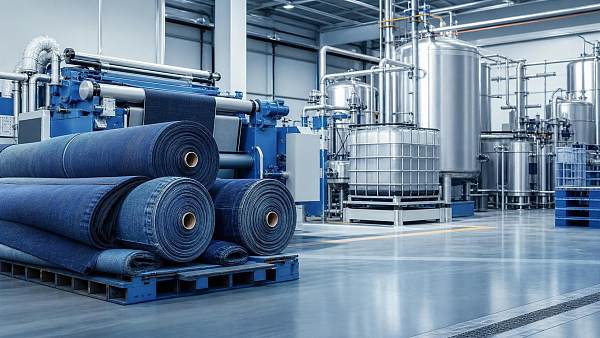
A mill can still buy cotton competitively and lose margin elsewhere. Dyeing energy, water recycling costs, compliance delays, and freight disruption can quickly outweigh a favorable yarn price.
This broader view matters even more in 2026 because industrial systems are becoming more connected. Textile operations are now judged with the same discipline used in automotive, electronics, and infrastructure supply chains.
That is where a platform such as Global Industrial Matrix brings value. Its cross-sector benchmarking mindset helps frame denim manufacturing as a technical system, not just a commodity purchase.
The cost structure behind denim manufacturing
At a high level, denim manufacturing cost can be grouped into material, conversion, compliance, and risk-related layers. Each layer behaves differently under market stress.
Raw materials remain the first driver
Cotton remains the anchor input, but it is not the only one. Yarn quality, cotton origin, blend ratios, elastane content, dyes, sizing agents, and finishing chemicals all influence final cost.
A lower-priced fiber basket may reduce upfront spend, yet it can raise loom stoppage, increase shade variation, or create rework in finishing. In practice, material cost and production stability are tightly linked.
Energy has moved from overhead to strategic variable
Spinning, weaving, dyeing, drying, and finishing all consume significant electricity, steam, or gas. In many regions, utility volatility now shifts total denim manufacturing economics more than labor alone.
Facilities with outdated boilers, inefficient stenters, or unstable power supply often carry hidden cost. The issue is not only price per kilowatt-hour, but energy intensity per finished meter.
Labor cost is really a productivity question
Unit labor cost depends on training, automation, maintenance discipline, and workflow design. A higher-wage plant can outperform a lower-wage one if throughput, defect control, and changeover times are stronger.
This is why comparing country wage levels alone often leads to weak sourcing decisions in denim manufacturing.
Water, chemistry, and compliance now shape competitiveness
Denim carries a distinctive processing footprint because indigo dyeing, washing, and finishing depend heavily on water and chemical management. In 2026, these factors are no longer peripheral.
Wastewater treatment capacity, sludge handling, restricted substance controls, and local discharge rules can materially change landed cost. They can also affect business continuity.
Where industrial ESG rules are tightening, non-compliant mills may face production caps, delayed permits, or forced capital upgrades. Those risks should be treated as cost drivers, not separate ESG topics.
What makes one denim source more resilient than another
The lowest quoted mill is not always the lowest-risk choice. In denim manufacturing, resilience often comes from balanced capability across process control, utilities, compliance, and network depth.
A strong source usually shows stable yarn access, consistent indigo performance, reliable wastewater operations, disciplined machine maintenance, and documented traceability through the supply chain.
This mirrors the logic used in other advanced manufacturing sectors. Whether benchmarking an EV component or a filtration module, the same principle applies: robust systems produce more predictable cost outcomes.
Regional comparisons need more context
Country selection for denim manufacturing is often framed around labor and freight. That remains relevant, but it misses key variables such as water stress, fuel dependence, grid reliability, policy enforcement, and upgrade capacity.
A sourcing region with slightly higher nominal cost may still perform better if it delivers shorter recovery times, cleaner compliance records, and lower variance in production output.
How to evaluate denim manufacturing cost beyond the quote
A practical assessment starts by separating visible price from structural cost. That means asking how a supplier produces denim, not just what it charges per meter or per garment program.
- Review fiber and yarn assumptions, including blend ratios, source concentration, and quality variation tolerance.
- Measure energy intensity at process level, especially indigo dyeing, drying, and finishing.
- Check water treatment capability against actual production load, not only design capacity.
- Compare labor productivity through output, downtime, and defect escape rates.
- Map logistics risk, including port exposure, inland transport limits, and customs complexity.
- Validate whether compliance claims align with operating reality and upgrade history.
This approach is especially useful when internal teams need a common framework across categories. GIM’s cross-sector perspective supports that kind of structured comparison by translating technical performance into strategic sourcing insight.
Where the next cost shifts are likely to appear
Looking ahead, several pressure points are likely to shape denim manufacturing through 2026 and beyond. Some are cyclical, while others reflect deeper structural change.
- Tighter water regulation in major production zones may raise treatment and recycling investment.
- Energy transition policies may reward efficient plants and penalize carbon-intensive operations.
- Traceability expectations may increase administrative cost, but also reduce disruption risk.
- Automation and process digitization may widen the gap between average mills and high-discipline operators.
- Climate-linked cotton variability may increase the value of diversified fiber strategies.
In other words, denim manufacturing cost is becoming more technical, more data-dependent, and more sensitive to operational transparency.
A better basis for decisions in 2026
The most useful way to read denim manufacturing cost in 2026 is as a system of interacting variables. Cotton price still matters, but it is only one layer of the picture.
Better decisions usually come from comparing process efficiency, environmental controls, supply continuity, and compliance resilience alongside quoted price. That creates a more realistic view of total cost exposure.
The next step is to build a decision framework that reflects those variables clearly. A structured benchmark, a supplier scorecard, or a scenario model can reveal where denim manufacturing cost is stable, and where it is only temporarily low.
The Archive Newsletter
Critical industrial intelligence delivered every Tuesday. Peer-reviewed summaries of the week's most impactful logistics and market shifts.