Monday, May 22, 2024

Fiberglass Acoustic Insulation Performance Guide
by
Published
Views:
Fiberglass Acoustic Insulation Performance Guide
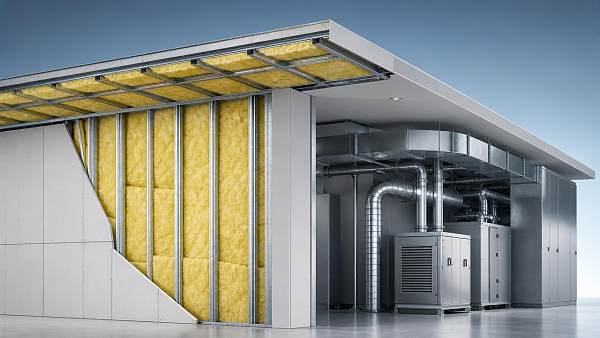
Selecting the right fiberglass acoustic insulation is more than a materials decision. It affects timelines, compliance, occupant comfort, and long-term asset performance.
Density, thickness, fire ratings, moisture behavior, and installation quality all influence the final acoustic result. Small specification gaps can create costly rework.
This guide explains how to evaluate fiberglass acoustic insulation across commercial, industrial, mobility, infrastructure, and controlled technical environments.
Why Fiberglass Acoustic Insulation Needs Checklist-Based Evaluation
Acoustic performance is rarely determined by one material property. It depends on the complete assembly, boundary conditions, penetrations, and field workmanship.
Fiberglass acoustic insulation is widely used because it combines sound absorption, fire resistance, thermal performance, and flexible installation options.
However, incorrect density, compression, uncovered gaps, or incompatible facings can reduce expected sound control in finished spaces.
A checklist approach converts acoustic goals into verifiable decisions. It supports repeatable selection, clearer documentation, and better coordination across disciplines.
For Global Industrial Matrix, this aligns with cross-sector benchmarking. Materials should be evaluated through measurable performance, standards, and lifecycle reliability.
Core Checklist for Fiberglass Acoustic Insulation Selection
- Define the noise source before selection, including airborne sound, equipment vibration, speech privacy, traffic noise, or mechanical room transmission paths.
- Match fiberglass acoustic insulation density to the assembly, because higher density may improve absorption but can reduce cavity efficiency in some systems.
- Verify thickness against cavity depth, avoiding compression that changes airflow resistance and weakens the intended acoustic absorption profile.
- Check NRC and STC data separately, since absorption performance and transmission loss describe different acoustic behaviors.
- Confirm fire ratings, flame spread, and smoke development values against local codes and project-specific life safety requirements.
- Review moisture exposure risks, especially near exterior walls, humid process zones, tunnels, parking structures, and HVAC plenums.
- Specify compatible facings or encapsulation when fibers, dust control, cleanability, or exposed installation conditions are critical.
- Coordinate penetrations, outlets, ducts, and pipe openings, because untreated gaps can bypass otherwise effective fiberglass acoustic insulation.
- Require tested assembly data instead of relying only on product datasheets, especially for partitions, ceilings, enclosures, and equipment rooms.
- Plan inspection points before closing walls or ceilings, ensuring insulation placement, fit, and continuity are verified on site.
Performance Criteria That Matter Most
Density and Airflow Resistance
Density affects how fiberglass acoustic insulation interacts with sound energy. The goal is not always maximum density.
Effective acoustic absorption depends on controlled airflow through the material. Overly dense products may reflect part of the sound field.
Compare density with product test data. Use the density range proven for the wall, ceiling, panel, or enclosure being specified.
Thickness and Cavity Fill
Thicker fiberglass acoustic insulation often improves low and mid-frequency absorption, especially in deeper cavities.
Yet full performance requires proper placement. Gaps, sagging batts, and compressed boards can distort the expected acoustic curve.
For partitions, choose insulation thickness that fits the stud depth without forcing the material against finishes or services.
NRC, STC, and Field Performance
Noise Reduction Coefficient, or NRC, indicates how much sound a material absorbs inside a space.
Sound Transmission Class, or STC, measures how well an assembly reduces airborne sound passing through it.
Fiberglass acoustic insulation supports both goals, but ratings must be interpreted at the assembly level.
Application Notes Across Different Environments
Commercial Buildings and Interior Partitions
In offices, schools, hotels, and healthcare spaces, fiberglass acoustic insulation is often installed inside gypsum wall assemblies.
The main objective is speech privacy, lower reverberation, and reduced disturbance from adjacent rooms or corridors.
Coordinate insulation with resilient channels, sealed perimeters, door ratings, and ceiling plenum paths. Weak links dominate final performance.
Industrial Equipment Rooms
Mechanical rooms, compressor zones, pump stations, and generator enclosures require stronger attention to low-frequency noise.
Fiberglass acoustic insulation may be combined with perforated metal liners, barriers, vibration isolation, or removable acoustic panels.
Select materials that tolerate temperature variation, airflow, maintenance access, and possible oil or condensate exposure.
Transportation and Mobility Infrastructure
Stations, tunnels, parking structures, service depots, and mobility hubs expose insulation systems to vibration, dust, and humidity.
Fiberglass acoustic insulation should be evaluated with facing durability, attachment reliability, and cleanability in mind.
For rail or road-adjacent structures, prioritize tested assemblies that address both airborne noise and structure-borne transmission.
Data, Electronics, and Precision Facilities
Technical spaces require careful control of fibers, particles, and airflow paths around sensitive hardware.
Encapsulated fiberglass acoustic insulation or protected boards may be preferable where cleanliness and maintenance access are essential.
Confirm compatibility with fire suppression systems, cable trays, raised floors, and cooling strategies before installation.
Common Overlooked Risks
Ignoring flanking paths: Sound can bypass insulated partitions through ceilings, floors, ducts, conduits, curtain walls, and poorly sealed perimeter joints.
Compressing insulation: Fiberglass acoustic insulation needs its designed loft and structure. Compression changes acoustic behavior and may create uneven cavity coverage.
Using product data alone: A high NRC product does not guarantee a high STC wall. Always compare complete assembly testing.
Skipping moisture review: Wet or contaminated insulation can lose performance, create odor issues, and require replacement.
Overlooking installation sequencing: Late service changes can cut, remove, or displace fiberglass acoustic insulation before closure.
Missing documentation: Without labeled materials, inspection records, and test references, compliance verification becomes difficult after installation.
Execution Checklist for Better Field Results
- Set measurable acoustic targets before material selection, including room criteria, STC goals, reverberation control, or equipment noise limits.
- Request current test reports for fiberglass acoustic insulation products and the full assemblies where they will be used.
- Review drawings for service conflicts, especially ducts, pipe sleeves, access panels, outlets, and cable penetrations.
- Seal perimeter gaps and penetrations using approved acoustic sealants, gaskets, sleeves, or fire-rated systems as required.
- Inspect insulation before closure, confirming full cavity coverage, correct thickness, no compression, and secure placement.
- Protect installed insulation from moisture, dust, impact, and trade damage until the enclosure is complete.
- Record batch information, product labels, installation photos, and inspection notes for future maintenance or compliance audits.
Specification Guidance for Reliable Procurement
A strong specification for fiberglass acoustic insulation should define more than nominal thickness and product type.
Include density range, facing requirements, fire performance, moisture limitations, applicable standards, and installation tolerances.
Reference ASTM, ISO, or regional test methods where applicable. Keep performance requirements traceable to accepted laboratory procedures.
Where substitutions are allowed, require equivalent assembly data. Equivalent thickness alone is not enough for acoustic confidence.
For complex sites, create a material approval matrix. Compare acoustic performance, fire behavior, moisture resilience, installation method, and lifecycle maintainability.
Final Action Guide
Fiberglass acoustic insulation performs best when it is selected as part of a complete acoustic system.
Start with the noise problem, then verify density, thickness, assembly ratings, fire compliance, moisture exposure, and installation conditions.
Use checklists before procurement, during installation, and before enclosure closure. This reduces uncertainty and protects project performance.
The next step is to map each room, enclosure, or infrastructure zone to its acoustic target and operating exposure.
Then shortlist fiberglass acoustic insulation options using verified data, tested assemblies, and documented field controls.
With disciplined evaluation, fiberglass acoustic insulation can support quieter, safer, and more resilient built environments across modern industrial systems.
The Archive Newsletter
Critical industrial intelligence delivered every Tuesday. Peer-reviewed summaries of the week's most impactful logistics and market shifts.