Monday, May 22, 2024

How to Shortlist an Auto Lighting Supplier Without Costly Requalification
by
Published
Views:
Choosing the right auto lighting supplier is not just about price—it is about protecting validation timelines, compliance status, and sourcing continuity. For business evaluation teams, the real challenge is narrowing the field without triggering costly requalification. This guide outlines how to assess supplier capability, quality discipline, and technical fit with greater confidence, so procurement decisions support both operational efficiency and long-term manufacturing resilience.
Why a checklist-based review is the safest way to shortlist
When a business evaluation team replaces or adds an auto lighting supplier, the obvious risk is unit cost drift. The less obvious risk is that a poor shortlisting process can force repeat PPAP activity, additional DV/PV testing, tooling adjustments, label changes, logistics disruptions, or customer approval delays. In automotive and adjacent industrial sourcing, these hidden costs often exceed any negotiated savings.
A checklist approach reduces this exposure by forcing early review of the items that most often drive requalification: form-fit-function equivalence, regulatory conformity, process control stability, traceability, and change management discipline. Instead of screening suppliers on sales claims or sample quality alone, business evaluators can quickly separate truly low-risk candidates from suppliers that would create engineering and compliance burden later.
For organizations operating across global manufacturing networks, this matters even more. An auto lighting supplier may appear capable in one plant or product family, yet still fall short on regional homologation, ESD discipline for electronics, resin consistency for optical parts, or packaging robustness for export lanes. A structured shortlist prevents these mismatches from surfacing too late.
Start with the five gate checks before you request quotes
Before commercial comparison begins, use five gate checks to decide whether a supplier should remain in scope at all. This is the fastest way to reduce wasted RFQ cycles and avoid inviting vendors that will later fail technical review.
- Program fit: Confirm whether the supplier has direct experience with the lighting category you need, such as headlamps, signal lamps, interior modules, work lights, or LED driver assemblies. A capable general manufacturer is not automatically a fit for your exact application.
- Compliance fit: Verify familiarity with the target regulations and standards relevant to your destination markets, such as ECE, SAE, FMVSS, EMC expectations, RoHS, REACH, and customer-specific requirements.
- Quality system maturity: Screen for IATF 16949 alignment or equivalent automotive quality discipline, supported by APQP, PPAP, MSA, SPC, layered process audit practice, and controlled deviation handling.
- Change control discipline: Ask how the supplier manages component substitutions, tooling maintenance, firmware changes, sub-tier changes, and process relocation. Weak change control is one of the biggest triggers for costly requalification.
- Supply continuity: Check plant redundancy, critical component sourcing, inventory strategy, lead time resilience, and response plans for semiconductor or resin shortages.
If a candidate fails two or more of these gate checks, it is usually more efficient to remove that auto lighting supplier from the shortlist early, even if pricing looks attractive.
Core supplier shortlist checklist: what business evaluators should verify
Once a candidate passes the initial screen, the next step is a deeper checklist that links commercial evaluation to technical and operational risk. This is where many teams can save both validation time and downstream management effort.
1. Product equivalence and technical fit
- Confirm critical dimensions, mounting architecture, connector type, beam pattern requirements, ingress protection level, thermal envelope, and electrical characteristics.
- Review optical performance consistency, lumen maintenance, color temperature stability, and vibration resistance under expected duty cycles.
- Check whether the supplier uses validated LEDs, drivers, lenses, housings, seals, and heat sinks from approved or proven sub-tier sources.
- Ask for evidence that the proposed part can meet form-fit-function expectations without redesign at customer assembly points.
2. Process capability and manufacturing discipline
- Review process flow from SMT or driver assembly through molding, metallization, sealing, final test, and packaging.
- Look for defined control plans on moisture-sensitive components, solder profile control, lens cleanliness, torque settings, adhesive cure windows, and end-of-line testing.
- Ask for Cp/Cpk data on the characteristics most likely to affect optical output, watertightness, electrical reliability, and customer assembly.
- Verify calibration management and gage adequacy for photometric, electrical, dimensional, and leak-test equipment.
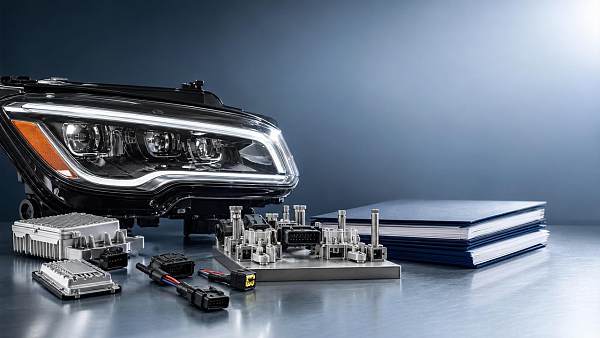
A strong auto lighting supplier should be able to explain not only what is tested, but why each control point protects the end-use function. That level of process understanding usually signals lower launch risk.
3. Validation history and documentation readiness
- Request sample validation reports, PPAP package examples, DFMEA or PFMEA excerpts, control plans, IMDS readiness, and traceability records.
- Check whether the supplier can map legacy validation evidence to your current specification set, which may reduce duplicate testing.
- Review past field performance, warranty trends, and corrective action closure quality.
- Confirm response speed for technical queries, deviation requests, and document revision control.
4. Regulatory and market access readiness
- Determine whether the supplier has prior homologation support experience for your target regions.
- Check labeling, marking, lot coding, and legal traceability practices.
- Review environmental compliance management for restricted substances and material declarations.
- Confirm cybersecurity or software governance basics if the lighting assembly includes smart control or networked electronics.
5. Commercial stability and supply resilience
- Assess financial stability, customer concentration, and exposure to volatile raw materials or semiconductor bottlenecks.
- Review production capacity, peak season flexibility, safety stock logic, and multi-plant support options.
- Ask how the supplier handles obsolescence management for LEDs, controllers, connectors, and optical polymers.
- Evaluate export experience, Incoterms familiarity, packaging validation, and lane-specific logistics risk.
A practical scoring matrix for shortlisting an auto lighting supplier
Business evaluation teams often move faster when the review criteria are weighted in advance. The table below offers a practical framework to compare suppliers without overemphasizing price.
This model helps keep the shortlist balanced. A low-cost auto lighting supplier that scores poorly on quality maturity or continuity planning should not rank above a slightly higher-cost supplier with stronger operational reliability.
Scenario-based checks: where your shortlist criteria should change
Not every sourcing case carries the same risk. The right checklist should reflect whether you are dual-sourcing, replacing an incumbent, localizing supply, or supporting a platform change.
If you are replacing an incumbent supplier
Prioritize interchangeability evidence, prior validation comparability, connector and mounting consistency, and deviation risk. The key question is whether the new auto lighting supplier can match approved performance without forcing customer-level engineering changes.
If you are adding a second source
Focus on sub-tier alignment, test method equivalence, common raw material risk, and plant-to-plant consistency. A second source is valuable only if it reduces concentration risk rather than replicating the same hidden vulnerability.
If you are localizing supply for regional production
Check regional regulatory know-how, localized packaging standards, tax and customs readiness, and local service responsiveness. Localization can improve lead times, but only if the supplier also supports documentation and after-launch issue resolution in the target region.
Commonly overlooked risks that lead to requalification later
Many shortlist failures are not caused by major capability gaps. They come from smaller issues that were never reviewed early enough. Business evaluation teams should flag the following items before nomination:
- Uncontrolled LED bin changes: even small shifts can affect light output, color, and customer acceptance.
- Different sealing materials or adhesives: these can alter environmental durability and field life.
- Sub-tier electronics substitutions: controller or driver changes can create EMC or reliability issues.
- Weak packaging validation: transit vibration and humidity can damage optics or connectors before assembly.
- Incomplete change notification rules: if notice periods are vague, requalification risk increases sharply.
- Overreliance on manual inspection: this may hide process instability that only appears at scale.
Execution plan: how to shortlist without slowing the sourcing cycle
A disciplined process does not need to be a slow process. The most effective teams compress review time by sequencing the right actions.
- Build a one-page requirement summary covering performance, compliance, validation status, launch timing, and non-negotiable interfaces.
- Use a supplier pre-screen questionnaire to eliminate unqualified candidates before RFQ release.
- Request only the highest-value evidence first: certifications, process map, sample test summary, change control procedure, and customer reference profile.
- Score suppliers using a weighted matrix and align procurement, quality, and engineering on pass-fail thresholds.
- Run focused audits on the top two or three suppliers rather than broad audits on every respondent.
- Document assumptions that protect qualification scope, including approved materials, tooling configuration, software version, and sub-tier boundaries.
What to ask in the final supplier conversation
Before naming a preferred auto lighting supplier, the final discussion should confirm the items most likely to affect launch confidence and lifecycle stability. Ask direct questions such as:
- Which exact components and materials are frozen for the quoted design?
- What events would trigger customer notification or new approval?
- Which validation tests can be bridged from existing evidence, and which must be repeated?
- What are the highest-risk sub-tier dependencies in the current bill of materials?
- How quickly can containment, root cause analysis, and certified replacement stock be deployed in the event of a field issue?
Final takeaway for business evaluation teams
To shortlist an auto lighting supplier without costly requalification, the main objective is not simply finding a capable manufacturer. It is identifying a supplier whose technical baseline, compliance discipline, process controls, and change management are close enough to your approved requirements that transition risk remains contained. That is why the best shortlist is built on gate checks, weighted scoring, and evidence-led review rather than price comparison alone.
If your team needs to move forward, prioritize discussion around required specifications, validation scope, regulatory markets, annual volume, launch timing, approved materials, packaging conditions, and change notification expectations. Those inputs will help determine whether a proposed auto lighting supplier can support your program with minimal disruption and stronger long-term sourcing resilience.
The Archive Newsletter
Critical industrial intelligence delivered every Tuesday. Peer-reviewed summaries of the week's most impactful logistics and market shifts.