Monday, May 22, 2024

Industrial PC Hardware: Key Specs for Harsh Environments
by
Published
Views:
Choosing the right PC hardware for industrial applications starts with a practical truth: in harsh environments, the lowest-risk system is not the one with the highest headline performance. It is the one whose thermal behavior, enclosure protection, power stability, mechanical design, and lifecycle support remain predictable under real operating stress.
For technical evaluators, that changes the buying logic. Instead of comparing CPU speed or memory capacity in isolation, the better approach is to judge whether the platform can sustain workloads in heat, dust, vibration, moisture, electrical noise, and continuous duty without creating hidden maintenance or replacement costs.
In most industrial projects, the key decision is not simply “Which industrial PC is fastest?” but “Which hardware profile will stay stable, serviceable, and available across the intended deployment life?” That is especially important when systems are installed in production lines, mobile machinery, utilities, transportation assets, or outdoor infrastructure.
The most useful specification review therefore focuses on sustained operation rather than lab-ideal peak numbers. Thermal architecture, ingress protection, shock and vibration tolerance, storage endurance, power input flexibility, I/O robustness, and long-term component availability often matter more than raw benchmark performance.
What technical evaluators should prioritize first
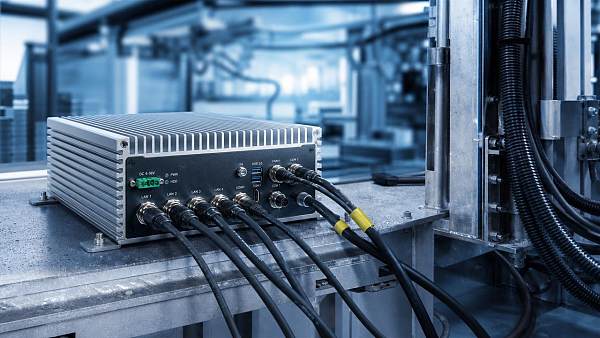
When reviewing industrial PC hardware, start by mapping the operating environment to failure modes. Excess heat can throttle processors and shorten component life. Fine dust can clog airflow or contaminate connectors. Vibration can loosen assemblies and damage storage. Voltage fluctuation can trigger resets, data corruption, or premature power supply failure.
This is why specification sheets must be read as a system, not as a list of isolated numbers. A fanless chassis may improve dust resistance, but only if the thermal path can dissipate load without reducing performance. A wide operating temperature rating is useful, but only if it applies to the full configuration, including storage and memory.
For technical assessment teams, the first pass should answer four questions. Can the hardware survive the site conditions? Can it maintain computing performance over time? Can it integrate cleanly with existing industrial interfaces? And can it be sourced, serviced, and supported for the expected lifecycle?
Those questions align directly with procurement risk. A system that appears economical upfront can become expensive if it needs oversized cooling, frequent cleaning, early SSD replacement, or redesign because the original components become unavailable within two years.
Why thermal design matters more than peak processor specs
Thermal design is often the most underestimated factor in industrial computing. In harsh settings, ambient temperatures may already be high before internal component heat is added. If the enclosure traps thermal energy or heat transfer is poorly engineered, CPU throttling, storage errors, and board-level reliability issues can appear long before complete failure.
Technical evaluators should verify the operating temperature range under realistic load, not only at idle or in lightly configured models. Ask whether the published rating applies to maximum CPU utilization, installed expansion cards, and full storage population. Many issues appear only when systems move from office-style validation to 24/7 industrial use.
Fanless systems are attractive because they reduce moving parts and limit dust intake. However, fanless does not automatically mean thermally robust. Effective fanless designs depend on heat spreaders, chassis material, internal layout, airflow assumptions around the enclosure, and proper processor selection matched to thermal dissipation capacity.
Pay attention to sustained TDP management rather than nominal processor class alone. A mid-range processor that runs continuously within thermal limits often delivers better real-world uptime than a higher-power CPU that repeatedly throttles. In industrial deployments, stable deterministic performance is usually more valuable than occasional performance peaks.
Install location also affects thermal success. Hardware placed inside cabinets, near drives, or under direct sunlight may face much harsher conditions than the room specification suggests. Good evaluation practice includes cabinet-level thermal review, not just the computer’s published operating range.
How enclosure protection and materials affect real-world reliability
Ingress protection is central when equipment faces dust, washdown, oil mist, humidity, or outdoor exposure. IP ratings indicate resistance to solids and liquids, but evaluators should interpret them in context. An IP65 front panel may suit operator interfaces, while the full system body may have lower protection and require sheltered mounting.
For many indoor industrial sites, the real issue is not dramatic water exposure but persistent contamination. Fine particulates, conductive dust, and airborne chemicals can degrade ports, seals, and coatings over time. In such environments, sealed connectors, gasket quality, and corrosion-resistant materials deserve as much attention as the published IP number.
Material choice also influences lifespan. Aluminum housings help with heat dissipation and corrosion resistance, while steel may provide mechanical strength in demanding installations. Protective coatings, connector plating, and sealing compounds should be reviewed if the system will face fertilizer residues, salt air, cleaning agents, or process vapors.
Outdoor or semi-outdoor deployments require a broader environmental view. UV exposure, condensation cycles, freeze-thaw stress, and solar heat gain can create performance problems that an indoor rating does not reveal. If the use case involves roadside assets, agricultural equipment, or utility infrastructure, ask for deployment-specific validation data.
Shock, vibration, and mounting stability are not niche concerns
Many industrial failures are mechanical before they are electronic. Vibration from motors, compressors, mobile platforms, stamping equipment, or transport vehicles can stress solder joints, connectors, storage devices, and cable retention points. Shock events during equipment movement or machine impact can create intermittent faults that are hard to diagnose.
Technical evaluators should check compliance claims for shock and vibration against recognized testing standards and understand the test conditions. Numbers alone are not enough. It matters whether the device was tested powered on or off, which axes were evaluated, how long the exposure lasted, and whether the configuration included installed drives and expansion modules.
Mounting method is equally important. DIN-rail, wall, VESA, panel, or rack mounting all change mechanical stress distribution. A robust system can still fail prematurely if installed on a resonant panel or with unsupported cable mass pulling on ports. The best hardware review includes mounting constraints and cable management requirements.
Storage technology is a major part of vibration resilience. Solid-state storage is generally preferred over spinning disks in harsh environments, but not all SSDs are equal. Endurance ratings, controller quality, temperature tolerance, and power-loss protection all influence whether storage remains reliable during repeated industrial stress cycles.
Power input quality can determine uptime more than computing power
Industrial sites rarely provide the clean, predictable power conditions assumed in office electronics. Voltage dips, surges, transient noise, grounding issues, and supply interruptions can all affect computer stability. As a result, power input design is one of the most important aspects of PC hardware for industrial applications.
Look for wide-range DC input where appropriate, especially in vehicles, machinery, renewable energy systems, and distributed control cabinets. Hardware designed to tolerate input variation can reduce nuisance shutdowns and improve compatibility with industrial power architectures. Reverse polarity protection, overvoltage protection, and surge resilience are also valuable safeguards.
Ignition control and delayed shutdown functions matter in mobile and fleet settings. In fixed facilities, support for uninterruptible power strategies, remote recovery, and power event logging may be more relevant. The right choice depends on whether the priority is data retention, autonomous restart, or simplified maintenance response.
Power quality also intersects with storage and operating system integrity. Sudden loss of power can corrupt filesystems or damage write-intensive applications if storage lacks adequate protection. This is why evaluators should consider the whole chain: power supply design, system board tolerance, storage behavior, and software recovery strategy.
Processing, memory, and storage should be matched to workload stability
Industrial buyers sometimes overspecify compute resources because faster parts seem safer. In reality, the best processor choice is the one that supports the application with sufficient margin while staying within thermal and power constraints. HMI visualization, PLC gateway tasks, machine vision, AI inference, and SCADA edge analytics each have different hardware profiles.
If the workload is deterministic control, protocol conversion, or data logging, reliability and low thermal output may be better than aggressive multicore performance. If the system handles machine vision or analytics at the edge, GPU support, memory bandwidth, and sustained processing under heat become more important than nominal core count alone.
Memory should be selected for environmental and application needs, not just capacity targets. Error-correcting memory can be valuable in mission-critical applications where data integrity matters. Storage sizing should also account for write endurance, log retention, image capture, or buffering during network outages.
For harsh environments, use workload-based validation whenever possible. Ask whether the vendor can demonstrate performance under the expected software stack, ambient temperature, and I/O load. That provides more decision value than generic benchmark charts, which rarely represent industrial reality.
Industrial I/O and connectivity often decide integration success
A capable processor does not guarantee a successful deployment if the system lacks the right interfaces. Technical evaluators usually care just as much about I/O reliability as computing performance. Serial ports, CAN bus, industrial Ethernet, digital I/O, isolated ports, USB retention, and expansion support can determine whether the platform fits the application without extra adapters.
Every added converter, dongle, or external expansion box increases points of failure. In harsh environments, simpler architectures are usually more reliable. Native support for required protocols and connector types can reduce commissioning time, lower maintenance complexity, and improve long-term serviceability.
Network resilience also deserves attention. Dual LAN, time-sensitive networking support, wireless fallback, and remote management functions may be important in distributed industrial systems. If the deployment spans multiple sectors such as mobility, infrastructure, or smart agriculture, cross-environment communication flexibility becomes a major advantage.
Port placement and physical retention matter too. Locking connectors, isolated interfaces, and thoughtfully spaced I/O can prevent accidental disconnects and ease installation in tight cabinets. These details rarely dominate marketing materials, but they often shape field reliability.
Lifecycle support and component availability are strategic specifications
For technical evaluation teams, long-term availability is not a procurement footnote. It is a design risk issue. Industrial systems are often expected to remain in service for five to ten years, sometimes longer. If a motherboard revision, processor family, or storage module is discontinued early, the resulting redesign effort can be expensive and disruptive.
Ask suppliers about product lifecycle policy, controlled revision management, BIOS support, operating system roadmap, and replacement part strategy. Availability of the original hardware image, compatible spare units, and notice periods for end-of-life changes are all important for maintenance planning and qualification continuity.
This is where specialized industrial vendors often outperform consumer-derived platforms. The value is not only rugged hardware, but also controlled supply, documentation quality, and predictable support. In high-volume or multi-site deployments, those factors can outweigh small differences in initial unit cost.
From a total cost perspective, stable lifecycle support reduces revalidation work, spare inventory complexity, and unexpected field variation. For organizations managing global manufacturing, mobility assets, environmental systems, or precision equipment, that consistency directly supports operational resilience.
A practical checklist for evaluating industrial PC hardware
When comparing systems, build an evaluation matrix around actual site conditions and application requirements. Include ambient temperature range, contamination level, vibration profile, mounting orientation, power characteristics, connectivity needs, compute load, storage endurance, and target service life. This helps filter out attractive but unsuitable configurations early.
Request evidence, not just brochure claims. Useful documents include thermal derating guidance, shock and vibration test reports, ingress rating scope, component lifecycle statements, block diagrams, and field deployment references in similar environments. The goal is to verify whether the platform has been engineered for industrial reality, not simply labeled as industrial.
Pilot testing is often worthwhile for critical deployments. Even a short validation cycle under representative load can reveal thermal hotspots, power instability, connector issues, or software-hardware mismatches. Technical evaluators gain better confidence when hardware is tested as part of the broader operating system rather than as a standalone device.
Finally, weigh maintainability alongside ruggedness. A sealed design may reduce contamination risk, but service access, remote diagnostics, firmware support, and replacement procedures still matter. The best PC hardware for industrial applications balances resilience, integration simplicity, and lifecycle control.
Conclusion: the best industrial hardware is the most predictable under stress
In harsh environments, industrial PC selection is fundamentally a risk management exercise. The strongest choice is usually not the platform with the most aggressive specifications, but the one that delivers stable performance, strong environmental tolerance, reliable power behavior, appropriate I/O, and long-term availability across the full deployment lifecycle.
For technical evaluators, the most effective method is to assess hardware through the lens of operating reality: heat, dust, moisture, vibration, electrical instability, maintenance demands, and replacement planning. When those factors are prioritized early, it becomes easier to identify systems that protect uptime and reduce lifecycle cost.
That is the practical benchmark that matters most. In industrial settings, dependable performance under sustained stress is the real specification that separates suitable hardware from expensive future problems.

The Archive Newsletter
Critical industrial intelligence delivered every Tuesday. Peer-reviewed summaries of the week's most impactful logistics and market shifts.