Monday, May 22, 2024
Inner Mongolia Jinmei to Sign Loan Extension Agreement
by
Published
Views:
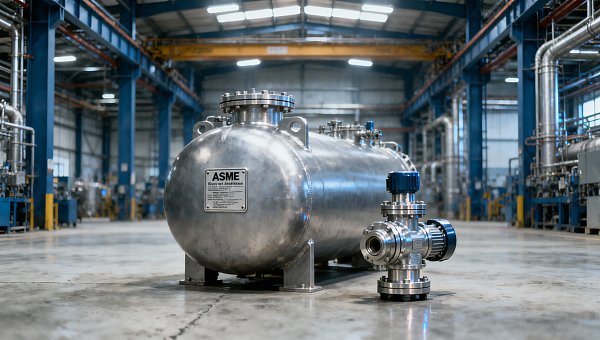
On May 14, 2026, Inner Mongolia Jinmei Chemical Technology announced its intent to sign a loan extension agreement with an affiliated party, signaling a short-term liquidity adjustment. This development may affect delivery timelines for coal-to-ethylene glycol (CTEG) equipment exports — particularly pressure vessels and smart valve actuators — to end markets including India, Vietnam, and South Africa. Equipment manufacturers, EPC contractors, and international buyers in the coal chemical engineering and industrial equipment sectors should monitor implications for production scheduling and overseas project execution.
Event Overview
On May 14, 2026, Inner Mongolia Jinmei Chemical Technology Co., Ltd. issued a public announcement stating its intention to enter into a loan extension agreement with a related party. The arrangement is described as a short-term liquidity measure. Jinmei is identified in the announcement as a core domestic manufacturer of key equipment for coal-based ethylene glycol production, with export business spanning India, Vietnam, and South Africa. The company notes that this financial adjustment may impact production sequencing for hardware components supporting EPC projects — specifically pressure vessels and intelligent valve actuators — potentially affecting delivery windows for overseas end customers.
Industries Affected
Export-Oriented Equipment Manufacturers
These firms rely on Jinmei’s timely supply of integrated subsystems or certified components. Any delay in Jinmei’s internal production scheduling — driven by liquidity-related capacity reallocation — may constrain their own assembly timelines and certification cycles for export-bound units.
EPC Contractors Serving Overseas Coal Chemical Projects
Jinmei supplies critical pressure equipment and control hardware embedded in full-scope EPC deliveries. A shift in Jinmei’s output rhythm could compress downstream integration windows, increase coordination overhead, and raise risk exposure for fixed-price or milestone-based contracts in India, Vietnam, and South Africa.
International End-Users in Coal-Based Chemical Production
End customers operating or commissioning coal-to-ethylene glycol plants depend on synchronized arrival of major equipment. Delivery slippage from a core supplier like Jinmei may trigger cascading delays in site installation, commissioning, and operational ramp-up — especially where local regulatory approvals are time-bound or linked to equipment conformity.
Supply Chain Service Providers (Logistics, Certification, Customs Support)
Third-party service providers engaged in cross-border equipment logistics, ASME/CE/PED compliance verification, or import clearance may face revised shipment schedules, shifting documentation deadlines, and increased ad hoc coordination demands if Jinmei adjusts batch releases or shipping milestones.
What Stakeholders Should Monitor and How to Respond
Track Official Updates on the Loan Agreement Terms
Monitor Jinmei’s subsequent disclosures — including whether the agreement is finalized, its duration, conditions attached, and any stated impact on capital expenditure or procurement plans. These details will clarify whether the liquidity measure is administrative or indicative of broader working capital pressure.
Assess Exposure to Jinmei-Supplied Components in Active Export Projects
Review current BOMs and delivery schedules for pressure vessels, smart valve actuators, and other Jinmei-sourced items across active orders. Identify which projects have narrow delivery buffers or contractual liquidated damages clauses — particularly those targeting Indian, Vietnamese, or South African sites.
Engage Proactively with Jinmei on Revised Production Timelines
Where under contract or in advanced procurement negotiation, request written updates on revised manufacturing start dates, inspection milestones, and FOB readiness windows. Document all communications to support potential schedule relief claims or contingency planning.
Validate Alternative Sourcing Options for Critical Subsystems
For non-certification-locked components (e.g., certain actuator models or auxiliary vessels), assess lead times and qualification pathways for alternative vendors — not as immediate replacements, but as validated fallbacks should Jinmei’s timeline uncertainty persist beyond Q3 2026.
Editorial Observation / Industry Perspective
Observably, this announcement functions primarily as a forward-looking signal — not yet a confirmed disruption. It reflects a liquidity management step rather than a declared production halt or order cancellation. Analysis shows the impact remains contingent: it hinges on whether the loan extension correlates with delayed raw material procurement, deferred capex, or revised internal priority-setting across Jinmei’s product lines. From an industry perspective, this is less about systemic risk and more about localized schedule sensitivity in a niche but strategically important segment — coal chemical hardware for emerging-market EPC deployment. Current attention should focus on Jinmei’s follow-up disclosures and whether similar announcements emerge from other CTEG equipment suppliers in the coming months.
In summary, the proposed loan extension at Inner Mongolia Jinmei does not indicate a broad market shift, but highlights increasing schedule fragility in the export supply chain for coal-based chemical plant equipment. It is best understood not as an operational failure, but as a marker of tightening working capital conditions among specialized manufacturers serving capital-intensive, long-cycle international projects. Stakeholders are advised to treat it as a trigger for targeted due diligence — not alarm, but calibrated vigilance.
Source: Official announcement by Inner Mongolia Jinmei Chemical Technology Co., Ltd., dated May 14, 2026.
Note: The loan extension agreement has not yet been executed; terms and implementation remain subject to further disclosure. Ongoing monitoring is recommended.
The Archive Newsletter
Critical industrial intelligence delivered every Tuesday. Peer-reviewed summaries of the week's most impactful logistics and market shifts.