Monday, May 22, 2024

Lubricants Manufacturer Selection: Cost, Quality, and Supply Risk
by
Published
Views:
Why is choosing a lubricants manufacturer now a strategic sourcing decision?
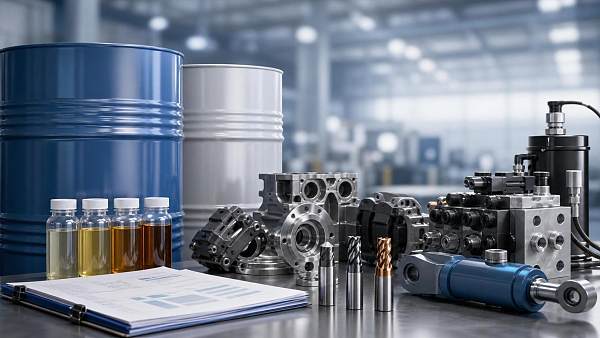
A lubricants manufacturer influences more than fluid cost per drum. It affects uptime, maintenance intervals, warranty exposure, and supply continuity across multiple production sites.
That shift matters in cross-sector manufacturing. Electronics lines, automotive assembly, smart agri-tech equipment, filtration systems, and precision tooling all depend on stable lubrication performance.
In practical terms, a low unit price can hide higher lifecycle cost. Oxidation instability, contamination, or inconsistent viscosity often appears later as wear, scrap, or unplanned shutdowns.
A capable lubricants manufacturer should therefore be assessed as a technical and operational partner, not only as a commodity supplier.
This is also where broader benchmarking matters. Platforms such as Global Industrial Matrix connect supplier evaluation with international standards, operating conditions, and cross-industry risk signals.
The result is a more complete sourcing view. Cost still matters, but it is weighed alongside formulation quality, compliance discipline, and resilience under real market pressure.
What should be checked first when comparing one lubricants manufacturer with another?
The fastest way to compare suppliers is to separate claims from evidence. Product brochures are useful, but decision quality improves when technical proof and delivery performance are reviewed together.
A reliable starting point usually includes five checks:
- Base oil and additive consistency across production batches.
- Documented compliance with ISO, OEM, or application-specific standards.
- Lead time stability across regions and packaging formats.
- Technical support for application matching, storage, and changeover.
- Clear traceability, lot control, and response process for quality incidents.
Many sourcing mistakes happen when only headline price and basic specification sheets are compared. Two products may share the same viscosity grade, yet behave differently under heat, load, water ingress, or extended drain intervals.
More careful buyers ask for application evidence. That can include used oil analysis data, field performance records, compatibility notes, or controlled trials on similar equipment.
Need-to-know questions also change by sector. A lubricants manufacturer serving EV drivetrains, CNC systems, hydraulic farming equipment, and water treatment assets must show different strengths in each context.
A practical comparison table for early screening
Before moving into plant trials, it helps to score each lubricants manufacturer against the issues that usually drive hidden cost and supply disruption.
Is the lowest-cost lubricants manufacturer ever the right choice?
Sometimes, yes. More often, only when the cost model is broader than purchase price.
The better question is whether a lower-cost lubricants manufacturer can maintain performance without shifting expense elsewhere. That includes bearing life, filter replacement, fluid change frequency, energy draw, and cleaning labor.
In real operations, one lubricant change can affect several budgets. A cheaper metalworking fluid may increase tool wear. A lower-grade hydraulic oil may shorten seal life. The invoice looks better, but the plant runs worse.
This is why total cost of ownership is more useful than unit cost alone. For a lubricants manufacturer, value should be measured through fluid life, failure avoidance, and supply predictability.
A balanced sourcing model often compares:
- Delivered cost by region and package size.
- Expected drain interval or replacement cycle.
- Maintenance labor linked to the lubricant.
- Downtime risk from inconsistent performance.
- Switching cost, including flush, testing, and retraining.
If two suppliers look similar on paper, the stronger lubricants manufacturer is usually the one that can defend performance with stable data over time, not with one successful sample batch.
How do quality and certification affect risk beyond the lab?
Quality risk is rarely limited to a failed test report. It tends to spread into production reliability, customer complaints, environmental handling, and even cross-border shipment acceptance.
A strong lubricants manufacturer should provide traceable production records, current SDS documentation, and application-specific technical data. For regulated sectors, this becomes essential rather than optional.
The same logic applies to certifications. A certificate alone is not enough. What matters is whether the supplier’s process discipline actually supports consistent output.
In multi-industry operations, risk also comes from mismatch. A product suitable for general machinery may be wrong for food-adjacent systems, electronics environments, or equipment with strict OEM approval requirements.
That is where cross-sector intelligence becomes useful. GIM-style benchmarking helps connect lubricant claims with operating conditions seen in automotive mobility, precision tooling, smart agriculture, and infrastructure assets.
Common warning signs include vague approval language, missing revision control on data sheets, slow root-cause response, and limited visibility into blending or raw material substitution.
Warning signals that deserve extra review
- Specifications are broad, but test methods are not disclosed.
- OEM references are mentioned without formal approval numbers.
- The lubricants manufacturer cannot explain contingency supply routes.
- Technical support is outsourced and not application-specific.
- COA formats vary by shipment without explanation.
What usually creates supply risk with a lubricants manufacturer?
Supply risk is often less visible than quality risk, but it can be just as expensive. A lubricants manufacturer may have acceptable product performance while still being vulnerable to feedstock swings, packaging shortages, or regional logistics bottlenecks.
The more global the operation, the more important this becomes. Facilities in different countries may need the same formulation, yet receive different lead times, substitute raw materials, or uneven technical support.
More resilient suppliers usually show three traits. They have diversified raw material access, documented backup production options, and transparent communication when disruption starts building.
A useful review goes beyond asking about lead time. It should also cover:
- Single-source additives or base oil dependency.
- Regional warehouse coverage and safety stock levels.
- Drum, pail, tote, and bulk delivery flexibility.
- Change notification policy for formula or source changes.
- Recovery time assumptions after plant or transport disruption.
In actual sourcing reviews, a lubricants manufacturer with slightly higher price but stronger continuity planning may carry lower long-term risk than a cheaper, less transparent option.
How can a final shortlist be built without slowing the buying cycle?
The most efficient approach is staged qualification. Start broad, filter quickly, then go deeper only where the commercial and technical case remains strong.
A practical shortlist process often works like this:
- Map the application by equipment type, load, temperature, contamination exposure, and compliance need.
- Screen each lubricants manufacturer for certifications, coverage, and supply footprint.
- Request evidence packs, including COA samples, approvals, and incident response methods.
- Run limited trials where cost, wear, and service interval can be measured.
- Compare total cost and continuity risk before contract finalization.
This keeps the process disciplined without becoming bureaucratic. It also makes supplier discussions more factual, which helps when several internal functions need alignment.
If the operating environment spans several industries, benchmark data becomes even more valuable. That is where a platform such as GIM helps normalize technical comparisons across very different asset classes.
The best final choice is rarely the supplier with the loudest claim. It is usually the lubricants manufacturer that proves repeatability, supports the application, and can still deliver when conditions become less stable.
What is the smartest next step before awarding business?
Start by tightening the evaluation criteria around the actual operating risk. That means defining acceptable performance, required approvals, preferred delivery model, and the cost of interruption.
Then compare each lubricants manufacturer against the same evidence-based checklist. Keep the review simple enough to move, but detailed enough to catch hidden risk.
In many cases, the deciding factor is not only who can supply today. It is who can keep quality stable, support audits, and respond quickly if feedstocks, regulations, or logistics change.
A sound decision usually comes from combining technical validation, landed-cost analysis, and continuity planning in one sourcing framework. That is the more durable way to select a lubricants manufacturer for modern industrial networks.
If the shortlist is still unclear, review one application family first, document performance assumptions, and expand from there. That approach makes comparison easier and reduces switching risk before full rollout.

The Archive Newsletter
Critical industrial intelligence delivered every Tuesday. Peer-reviewed summaries of the week's most impactful logistics and market shifts.