Monday, May 22, 2024

Material Fatigue in Hardware Often Starts at Small Design Choices
by
Published
Views:
Material fatigue in hardware rarely begins with catastrophic overload; it often traces back to overlooked design choices that weaken the mechanical foundations of critical systems. For Tier-1 engineers, industrial strategists, and operators seeking industrial transparency through cross-sector data, understanding how factors such as metal hardness testing (Rockwell), HDI substrates, and high-speed machining spindle speed influence infrastructure benchmarking is essential to reducing failure risk.
Why do small design choices trigger material fatigue earlier than expected?
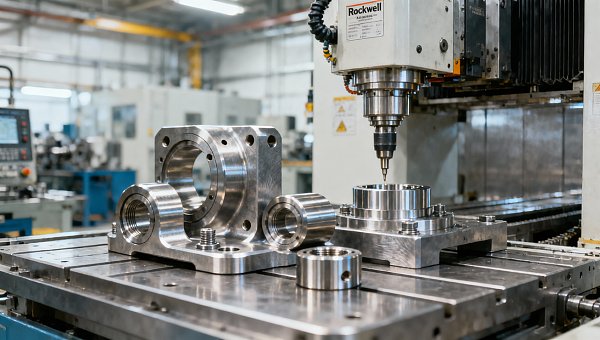
In hardware systems, fatigue usually develops through repeated stress cycles rather than one-time overload. A radius that is too sharp, a hole placed too close to an edge, a mismatch between substrate rigidity and fastening force, or an overly aggressive spindle speed during machining can all create local stress concentration. In many industrial environments, these choices do not fail on day 1; they fail after 3 months, 12 months, or several thousand duty cycles.
This matters across industries because the same fatigue logic appears in EV battery housings, agricultural actuator mounts, filtration skids, HDI substrate-supported electronics, and precision tooling fixtures. When supply chains span electronics, mobility, water treatment, and smart agri-tech, a design team can no longer evaluate fatigue as a single-discipline issue. Mechanical loading, thermal fluctuation, vibration, corrosion exposure, and assembly variation interact as a system.
For information researchers and operators, the real challenge is not recognizing fatigue after fracture. The challenge is identifying upstream signals before downtime, scrap, warranty exposure, or safety risk escalates. In practice, 4 recurring causes deserve early review: geometry transitions, hardness-selection mismatch, manufacturing-induced residual stress, and service conditions that exceed the original design assumption.
Typical early-stage fatigue drivers in cross-sector hardware
Small design choices often look harmless in drawings because nominal dimensions still meet tolerance. Yet fatigue life is highly sensitive to local details. A minor notch, insufficient fillet radius, or uneven clamping load may reduce usable life far more than a simple static strength calculation suggests. This is why benchmarking should cover not only materials and dimensions, but also process settings and use conditions.
- Sharp geometry transitions that raise stress concentration at corners, slots, threads, and stamped edges.
- Hardness values selected for wear resistance without checking whether lower toughness increases crack initiation risk.
- Machining parameters, including spindle speed and feed strategy, that leave tensile residual stress or heat-affected zones.
- Multi-material assemblies where metals, polymers, coatings, and laminates expand at different rates over temperature swings of 10°C–40°C or wider.
Global Industrial Matrix (GIM) addresses this problem by connecting fatigue evaluation across five pillars rather than treating each component in isolation. For procurement teams and engineering operators, this cross-sector benchmarking approach supports more reliable comparison of what appears equivalent on paper but performs differently in field conditions.
Which design variables deserve priority in fatigue benchmarking?
When teams investigate hardware fatigue, they often begin with material grade alone. That is too narrow. In operational reality, fatigue performance depends on a chain of linked variables from design geometry to process quality to service loading. A practical benchmarking model should review at least 5 dimensions: base material, hardness window, surface finish, joint design, and cyclic load profile.
The table below highlights decision variables that frequently shape fatigue risk across industrial hardware. These variables are relevant whether the product is a machined shaft, an electronics support frame, an automotive bracket, a pump housing, or a tooling fixture used in repetitive production cycles.
For users and operators, the value of this framework is clarity. Instead of asking only whether a part is “strong enough,” the better question is whether the design and process chain supports stable performance over the actual service interval, such as daily cycling, 24/7 operation, or repeated seasonal duty. That change in evaluation logic often prevents avoidable replacement cost.
Why Rockwell hardness and spindle speed need to be reviewed together
Rockwell hardness testing is useful, but hardness alone does not guarantee fatigue durability. A harder surface may resist wear and indentation, yet if the machining process introduces surface tearing or tensile residual stress, the fatigue benefit may disappear. This is especially relevant in high-speed machining where spindle speed, feed per tooth, and thermal management influence final microstructure and surface integrity.
In precision tooling and mobility hardware, review windows often include roughing and finishing conditions performed across 2–3 operations. If one finishing step runs too hot or with unstable tool condition, a component can pass dimensional inspection but still carry fatigue risk. GIM’s benchmarking value lies in comparing process-sensitive performance variables across sectors rather than relying on isolated test numbers.
A practical 5-point review list
- Confirm hardness range against application duty, not just drawing minimum.
- Check whether spindle speed and thermal load may alter surface integrity.
- Review radius, edge break, and hole placement in the highest-stress zones.
- Map assembly torque and cyclic load transfer points.
- Align validation testing with actual duty cycles, vibration, and temperature conditions.
How does fatigue risk change across electronics, automotive, agri-tech, and infrastructure hardware?
Fatigue is universal, but the trigger profile is different across sectors. In semiconductor and electronics applications, HDI substrates and compact assemblies face thermal cycling, stiffness mismatch, and vibration in constrained spaces. In automotive and mobility systems, brackets, housings, shafts, and battery structures face combined vibration, torque fluctuation, and road-induced shock over long service intervals.
In smart agri-tech, operators often deal with variable loads, dust ingress, moisture, fertilizer exposure, and seasonal start-stop usage. A component may idle for weeks and then run under heavy field shock. In industrial ESG and infrastructure systems such as pumps, filtration modules, skids, and support frames, the fatigue issue may stem from continuous vibration, pressure pulsation, corrosion, or maintenance-induced reassembly variation.
The procurement implication is important. A supplier proven in one sector is not automatically qualified for another if fatigue drivers differ. Cross-sector benchmarking helps teams compare whether material choice, joining method, and process control are truly transferable. This is one of the strongest reasons industrial strategists use GIM as a system-level reference rather than a single-category database.
Application-oriented fatigue comparison
The following table helps researchers and operators compare common fatigue concerns by sector. It is not a substitute for product-specific validation, but it is a reliable screening tool during sourcing, design review, and failure investigation.
This comparison shows why the same nominal alloy or component format can behave differently across applications. A buyer comparing suppliers should therefore ask for process detail, interface design detail, and use-condition alignment, not only a material certificate. The stronger the operating complexity, the more valuable cross-sector technical benchmarking becomes.
What this means for day-to-day operations
Operators often encounter fatigue as vibration growth, fastener loosening, noise change, leakage, drift in alignment, or recurring replacement at the same location. These are useful field signals. If the same zone requires intervention every 6–12 months, the issue is often design- or process-rooted rather than purely maintenance-related. Escalating these patterns into structured benchmarking shortens troubleshooting time and improves sourcing decisions.
What should procurement teams and operators check before selecting hardware?
Procurement teams usually balance price, lead time, and compliance. Yet fatigue-sensitive hardware demands another filter: whether the supplier can demonstrate process stability and use-case fit. A lower unit price may become more expensive if replacement frequency, downtime, field service, or line stoppage rises within the first 2–4 quarters of operation.
For operators, selection mistakes typically show up as recurring maintenance burden. For researchers, they show up as incomplete comparison criteria. A better selection framework combines design review, material review, process review, and support review. This is especially useful when teams source globally and need consistent benchmarking across different manufacturing cultures and documentation styles.
A practical selection checklist for fatigue-sensitive hardware
- Request hardness data in context: ask for the intended hardness window and how heat treatment consistency is controlled across batches.
- Review process-sensitive features: surfaces near threads, shoulders, weld toes, bends, and machined transitions should receive specific attention.
- Align the duty profile: identify whether the part sees high-cycle vibration, intermittent shock, thermal cycling, or corrosive exposure.
- Check service interval assumptions: if inspection is planned every quarter, every 6 months, or annually, confirm that the design supports that interval.
- Ask about validation logic: confirm whether testing or benchmarking reflects realistic assembly load, not only standalone coupon results.
In sourcing projects, GIM helps narrow uncertainty by mapping hardware performance against international references such as ISO, IATF, and IPC where relevant. That matters because many fatigue issues begin at the interface between drawing intent and manufacturing execution. Technical benchmarking should therefore support both supplier comparison and operating feedback loops.
Common selection mistakes that increase failure risk
A frequent mistake is overvaluing static strength while undervaluing cyclic behavior. Another is approving a design based on nominal hardness or tensile strength without reviewing surface finish and local geometry. Teams also underestimate environmental effects. A component that performs well indoors may degrade much faster in humid, dusty, or chemically exposed infrastructure and agri-tech settings.
Another common problem is using one-sector assumptions in another sector. For example, an electronics-adjacent support bracket may look dimensionally adequate, but if installed in a mobility or field-machine environment with higher vibration and shock, fatigue margins can disappear quickly. Procurement decisions should always match the actual load spectrum and service context.
How can teams reduce fatigue risk through standards, review steps, and operator feedback?
Reducing fatigue risk does not always require a complete redesign. In many cases, structured review and better cross-functional communication remove the highest-risk factors early. A useful implementation model includes 4 stages: requirement mapping, design and process review, verification against relevant standards, and field feedback integration. Each stage should be documented before high-volume rollout or critical infrastructure deployment.
Standards matter because they create a common language for comparison. ISO frameworks can support dimensional, quality, and management consistency. IATF is relevant where automotive-grade process discipline is required. IPC matters when electronic assemblies and substrate reliability affect the hardware system. The standard itself does not eliminate fatigue, but it improves traceability and comparability during sourcing and validation.
A serviceable review flow for fatigue prevention
The table below outlines a practical review flow that teams can adapt for new hardware introduction, supplier transition, or recurring field failure analysis. It is especially useful when decisions must be made within 7–15 working days and complete redesign is not feasible.
This flow is effective because it links engineering analysis with practical operating evidence. In many organizations, fatigue prevention fails not from lack of expertise but from disconnected information. Procurement sees price and lead time, engineering sees drawings, and operators see breakdowns. A system-of-systems platform closes that gap by making comparisons technically consistent.
FAQ and common misconceptions
Does higher hardness always mean better fatigue life?
No. Higher hardness can improve wear resistance, but fatigue life depends on toughness, residual stress, surface condition, and actual load mode. For cyclic loading, a balanced hardness window is often more reliable than chasing the highest possible value.
Can a dimensionally qualified part still fail early in fatigue?
Yes. A part may meet dimensional tolerance and still carry micro-cracks, heat damage, burr-related stress risers, or assembly-induced local overload. This is why process review and field-condition alignment are necessary in addition to inspection reports.
How often should operators review fatigue-prone hardware?
The interval depends on duty severity, but common review windows are monthly for high-vibration assets, quarterly for critical production hardware, and every 6–12 months for less severe service. The right interval should follow load profile, environment, and consequence of failure.
Why do cross-sector benchmarks help with fatigue decisions?
Because many modern systems combine electronics, mobility, infrastructure, and precision tooling logic in one operating environment. Cross-sector benchmarks reveal where a component is being used outside the assumptions under which it was originally validated.
Why work with GIM when fatigue risk affects sourcing, operations, and long-term reliability?
GIM is built for organizations that cannot afford siloed decisions. When hardware fatigue may originate in material hardness selection, HDI substrate support design, machining conditions, or infrastructure vibration exposure, teams need a connected technical view. Our platform brings together benchmarking across Semiconductor & Electronics, Automotive & Mobility, Smart Agri-Tech, Industrial ESG & Infrastructure, and Precision Tooling so buyers and engineers can compare risk with greater precision.
For information researchers, we support structured evaluation of fatigue-sensitive hardware through cross-sector data transparency and standards-aware comparison. For users and operators, we help translate field symptoms into actionable sourcing and design questions. That means fewer blind spots between specification, manufacturing, and service performance.
If you are reviewing recurring hardware failures, evaluating suppliers, or planning a new component rollout, you can consult GIM on parameter confirmation, material and process benchmarking, product selection logic, lead-time assumptions, standards alignment, sample support considerations, and quotation discussions. We can also help frame which 3–5 evaluation dimensions matter most for your application before you commit to a sourcing path.
Contact us when you need a more disciplined way to assess fatigue risk across hardware categories, compare options under realistic operating conditions, or build a procurement decision model that connects reliability, compliance, and total operating impact. In complex industrial systems, small design choices matter early. The right benchmark helps you catch them before failure does.

The Archive Newsletter
Critical industrial intelligence delivered every Tuesday. Peer-reviewed summaries of the week's most impactful logistics and market shifts.