Monday, May 22, 2024

Mechanical Foundations Components: Common Selection Mistakes to Avoid
by
Published
Views:
Why Mechanical Foundations Components Fail at the Selection Stage
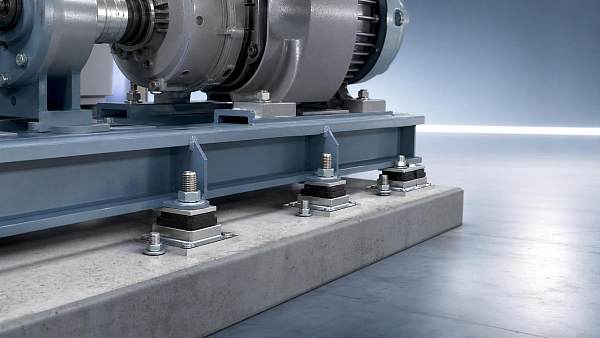
Mechanical foundations components rarely fail because the catalog looked wrong. They fail because the real operating context was only partly defined.
That gap matters more today. Production lines, EV assemblies, smart agriculture equipment, filtration systems, and precision electronics now share tighter tolerance expectations.
A base frame, mounting plate, isolator, anchor, shim set, or support bracket may look interchangeable on paper. In practice, each one responds differently to vibration, thermal movement, moisture, and maintenance access.
Small mistakes in selecting mechanical foundations components can trigger misalignment, fatigue cracking, seal wear, calibration drift, and avoidable downtime.
Across GIM-tracked industrial sectors, the pattern is consistent. The highest risk is not always under-specification. It is often selecting a technically acceptable part for the wrong use condition.
In Real Projects, the Same Component Category Serves Different Priorities
Mechanical foundations components support very different asset behaviors depending on the installation environment and the tolerance stack of the wider system.
In an electronics facility, stability may mean protecting alignment for precision handling equipment. In mobility assembly, it may mean absorbing dynamic loads without changing torque retention.
Agricultural and infrastructure settings shift the focus again. There, corrosion resistance, washdown exposure, soil variability, and field-service simplicity can outweigh compactness or finish quality.
This is why mechanical foundations components should be judged as part of a system. GIM’s cross-sector benchmarking approach is useful precisely because standards compliance alone does not resolve application fit.
What changes from one site to another
- Load pattern: static support, cyclic motion, shock impact, or mixed duty.
- Environment: dry indoor control space, outdoor UV exposure, chemical washdown, or slurry contact.
- Tolerance sensitivity: coarse positioning versus micron-level alignment stability.
- Maintenance reality: scheduled shutdown access or emergency field replacement.
- Compliance scope: ISO, IATF, IPC, local safety codes, and traceability needs.
Where Selection Errors Show Up First
One common mistake is sizing for nominal load only. Mechanical foundations components must also handle startup surges, resonance, off-center loading, and occasional misuse.
Another frequent error is focusing on material grade without checking surface treatment, fastening compatibility, and galvanic interaction with adjacent structures.
More subtle problems appear when teams assume similar machines create similar support requirements. A filtration skid and an autonomous tractor module can share footprint dimensions while demanding different stiffness behavior.
The table below reflects how judgment criteria shift by application.
Precision Equipment Demands More Than Basic Support
In semiconductor and electronics environments, mechanical foundations components are often selected too late, after control architecture and machine layout are already frozen.
That creates a bad habit. Teams compensate with shims, oversized anchors, or improvised pads instead of revisiting stiffness, damping, and mounting geometry.
A component that supports weight adequately may still transmit micro-vibration into inspection units, placement heads, or substrate handling modules.
The better approach is to review machine frequency, floor flatness, anchor spacing, and maintenance-induced movement as one package.
When mechanical foundations components are chosen early, alignment stability tends to improve without excessive secondary adjustment work.
Mobile and High-Duty Systems Shift the Risk Profile
Automotive fixtures, EV subassemblies, and mobile industrial platforms expose mechanical foundations components to repeated load reversals, road-like shock, and thermal cycling.
In these cases, the usual mistake is assuming heavier means safer. Excess mass can change vibration behavior, increase joint stress, and complicate integration.
Another issue is overlooking interface movement between metal structures and elastomeric supports. Compression set, creep, and torque relaxation become long-term reliability factors.
For mobility-related applications, mechanical foundations components should be evaluated against fatigue life, serviceability, and dimensional stability after repeated thermal events.
Useful checks before release
- Confirm whether peak loads are transient or recurring.
- Compare actual mounting stack-up to drawing assumptions.
- Review preload retention after vibration and heat exposure.
- Check whether replacement requires recalibration or line stoppage.
Outdoor and Utility Environments Punish Simplified Assumptions
Mechanical foundations components used in smart agri-tech and environmental infrastructure often operate under mixed abuse: mud, washdown, UV, fertilizer, chlorides, and inconsistent base conditions.
The selection error here is usually false equivalence. Two outdoor systems may share the same material, yet require different drainage paths, sealing interfaces, and anchor details.
A support that performs well on a clean equipment pad may fail quickly in a field-mounted unit where trapped moisture accelerates corrosion around fastener points.
This is where mechanical foundations components should be judged by lifecycle conditions, not only installation-day conditions.
In practice, field access matters too. If a bracket or isolator cannot be inspected or replaced easily, the real maintenance cost rises even when the part price looks efficient.
The Most Overlooked Differences Are Not Always Mechanical
Selection errors often begin outside the component itself. Documentation gaps, inconsistent supplier test methods, and missing traceability make mechanical foundations components hard to compare fairly.
Cross-sector platforms such as GIM help because benchmarking can reveal whether a claimed performance level was tested under conditions close to the intended use.
This matters when one supplier reports compression strength, another reports deflection range, and neither clarifies exposure limits or long-term creep behavior.
A mechanical foundations components decision becomes stronger when mechanical data, standards alignment, environmental limits, and replacement logistics are reviewed together.
A Practical Way to Match Components to the Actual Use Case
A useful starting point is to map each installation by movement, environment, tolerance sensitivity, and maintenance window before comparing part numbers.
Then narrow the options using a short decision structure rather than a broad catalog search.
- Define real load behavior, including shock, imbalance, and startup events.
- Record environmental exposure across the full service cycle.
- Check interface compatibility with fasteners, coatings, and adjacent metals.
- Review standards and validation evidence relevant to the application.
- Estimate downtime, alignment work, and replacement complexity.
This approach keeps mechanical foundations components tied to operational reality. It also reduces the common bias toward lowest upfront cost.
Before final selection, it is worth comparing at least two realistic operating scenarios, not just the ideal design condition. That is often where hidden failure modes appear.
The strongest next step is straightforward: document the exact application conditions, rank the non-negotiable parameters, and verify whether the chosen mechanical foundations components still perform after installation, exposure, and service access are considered together.

The Archive Newsletter
Critical industrial intelligence delivered every Tuesday. Peer-reviewed summaries of the week's most impactful logistics and market shifts.