Monday, May 22, 2024

Modern Office Furniture Modular Systems: Cost, Flexibility, and Space Planning
by
Published
Views:
Modern Office Furniture Modular Systems: Cost, Flexibility, and Space Planning
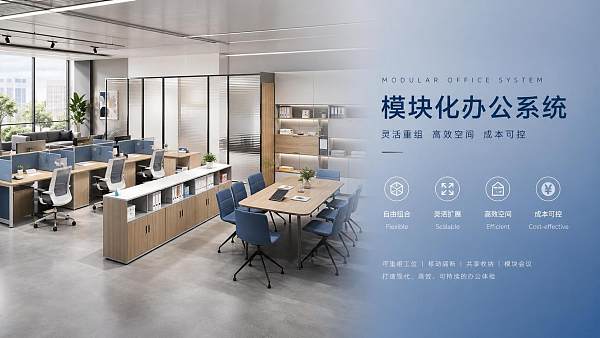
Modern office furniture modular systems are changing how companies plan workplaces.
What used to be a fit-out decision now shapes operating cost, team movement, and future expansion.
That shift matters even more as office layouts keep evolving.
Hybrid work, project teams, and space pressure have made fixed furniture less practical.
In real operations, leaders need systems that can adapt without repeated renovation cycles.
Modern office furniture modular systems support that goal by combining movable components, scalable storage, and flexible workstation design.
They also help control capital spending over time, not just at installation.
This article looks at cost, flexibility, and space planning from a practical buying perspective.
The goal is simple: make better workplace investments with fewer surprises later.
Why Modular Systems Now Matter More
Recent workplace changes have made flexibility a purchasing priority.
Teams grow, shrink, regroup, and relocate faster than before.
A traditional layout often cannot keep up without added labor and downtime.
Modern office furniture modular systems reduce that friction.
A modular benching line, movable partition, or stackable storage unit can be reconfigured much faster than built-in alternatives.
That means less disruption for staff and better use of leased space.
There is also a financial signal behind the trend.
Companies are under pressure to justify every workplace asset over its full lifecycle.
Modular systems fit that mindset because they are easier to repurpose, relocate, and standardize.
Understanding the Real Cost Structure
Purchase price alone does not tell the full story.
The smarter question is total cost of ownership across five to ten years.
Modern office furniture modular systems may cost more upfront than basic fixed furniture.
However, they often lower future spend in several important areas.
- Lower churn cost when departments reorganize.
- Less disposal and replacement during expansions.
- Reduced installation labor for layout changes.
- Better inventory control through standardized components.
- Longer asset usefulness across multiple office locations.
That is where many buyers miscalculate value.
They compare desks against desks, instead of comparing systems against future change.
In practice, the cost advantage appears when change happens, not when nothing changes.
That also means procurement should ask suppliers for reconfiguration scenarios, not just catalog pricing.
Flexibility That Supports Business Change
Flexibility sounds attractive, but buyers need to define it clearly.
In workplace planning, flexibility usually means three things.
- Layouts can change without replacing core furniture.
- Teams can scale up or down with matching components.
- Spaces can support different work modes during the week.
Modern office furniture modular systems are built around this kind of operational flexibility.
A single system may support focus desks, touchdown stations, collaboration zones, and storage walls.
That reduces the need to buy separate furniture families for every use case.
More importantly, it helps keep visual consistency across sites.
Consistency matters for brand, maintenance, and spare parts planning.
So the real value is not flexibility alone, but flexibility with control.
Space Planning: Getting More from the Same Footprint
Office space is expensive, especially in prime urban markets.
That makes space planning a financial issue, not only a design issue.
Modern office furniture modular systems help improve space efficiency in practical ways.
- Benching systems reduce wasted gaps between individual desks.
- Shared storage cuts oversized personal cabinets.
- Mobile screens create temporary rooms without permanent construction.
- Modular meeting settings support fast conversion of underused areas.
These gains may look small on paper.
Across a regional portfolio, however, a few percentage points of better space use can be significant.
This is where planning discipline matters.
Furniture should follow work patterns, circulation paths, and acoustic needs.
A modular system performs best when linked to occupancy data and team behavior.
What to Evaluate Before You Buy
A strong vendor presentation does not guarantee a strong long-term fit.
Before selecting modern office furniture modular systems, focus on measurable criteria.
- Component compatibility across current and future product lines.
- Lead times for add-on units and replacement parts.
- Durability of connectors, surfaces, and moving elements.
- Cable management for power, data, and device-heavy workflows.
- Compliance with ergonomic and safety requirements.
- Ability to standardize across multiple offices or regions.
It is also smart to ask for case-based pricing.
For example, price the system for a new floor, a team expansion, and a future reconfiguration.
That gives a more realistic picture than a single showroom layout.
From a sourcing perspective, comparability matters as much as aesthetics.
Common Risks and How to Avoid Them
Not every modular offer creates real value.
Some systems look flexible, yet depend on proprietary parts with limited availability.
Others reconfigure well once, but become inconsistent across later phases.
The most common risks include the following.
- Buying too many specialized modules with narrow future use.
- Ignoring maintenance access and repair complexity.
- Underestimating storage needs in shared desk environments.
- Choosing layouts that maximize density but reduce comfort.
- Failing to align furniture standards across departments.
A practical response is to start with a planning framework.
Define user groups, space types, growth assumptions, and refresh cycles before final selection.
That reduces the chance of buying an attractive system that performs poorly in daily use.
A Smarter Procurement Approach
The best procurement decisions connect workplace design with business planning.
That is especially true for modern office furniture modular systems.
A good system should lower long-term cost, support layout changes, and improve space efficiency without constant reinvestment.
It should also fit broader operating goals such as workforce agility, site standardization, and asset resilience.
From that perspective, furniture is not a background purchase.
It is part of the infrastructure that shapes how people work every day.
The most effective next step is to review current layouts against future change scenarios.
Then compare suppliers based on lifecycle value, not headline price alone.
When modern office furniture modular systems are chosen with that discipline, they become a practical tool for cost control and strategic growth.
That is what turns a workplace upgrade into a stronger operating decision.

The Archive Newsletter
Critical industrial intelligence delivered every Tuesday. Peer-reviewed summaries of the week's most impactful logistics and market shifts.