Monday, May 22, 2024

PC Hardware Upgrades That Bottleneck Performance
by
Published
Views:
PC hardware upgrades can dramatically improve speed, but the wrong component often creates a hidden bottleneck that reduces operational efficiency. For teams involved in electronics manufacturing, printed circuit board assembly, and technical evaluation, understanding how PC hardware limits performance is essential to smarter investment, better energy management, and more reliable system planning across modern industrial workflows.
Why PC Hardware Bottlenecks Matter in Industrial and Technical Workflows
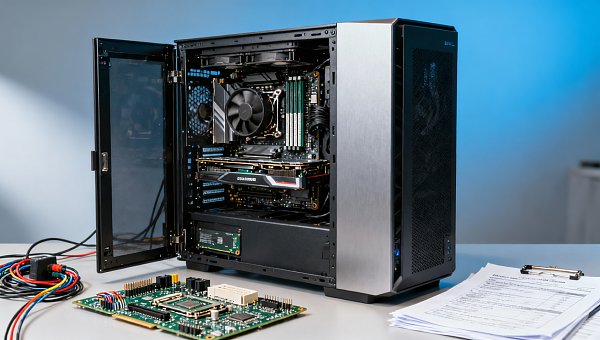
A PC hardware bottleneck occurs when one component restricts the performance of the entire system. In office environments, this may only cause minor delay. In cross-sector industrial settings, however, bottlenecks can slow CAD rendering, test data processing, MES dashboards, PLC interface tools, simulation workloads, and quality documentation. For procurement teams and engineering evaluators, the issue is not just speed. It affects system utilization, downtime exposure, upgrade timing, and capital efficiency.
In electronics, automotive, smart agriculture, infrastructure, and precision tooling environments, the wrong upgrade path often appears attractive because it is visible and easy to approve. A new GPU may look impressive, but a system with only 8GB–16GB RAM, a saturated SATA SSD, or an older 4-core CPU may still underperform. This is why PC hardware upgrades that bottleneck performance must be assessed as a system-level issue rather than a single-part purchase.
For project managers and finance approvers, the practical concern is lifecycle value over 12–36 months. A poorly matched upgrade may improve one benchmark while leaving daily workloads unchanged. In industrial teams working across procurement, QA, and operations, even a 10–20 second delay per repetitive task can compound across hundreds of actions per week. That is where technical benchmarking becomes more useful than headline specifications.
Global Industrial Matrix (GIM) approaches this challenge through cross-sector benchmarking and standards-aware analysis. Because modern manufacturing does not operate in silos, PC performance planning should also connect compute demand with application context, interface requirements, thermal conditions, storage behavior, and long-term operational resilience. This systems view helps decision-makers avoid fragmented upgrades and prioritize changes that reduce bottlenecks at the workflow level.
- Information researchers need to identify whether the slowdown comes from CPU load, memory pressure, storage latency, or graphics pipeline limitations.
- Technical evaluators need to compare upgrade options against actual software behavior, not generic gaming-style benchmarks.
- Business reviewers and finance teams need a practical ranking of low-cost, mid-cost, and replacement-level actions.
- Operators and quality teams need predictable response time, stable multitasking, and fewer interruptions during continuous use.
Which Components Most Often Create a PC Hardware Bottleneck?
The most common bottlenecks come from four areas: CPU, RAM, storage, and GPU. In technical environments, network throughput and motherboard I/O can also become constraints, especially when multiple external instruments, cameras, or high-speed storage devices are connected. A practical diagnosis should begin with the dominant workload over a 2–4 week observation window rather than a one-time performance test.
CPU bottlenecks appear when software depends on single-thread speed, instruction efficiency, or sustained multi-core throughput. This is common in simulation preparation, data conversion, CAD rebuilds, and local compilation. A processor upgrade helps only if thermal headroom, motherboard support, and power delivery are adequate. Otherwise, the new CPU may throttle under load and the bottleneck simply shifts from compute to heat and stability.
Memory and storage bottlenecks are often underestimated
RAM shortages are a hidden cause of poor performance in design review, browser-heavy dashboards, ERP tools, and data logging environments. When usage consistently approaches 80%–90%, the system starts to swap data to disk. That is why a jump from 8GB to 16GB or from 16GB to 32GB often delivers more noticeable improvement than a minor CPU refresh. The benefit is especially clear in multitasking and shared workstations.
Storage bottlenecks are equally common. Systems still running on HDDs or aging SATA SSDs can suffer from long boot times, slow application launch, and delayed file indexing. For engineering teams handling project archives, test images, or machine vision datasets, the move to NVMe storage can reduce waiting time in a visible way. However, NVMe only reaches its value when the workload is actually storage-sensitive and not limited elsewhere.
GPU upgrades help only in the right application profile
Many buyers over-prioritize the graphics card. A GPU matters in 3D modeling, rendering, AI-assisted inspection, visualization, and some accelerated compute tools. It matters far less in spreadsheet-heavy operations, browser-driven SaaS, serial programming utilities, and document workflows. If the CPU cannot feed the GPU quickly enough, or if the software barely uses GPU acceleration, the graphics upgrade becomes an expensive bottleneck trap.
The table below summarizes how common bottlenecks appear in industrial and technical PC environments. It can support early screening before deeper compatibility review.
This comparison shows why PC hardware upgrades should be mapped to workload class first. In many business and plant-floor systems, RAM and storage upgrades provide a faster payback than a premium GPU. In engineering and graphics-intensive roles, CPU and GPU balance matters more than peak specification in isolation.
How to Evaluate Upgrade Priority Before Spending Budget
Procurement and technical teams often ask a practical question: which upgrade should come first? The answer should follow a structured 4-step review process. Step 1 is workload mapping. Step 2 is utilization measurement. Step 3 is compatibility check. Step 4 is cost-to-gain ranking. This process reduces guesswork and helps both engineering and finance teams align on whether a component upgrade or full replacement is more sensible.
Workload mapping means grouping machines into categories such as design, office productivity, test control, quality reporting, machine vision, or mixed use. A workstation used for 3D design 6–8 hours per day should not be judged by the same upgrade logic as a procurement terminal handling browser tabs and spreadsheets. In mixed industrial environments, segmenting devices into 3–5 user profiles usually produces more consistent upgrade decisions.
A decision matrix helps reduce overspending
Utilization measurement should look at CPU load, memory usage, storage queue behavior, and thermal conditions during real work cycles. For example, if RAM stays above 85% during daily operation while CPU remains below 50%, a processor upgrade is unlikely to resolve the real bottleneck. If a machine takes 3–5 minutes to become fully responsive after login, storage latency is often a more urgent issue than raw compute power.
Compatibility review matters because many industrial PCs and business desktops have tight constraints. These include limited PSU capacity, restricted airflow, few memory slots, older chipsets, or BIOS limitations. In such cases, the “cheaper” upgrade path can become expensive after adapter needs, downtime planning, and installation labor are included. This is especially important where production support systems must remain available across fixed shift windows.
The following table can be used as a practical procurement guide for evaluating upgrade priority by symptom, budget level, and deployment context.
For enterprise buyers, this matrix supports faster internal approval. It gives technical teams a factual basis for selection and gives finance reviewers a clearer explanation of why some upgrades are tactical while others should lead to scheduled replacement. GIM’s benchmarking perspective is especially useful where equipment fleets serve different departments but must still follow a unified investment logic.
- Check 3 core indicators first: average CPU load, peak RAM use, and storage response behavior during normal work periods.
- Review 5 key constraints before ordering parts: chipset support, PSU headroom, cooling, slot availability, and deployment downtime.
- Use a 12–24 month horizon when comparing upgrade value against full replacement planning.
Application Scenarios: Where the Wrong Upgrade Causes Real Operational Friction
The impact of a PC hardware bottleneck changes by use case. In PCB assembly support, engineering documentation, Gerber review, and AOI data handling may depend more on storage and memory stability than on a high-end GPU. In automotive engineering and mobility testing, simulation interfaces and design packages can become CPU- and GPU-sensitive. In smart agriculture or environmental infrastructure, edge monitoring stations may depend more on low power draw, stable storage, and continuous uptime than on peak performance.
Cross-sector examples show why context matters
A procurement analyst working across five browser dashboards, two spreadsheet models, and a supplier portal may experience major delays from insufficient RAM, even though CPU usage appears moderate. A QA technician handling image-based inspection records may need faster storage and reliable scratch-disk behavior. A project engineer using CAD and simulation tools may require stronger per-core CPU performance and more graphics acceleration, but only if the application stack actually scales with those resources.
In plant-floor or industrial office deployments, environmental conditions also influence hardware decisions. Systems operating 8–12 hours per day in warmer enclosures or dust-prone zones need more conservative upgrade plans. A high-performance part that runs hot can become unstable if airflow is poor. This is where technical benchmarking should consider operating condition, duty cycle, and service access, not only benchmark scores.
Typical scenarios where bottlenecks are misread
- Engineering teams replace the GPU first, but the software spends most of its time waiting on CPU preprocessing or storage reads.
- Operations teams blame “old PCs,” but the main issue is 8GB memory capacity under heavy browser and dashboard multitasking.
- A business unit requests full workstation replacement, although a RAM plus NVMe upgrade would stabilize performance for another 12–18 months.
- An isolated component upgrade is approved, but deployment delays occur because BIOS, cooling, or PSU limits were not reviewed in advance.
For distributors, integrators, and enterprise planners, these examples matter because they influence stocking strategy, upgrade kit design, support workload, and warranty risk. GIM’s “System of Systems” perspective helps organizations compare hardware decisions across departments that may appear unrelated but share the same underlying need: stable compute matched to real industrial tasks.
Standards, Risk Control, and What Procurement Teams Should Verify
While PC upgrades are not always regulated in the same way as production equipment, industrial buyers still need disciplined verification. Compatibility with internal IT policy, thermal safety, power quality, and application stability should be checked before rollout. In organizations handling electronics, automotive, and industrial infrastructure programs, broader alignment with ISO-oriented documentation practice, IATF workflow discipline, or IPC-related digital support environments can improve traceability and reduce change risk.
A practical review should include at least 6 acceptance items: BIOS recognition, memory stability, storage migration integrity, thermal behavior under sustained load, power margin, and software performance verification. For business-critical systems, teams should also define rollback steps, backup timing, and deployment windows. This is especially important where even 2–3 hours of workstation downtime can delay reporting, engineering approval, or production-support decisions.
Risk control is as important as raw performance
Procurement teams should ask whether a component is technically compatible, operationally supportable, and financially justified. These are not the same question. A part may fit physically but create support issues later due to firmware mismatch, unusual thermals, or weak field service availability. Likewise, a premium graphics card may be technically suitable but commercially inefficient if the application profile does not monetize the performance gain.
This is one reason benchmarking platforms such as GIM create value. Decision-makers need a normalized view across sectors, not siloed product marketing. By comparing hardware roles against broader manufacturing and technical workflows, organizations can better define whether an upgrade supports reliability, throughput, compliance documentation, or simply cosmetic specification improvement. That distinction is critical for quality managers, approvers, and project leads.
- Document the existing system condition, including CPU generation, RAM configuration, storage interface, and PSU capacity.
- Test the target workload for at least 3 representative scenarios, such as startup, multitasking, and sustained active processing.
- Define an upgrade acceptance window, commonly 1–2 weeks for pilot use before broader deployment.
- Prepare a fallback path so critical teams can revert quickly if instability appears after installation.
FAQ: Practical Questions About PC Hardware Upgrades That Bottleneck Performance
How do I know whether the CPU or RAM is the main bottleneck?
Look at usage during normal work, not only during a synthetic test. If RAM regularly reaches 80%–90% and the system becomes unresponsive while CPU utilization stays moderate, memory is likely the main bottleneck. If one or more CPU cores stay heavily loaded during active processing and application response slows under compute tasks, the processor is a more likely constraint.
When is a storage upgrade more valuable than replacing the whole PC?
If the system remains compatible with current software, has acceptable CPU performance, and mainly suffers from slow startup or file access, a storage upgrade can be an efficient interim step. This is common in devices still using HDDs or older SATA SSDs. For many business and QA tasks, moving to a newer SSD can extend useful service life by 12–18 months, provided memory capacity is also adequate.
Are GPU upgrades necessary for industrial and engineering users?
Only in the right software profile. GPU upgrades are justified for rendering, 3D visualization, some simulation workloads, and AI-assisted inspection. They are less relevant for browser-heavy dashboards, ERP work, documentation, and many utility-driven engineering tools. Always verify whether the application uses GPU acceleration in a meaningful way before assigning budget.
What are the most common upgrade mistakes in procurement?
Three mistakes appear repeatedly: buying a visible high-spec part without measuring the real bottleneck, ignoring platform limits such as PSU or BIOS support, and comparing upgrade cost only by component price instead of including downtime, installation, and support effort. In multi-site organizations, inconsistent upgrade standards create a fourth problem: fragmented support and harder lifecycle management.
How long does a typical evaluation and rollout take?
For a small batch, a basic evaluation can often be completed in 7–15 days if workload profiles are already known. Broader rollout across multiple departments may take 2–4 weeks once compatibility checks, backup planning, pilot validation, and installation scheduling are included. The timeline depends on fleet size, criticality of the devices, and whether the organization requires staged approval.
Why Work With GIM for Upgrade Benchmarking and Decision Support
PC hardware planning is no longer a narrow IT issue. In modern manufacturing and technical operations, workstation performance affects engineering productivity, procurement speed, quality traceability, and project execution. GIM helps organizations evaluate these decisions in a cross-sector framework that connects electronics, automotive, smart agri-tech, infrastructure, and precision tooling realities. That matters when one fleet must support different teams with different performance profiles.
Our value is not limited to component comparison. We help stakeholders interpret where a PC hardware bottleneck comes from, how to prioritize upgrades, which trade-offs affect lifecycle cost, and how standards-aware benchmarking can support internal alignment. For procurement officers, technical assessors, quality teams, and enterprise decision-makers, this creates a clearer path between technical evidence and purchasing action.
What you can discuss with us
- Parameter confirmation for CPU, RAM, storage, GPU, interface compatibility, and thermal planning.
- Upgrade path selection for office fleets, engineering workstations, QA terminals, and mixed-use industrial PCs.
- Delivery cycle evaluation, pilot deployment planning, and phased rollout logic for 1 site or multiple locations.
- Custom benchmarking support tied to ISO, IATF, IPC-oriented operational environments and documentation needs.
- Quote comparison, replacement threshold analysis, and alternatives when budget constraints limit full refresh plans.
If your team is comparing PC hardware upgrades that bottleneck performance, GIM can help you narrow the issue quickly and turn scattered hardware decisions into a more resilient system strategy. Contact us to review workload characteristics, upgrade priorities, compatibility risks, expected deployment timing, and the most commercially sound path for your technical environment.
The Archive Newsletter
Critical industrial intelligence delivered every Tuesday. Peer-reviewed summaries of the week's most impactful logistics and market shifts.