Monday, May 22, 2024

Revised Maritime Code Shifts No-Collection Liability to Shipper
by
Published
Views:
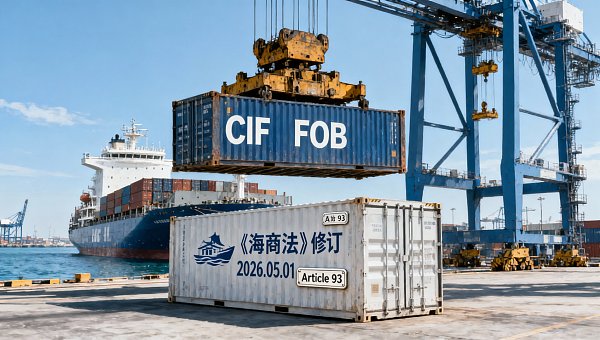
Starting May 1, 2026, the newly revised Maritime Code of the People’s Republic of China—specifically Article 93—reassigns primary liability for cargo not collected at the discharge port from consignee to shipper. This change directly affects Chinese exporters in long-cycle B2B sectors such as hardware components and plastic injection molds, and prompts overseas importers to reassess responsibility allocation in letters of credit and bill of lading terms. Stakeholders in international trade, freight forwarding, and contract logistics should pay close attention due to its implications for risk ownership, contract drafting, and operational contingency planning.
Event Overview
The revised Maritime Code of the People’s Republic of China enters into force on May 1, 2026. Per Article 93, the legal responsibility for uncollected cargo at the discharge port is now placed first and foremost on the shipper—not the consignee—as was previously the case. This amendment has been officially published and is effective as of the stated date; no further implementation guidelines or transitional provisions have been publicly released at this time.
Industries Affected by the Change
Direct Export Trading Enterprises
These enterprises—especially those operating under FOB or CIF terms—now bear primary statutory liability if overseas buyers fail to take delivery. The shift increases exposure to demurrage, storage fees, and potential cargo abandonment costs, even when contractual terms previously allocated such risks to the buyer.
Manufacturers with Long-Cycle B2B Orders (e.g., Hardware Components, Plastic Injection Molds)
Such manufacturers often act as shippers in export transactions where order-to-delivery cycles exceed 60–90 days. Under the revised rule, they may face unexpected liability post-shipment—even after invoice settlement—if the overseas buyer becomes insolvent, delays customs clearance, or withdraws from the transaction without notice.
Supply Chain Service Providers (Freight Forwarders, NVOCCs, Logistics Operators)
While not direct parties to the carriage contract, these service providers frequently advise clients on Incoterms® usage and document preparation. The revision increases their advisory responsibility: mischaracterizing liability under FOB/CIF—particularly in pre-shipment communications or documentation—may expose them to claims of negligent guidance.
What Enterprises and Practitioners Should Monitor and Do Now
Review and revise standard shipping clauses in sales contracts
Exporters should explicitly address discharge-port collection obligations and cost allocation in contracts—e.g., by adding clauses requiring consignee confirmation of readiness to receive prior to vessel arrival, or specifying cost caps for detention beyond a defined grace period.
Reassess Incoterms® application in high-risk markets
For shipments to jurisdictions with known customs delays, weak enforcement of commercial contracts, or volatile importer solvency (e.g., certain emerging markets), consider shifting from CIF/FOB to DAP or DPU—where control over destination-handling logistics remains with the exporter, enabling earlier intervention if collection stalls.
Update internal credit and documentation workflows
Finance and logistics teams should coordinate to verify consignee import eligibility and local agent capacity *before* bill of lading issuance—not just at order entry. Where possible, require advance acknowledgment of receipt readiness from the consignee or its appointed agent as a condition for release of original bills.
Monitor official interpretations and judicial practice
No judicial precedents or Ministry of Transport clarifications have yet been issued regarding how ‘shipper liability’ will be construed in cases involving third-party logistics providers, freight forwarder-issued house bills, or split consignments. This remains an area requiring active tracking over the next 6–12 months.
Editorial Perspective / Industry Observation
Observably, this amendment signals a legislative recalibration toward aligning maritime liability more closely with physical control and shipment initiation—rather than commercial intent alone. Analysis shows it is less a finalized operational framework and more an initial statutory signal: actual impact will depend heavily on how courts interpret ‘shipper’, whether exceptions apply for documented consignee default, and whether complementary revisions follow in related regulations (e.g., Customs Law or foreign exchange management rules). From an industry perspective, the change does not eliminate consignee obligations—but reorders their enforceability hierarchy, making proactive risk mitigation upstream (at contract and documentation stage) significantly more consequential than before.
This is not yet a settled regime, but rather a structural pivot point. Industry participants should treat it as a trigger for internal policy review—not as a reason to halt trade activity.
Conclusion
The revision marks a material shift in statutory risk allocation for ocean exports from China. It does not override private contract terms—but establishes a new default legal baseline that strengthens the shipper’s duty of care beyond shipment. Currently, it is best understood not as a comprehensive solution to port congestion or non-collection, but as a catalyst for more precise, jurisdiction-aware contracting and earlier-stage risk triage in cross-border supply chains.
Source Disclosure
Primary source: Official promulgation text of the Revised Maritime Code of the People’s Republic of China, effective May 1, 2026 (State Council Order No. XXX, published April 2026).
Note: Interpretive guidance from the Supreme People’s Court, Ministry of Transport, or China Maritime Arbitration Commission has not yet been issued and remains under observation.
The Archive Newsletter
Critical industrial intelligence delivered every Tuesday. Peer-reviewed summaries of the week's most impactful logistics and market shifts.