Monday, May 22, 2024

Smartwatches OEM: How to Compare Cost, MOQ, and Customization
by
Published
Views:
Smartwatches OEM: How to Compare Cost, MOQ, and Customization
For procurement teams evaluating smartwatchesOEM partners, comparing unit cost alone is never enough.
MOQ flexibility, customization depth, compliance capability, and supply chain reliability shape long-term sourcing results.
This guide offers a practical way to compare smartwatchesOEM suppliers without losing sight of total commercial risk.
Why Smartwatches OEM Comparison Needs a Broader Cost View
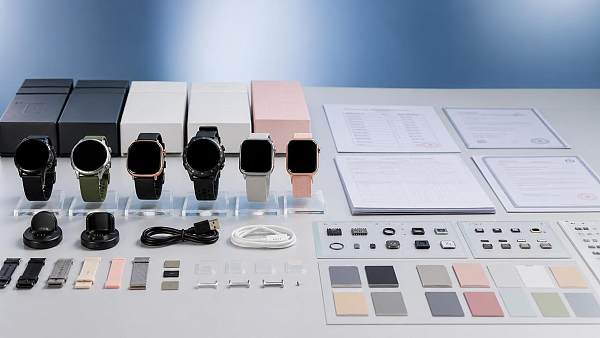
A low quoted price can look attractive early, then become expensive after tooling, certification, packaging changes, and delayed deliveries.
In practice, smartwatchesOEM sourcing should be evaluated through total landed cost and lifecycle execution capability.
That means checking hardware architecture, firmware ownership, battery quality, sensor sourcing, and after-sales defect handling.
For GIM-style industrial benchmarking, the useful question is simple: which supplier delivers predictable performance under real operating constraints?
More importantly, the best smartwatchesOEM partner supports both near-term margin targets and future product roadmap flexibility.
Key Cost Buckets to Compare
- Base unit price for standard hardware configuration
- NRE charges for tooling, mold updates, and firmware adaptation
- Certification expenses for CE, FCC, RoHS, REACH, or local market approvals
- Packaging, labeling, manuals, and accessory bundle costs
- Warranty reserve, failure return rate, and spare parts exposure
- Freight, duties, and buffer inventory required by lead-time volatility
When these buckets are ignored, smartwatchesOEM comparisons often favor the supplier with the least transparent quotation structure.
How MOQ Changes the Real Procurement Equation
MOQ is not just a number on a quotation sheet.
For smartwatchesOEM buying, MOQ determines cash exposure, launch speed, SKU strategy, and inventory risk.
A supplier offering low unit pricing with a high MOQ may still create a weaker purchasing outcome.
This becomes even clearer when product demand is uncertain or the buyer manages several regional variants.
What to Ask About MOQ
- Is the MOQ based on a finished SKU, housing color, strap type, or PCB configuration?
- Can pilot orders run at a lower MOQ before a mass production commitment?
- Does the MOQ change when using standard firmware instead of a custom app stack?
- Are packaging variants allowed without resetting the full MOQ threshold?
- Can future forecast commitments unlock phased MOQ reductions?
A flexible smartwatchesOEM partner usually separates engineering limits from commercial policy, which helps negotiations become more realistic.
That flexibility matters when testing new channels, wellness programs, branded promotions, or white-label retail launches.
MOQ Risk Signals
- MOQ terms change frequently during quotation rounds
- Sample quality and mass production standards are not clearly linked
- The supplier cannot explain component-level minimum buys
- Inventory liability for custom parts is left vague
These signals often point to weak planning discipline inside the smartwatchesOEM operation.
Customization: What Adds Market Value and What Just Adds Cost
Customization is where many smartwatchesOEM projects either build differentiation or lose margin discipline.
Not every custom feature creates user value, and not every standard platform limits branding potential.
A practical sourcing review separates visible customization from deep technical customization.
Low-Complexity Customization
- Logo printing on watch body, strap, charger, and packaging
- Retail box redesign and multilingual inserts
- Color changes using existing housing and strap tooling
- Preloaded watch faces and app branding adjustments
These are common smartwatchesOEM options and usually involve manageable cost and timeline impact.
High-Complexity Customization
- Custom sensors or new biometric measurement functions
- Battery upgrades that alter enclosure or charging behavior
- New PCB layouts, antenna tuning, or wireless module changes
- Dedicated firmware branches with private protocol integration
These features may justify investment, but only when the business case is clear and documented.
In actual sourcing, strong smartwatchesOEM partners explain the engineering impact before discussing sales pricing.
That is usually a better sign than aggressive promises around unlimited customization.
Compliance, Quality Control, and Supply Chain Reliability
A smartwatchesOEM supplier can meet price and MOQ targets and still be the wrong choice.
The missing layer is execution reliability across compliance, quality assurance, and component continuity.
Wearables combine electronics, software, batteries, wireless functions, and skin-contact materials.
That combination raises the sourcing bar for any smartwatchesOEM evaluation.
Core Verification Points
Recent market shifts have made chipset allocation and battery sourcing more sensitive than many buyers expect.
This also means the strongest smartwatchesOEM suppliers share transparent change-control procedures before production starts.
A Practical Scorecard for Smartwatches OEM Supplier Selection
To compare smartwatchesOEM options fairly, use a weighted scorecard instead of relying on quotation snapshots.
This keeps negotiations grounded and helps internal stakeholders align faster.
Suggested Evaluation Weights
- 25% total landed cost
- 20% MOQ flexibility and forecast adaptability
- 20% customization capability and engineering support
- 20% quality, compliance, and documentation maturity
- 15% lead time stability and communication discipline
The exact weighting can vary by project, but the structure helps reveal the real strength of each smartwatchesOEM candidate.
For example, a private-label launch may value MOQ flexibility more than deep firmware ownership.
A medically adjacent wellness device may place compliance and traceability at the top.
Questions That Improve Supplier Discussions
- Which parts are single-source, and what is the backup plan?
- Who owns firmware updates after shipment?
- How are engineering changes approved and documented?
- What defect rate data is available from similar smartwatchesOEM programs?
- What lead-time assumptions are based on committed material, not estimates?
These questions move the conversation away from sales language and toward procurement-grade evidence.
Final Takeaway for Smarter Sourcing
The best smartwatchesOEM decision rarely comes from the cheapest quote or the broadest customization promise.
It comes from balancing cost structure, MOQ practicality, customization value, and execution reliability.
That balance is where procurement teams reduce supply risk while protecting product competitiveness.
A disciplined smartwatchesOEM review should test every quote against commercial logic, technical limits, and future operating needs.
With a structured scorecard and stronger supplier questions, sourcing decisions become faster, clearer, and easier to defend internally.
For industrial buyers navigating complex global manufacturing, that is the standard worth applying from the first RFQ onward.
The Archive Newsletter
Critical industrial intelligence delivered every Tuesday. Peer-reviewed summaries of the week's most impactful logistics and market shifts.