Monday, May 22, 2024

Structural Silicone Sealant Bulk: Cost vs Storage Life
by
Published
Views:
Structural Silicone Sealant Bulk: Cost vs Storage Life
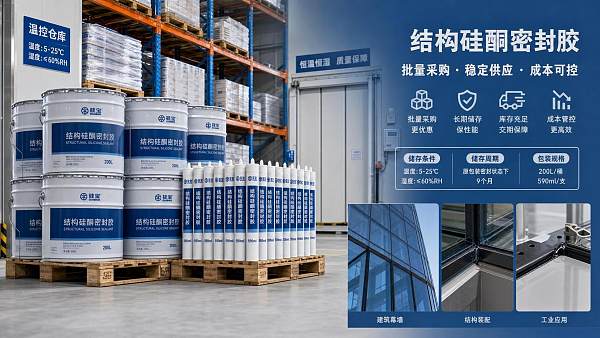
When evaluating structural silicone sealant bulk purchases, unit price is only the starting point. The real question is how long that material stays usable and profitable.
A lower quote can look attractive in quarterly reviews. Yet expired inventory, slow project drawdown, and emergency replenishment often erase that apparent saving.
This is why structural silicone sealant bulk sourcing needs a broader cost lens. Storage life directly shapes waste, working capital, and supply stability.
In sectors tied to glazing, curtain wall assembly, modular construction, electronics enclosures, and industrial sealing, storage decisions become financial decisions very quickly.
For procurement teams working across regions, the issue becomes even sharper. Transit time, customs delay, local warehousing, and production scheduling all affect usable shelf life.
Why Storage Life Changes the True Cost
Structural silicone sealant bulk is not a neutral inventory item. It is a time-sensitive material with handling limits, qualification requirements, and project-specific performance expectations.
That means the purchase price matters less than the usable output per delivered unit. If material expires before application, the nominal discount becomes irrelevant.
In practical terms, storage life affects four financial areas:
- Inventory carrying cost over the full storage window
- Waste exposure from expired or degraded stock
- Schedule risk when replacement orders must be rushed
- Cash tied up in safety stock that may never be used
From a finance perspective, structural silicone sealant bulk should be evaluated like any perishable industrial input. The benchmark is not purchase volume alone, but conversion into qualified use.
Where Bulk Buying Still Makes Sense
Bulk buying is not the problem. In many cases, it is the right move, especially when demand is stable and production plans are firm.
The strongest case for structural silicone sealant bulk appears when monthly usage is predictable, storage conditions are controlled, and multiple sites can draw from the same stock profile.
This usually applies to repeat facade programs, standardized industrial assemblies, and long-cycle infrastructure work with approved material lists.
In these settings, larger orders may reduce packaging cost, lock in better pricing, and improve supplier commitment during tight market periods.
The gain is most durable when procurement matches order size to realistic consumption, not to an arbitrary discount threshold.
Signs That Bulk Volume Is Financially Sound
- Usage history shows consistent monthly drawdown
- Supplier lead times are long or volatile
- Approved storage temperatures are easy to maintain
- The same specification serves several projects
- Quality teams have clear lot control and rotation procedures
When Low Price Becomes a Hidden Cost
The trouble starts when structural silicone sealant bulk is bought mainly to secure a lower unit rate. That decision often ignores how slowly the stock will actually move.
A six percent discount can disappear fast if ten percent of the shipment expires. The math becomes worse when storage conditions fluctuate or projects slip by one quarter.
More importantly, aging sealant may create compliance concerns. Even if it has not expired, shortened remaining shelf life limits deployment flexibility across sites.
This also affects transfer decisions between plants. Material that is still technically valid may not justify the freight and handling cost of redeployment.
Common Hidden Cost Drivers
- Delayed project release after material receipt
- Poor first-expiry-first-out discipline in warehouses
- Overbuying to hit annual rebate tiers
- Split demand across incompatible packaging formats
- Regional regulations that limit intersite transfers
A Simple Model for Comparing Cost vs Shelf Life
A better procurement model for structural silicone sealant bulk combines price, usage rate, and expiry risk. It does not need to be complicated.
Start with landed cost per unit. Then estimate how much will be consumed within the guaranteed storage window under real operating conditions.
After that, assign a waste factor. Include material likely to expire, material likely to be quarantined, and stock likely to be stranded by schedule changes.
The result is a more useful number: effective cost per usable unit.
Questions to Put in Front of Suppliers
Supplier discussions around structural silicone sealant bulk often focus too heavily on price breaks. A stronger discussion centers on usable life and supply reliability.
A few commercial and technical questions can quickly improve the decision quality:
- What minimum remaining shelf life is guaranteed at shipment and at receipt?
- How are production dates distributed across large orders?
- Can deliveries be staged under one negotiated price?
- What storage deviations void technical performance claims?
- Is there support for regional safety stock planning?
- What is the supplier’s contingency plan during feedstock disruption?
These questions shift the negotiation from nominal savings to risk-adjusted value. That is usually where the better long-term outcome appears.
How Global Manufacturers Can Reduce Risk
For global operations, structural silicone sealant bulk should be managed with the same discipline used for other sensitive industrial materials.
This is where technical benchmarking platforms such as Global Industrial Matrix help. Cross-site visibility makes it easier to compare usage patterns, qualification rules, and inventory performance.
The biggest advantage is not just data access. It is the ability to connect procurement choices with engineering realities and operational timing.
In actual business conditions, the best policy usually includes staged deliveries, strict lot traceability, and reorder triggers tied to consumption velocity instead of annual volume targets.
Practical Control Measures
- Set a minimum acceptable remaining shelf life on arrival
- Use quarterly demand reviews for every high-volume sealant SKU
- Align procurement lots with confirmed project release schedules
- Track waste as a sourcing KPI, not only as a warehouse issue
- Benchmark suppliers on continuity, not price alone
Final Takeaway on Structural Silicone Sealant Bulk
The smartest structural silicone sealant bulk decision is rarely the one with the lowest headline cost. It is the one that delivers the highest percentage of usable, compliant material at the right time.
Storage life is not a technical footnote. It is a direct lever on cash flow, waste control, and supply resilience.
When structural silicone sealant bulk is evaluated through effective cost, remaining shelf life, and consumption reality, procurement becomes more predictable and far less reactive.
The next step is straightforward. Review current sealant contracts, compare landed cost against usable-life performance, and reset order volumes around real demand instead of nominal discounts.

The Archive Newsletter
Critical industrial intelligence delivered every Tuesday. Peer-reviewed summaries of the week's most impactful logistics and market shifts.