Monday, May 22, 2024

Wholesale Hardware Components: How to Compare Suppliers Beyond Unit Price
by
Published
Views:
Sourcing wholesale hardware components is about far more than chasing the lowest unit price. For distributors, dealers, and agents, the real advantage comes from comparing suppliers on quality consistency, compliance, lead time stability, technical support, and long-term supply risk. This guide shows how to evaluate vendors with a smarter, data-driven approach that protects margins, strengthens customer trust, and improves procurement decisions.
Why Supplier Comparison Changes by Business Scenario
When buyers search for wholesale hardware components, they often start with quotations, minimum order quantities, and freight terms. That is reasonable, but incomplete. A distributor serving maintenance contractors has very different risk exposure from an agent supplying OEM production lines. The same fastener, connector, hinge, enclosure part, or machined component can carry different commercial consequences depending on where it will be sold, how quickly it must be replenished, and what standards the end customer expects.
For this reason, supplier comparison should be built around use cases rather than price sheets alone. In practical terms, the right supplier for project-based procurement may be the wrong supplier for high-mix inventory replenishment. A vendor that looks cheap for one-off orders can become expensive once defect returns, delayed shipments, engineering changes, or incomplete compliance documents begin to affect downstream operations.
This is especially true in modern industrial markets, where product categories overlap across electronics, automotive subsystems, precision tooling, agricultural equipment, and environmental infrastructure. Platforms such as Global Industrial Matrix (GIM) help procurement teams interpret those overlaps by benchmarking components against standards, technical expectations, and supply chain risk factors that matter across sectors. For distributors and channel partners, this wider view is essential when assessing wholesale hardware components intended for multiple customer types.
Common Scenarios Where Wholesale Hardware Components Are Purchased
Not every buying situation should be evaluated the same way. Before comparing suppliers, define the commercial scenario first. The table below shows how priorities shift across common channel environments.
This scenario-first approach immediately improves decision quality. It prevents buyers from treating wholesale hardware components as interchangeable commodities when their service expectations, documentation burden, and replenishment risk are not the same.
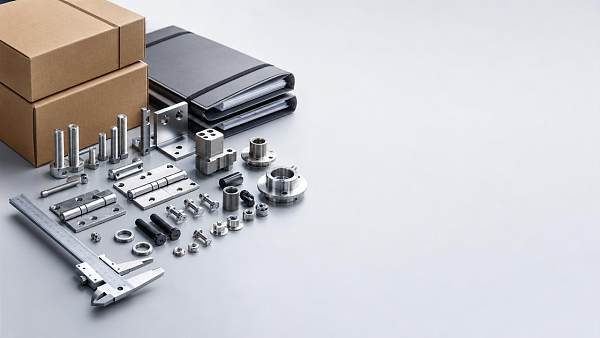
Scenario 1: Stocking Distribution Requires Predictable Replenishment
If your business model depends on carrying inventory and serving many small or mid-sized customer orders, the key question is not whether a supplier is cheapest today. It is whether that supplier can support stable stock rotation over the next twelve months. In this scenario, wholesale hardware components should be judged on fill rate, on-time performance, packaging integrity, and the supplier’s ability to maintain specification consistency across recurring orders.
A distributor that wins on paper with a low unit price may still lose margin if cartons arrive mislabeled, if lot variation triggers customer complaints, or if stockouts force urgent spot buys from more expensive sources. Even small variances can damage account trust when customers depend on routine availability. Therefore, ask suppliers for shipment performance data, stock planning practices, and historical lead time variance, not just average lead time.
For catalog-based sellers, SKU management is another deciding factor. Suppliers of wholesale hardware components should offer clean part numbering, consistent technical sheets, and disciplined revision control. These details reduce picking errors, support digital catalog accuracy, and improve customer service efficiency.
Scenario 2: Project Supply Demands Schedule Control More Than Lowest Cost
Dealers and agents serving construction, equipment installation, environmental systems, or industrial upgrade projects often buy wholesale hardware components in milestone-driven phases. In these cases, delayed shipments can trigger site downtime, labor disruption, and penalty exposure. The financial damage from one late batch may exceed the savings from an attractive quote.
Here, supplier comparison should focus on delivery coordination capability. Can the vendor split shipments by installation phase? Can they hold stock against a forecast? Can they update packing lists quickly when drawings change? Can they flag raw material constraints early enough for you to revise procurement plans? These questions matter more than a small difference in piece price.
Project environments also increase the value of traceability. When wholesale hardware components are tied to infrastructure, filtration modules, machinery frames, or field equipment, you need lot records that help isolate issues without disrupting the whole project. A supplier with strong traceability and claims response can save time, protect your client relationship, and reduce dispute friction.
Scenario 3: OEM-Oriented Channels Need Compliance and Technical Discipline
If your customers are OEMs, Tier suppliers, or technically demanding manufacturers, comparing wholesale hardware components becomes a matter of process capability. In these accounts, unit cost only matters after the supplier has demonstrated repeatable quality, documentation readiness, and controlled change management. End users may require adherence to ISO, IATF, IPC, RoHS, REACH, or customer-specific standards depending on the component category.
Distributors in this channel should request more than a certificate copy. They should examine inspection plans, gauge control, nonconformance handling, and whether engineering teams can support drawing reviews or specification clarifications. A technically weak supplier may pass a simple RFQ stage yet fail once production validation begins. In regulated or performance-critical applications, even minor material substitutions or tolerance drift can create serious quality escapes.
This is where a benchmarking mindset is valuable. GIM’s cross-sector perspective is useful because many wholesale hardware components now sit at the intersection of mechanical precision, electronics integration, and sustainability expectations. A sourcing decision should reflect not only what the component is, but also what system it influences.
Scenario 4: Aftermarket and Service Channels Must Minimize Returns
Aftermarket distribution looks simple until returns start to rise. In service-oriented channels, wholesale hardware components need to fit quickly, perform consistently, and be easy for technicians or resellers to identify. If the supplier’s labeling is unclear, dimensional tolerances drift, or packaging allows damage in transit, return rates can increase sharply.
For this scenario, compare vendors on practical service outcomes. Review complaint trends, replacement handling speed, sample-to-batch consistency, and technical file clarity. Ask whether the supplier can provide photos, installation notes, or cross-reference support. These tools reduce misorders and improve field confidence. The best supplier for aftermarket wholesale hardware components is often the one that lowers support cost, not the one that posts the lowest quote.
What to Measure Beyond Unit Price
Across all scenarios, the strongest supplier comparisons use a weighted scorecard. This helps teams move from subjective impressions to defendable procurement decisions. When evaluating wholesale hardware components, consider measuring the following:
- Quality consistency: defect rate, batch variation, incoming inspection performance
- Delivery reliability: on-time shipment rate, lead time variability, emergency response ability
- Compliance readiness: material declarations, test reports, certifications, traceability records
- Commercial resilience: payment flexibility, Incoterms clarity, currency risk handling
- Technical support: drawing review, substitution guidance, root cause response quality
- Supply continuity: raw material visibility, production redundancy, change notification discipline
A supplier may still win if its quote is not the lowest, provided it reduces total cost of ownership. For wholesale hardware components, total cost includes inventory carrying pressure, expediting fees, field failures, customer claims, and the labor consumed by poor supplier management.
Common Misjudgments in Comparing Wholesale Hardware Components
One common mistake is assuming that all suppliers with similar drawings or samples can deliver the same production outcome. Early samples often represent a best-case effort, while real supply performance depends on process control and capacity discipline. Another mistake is ignoring packaging and logistics. For many wholesale hardware components, surface damage, mixed lots, or moisture exposure can turn acceptable manufacturing quality into poor delivered quality.
Buyers also underestimate the cost of weak communication. A supplier that answers slowly, changes commitments casually, or fails to explain deviations creates hidden risk. In multi-country sourcing, these communication gaps can multiply through time zone differences and documentation delays. Lastly, many channel businesses compare current pricing but fail to check whether the supplier can scale. If a vendor cannot support future volume or additional SKUs, your growth becomes constrained.
How Different Channel Partners Should Adapt Their Evaluation Method
Distributors, dealers, and agents should not use identical scorecards. A regional dealer with project customers may assign the highest weight to delivery flexibility and claims speed. A national distributor may emphasize inventory continuity, packaging consistency, and catalog data quality. An industrial agent working with OEM accounts should increase the weight of compliance, engineering competence, and formal corrective action capability.
This tailored method is especially important when sourcing wholesale hardware components across mixed sectors. A product line that serves smart agriculture equipment may demand corrosion resistance and field durability, while one serving electronics assemblies may require stricter dimensional repeatability and material disclosure. Good procurement practice means matching supplier strengths to the revenue model you are trying to protect.
A Practical Shortlist Process for Better Supplier Decisions
A practical process can be simple. First, group your wholesale hardware components by sales scenario: stock, project, OEM, or aftermarket. Second, define the top five risks in each group. Third, ask suppliers for evidence, not promises. Fourth, run a weighted comparison on landed cost, quality, lead time stability, and support performance. Fifth, validate the result with a trial order or pilot batch before expanding the relationship.
Where possible, use external intelligence and benchmark references to support the review. Cross-sector visibility helps identify whether a supplier’s process maturity is aligned with the demands of your target market. That is where a data-backed platform such as GIM can add value by improving the rigor of comparison and reducing blind spots in supplier selection.
FAQ: Smart Comparison Questions Before You Place the Order
How many suppliers should I compare for wholesale hardware components?
Three to five qualified suppliers is usually enough for a meaningful comparison. Fewer can limit visibility; too many can slow decisions without improving quality.
Should I always dual-source wholesale hardware components?
Not always, but dual sourcing is wise for high-volume, high-risk, or long-lead items. It is less critical for low-risk parts with proven continuity and clear backup plans.
What document is most often overlooked?
Change notification procedures are often overlooked. They matter because unauthorized changes in material, tooling, process, or subcontracting can affect quality and customer acceptance.
Choose the Supplier That Fits the Scenario, Not Just the Spreadsheet
The best sourcing strategy for wholesale hardware components is rarely the one with the lowest visible price. It is the one that fits your business scenario, protects your service promise, and reduces operational surprises over time. Whether you sell from stock, support projects, serve OEM accounts, or manage aftermarket demand, supplier comparison should reflect the actual conditions under which those components create value.
If you want more reliable supplier decisions, start by defining your scenario, weighting the right risks, and validating claims with data. That approach leads to stronger margins, better customer retention, and a more resilient sourcing model for wholesale hardware components in a competitive global market.
The Archive Newsletter
Critical industrial intelligence delivered every Tuesday. Peer-reviewed summaries of the week's most impactful logistics and market shifts.