Monday, May 22, 2024

Choosing an Injection Molding Manufacturer for Tight Tolerances
by
Published
Views:
Choosing an injection molding manufacturer for tight tolerances demands more than a review of quoted cost and nominal lead time.
Dimensional stability, mold repeatability, resin behavior, metrology discipline, and supply resilience all shape final performance.
Across electronics, automotive, agri-tech, filtration, and precision tooling, tolerance capability affects assembly yield, field reliability, and lifecycle cost.
A capable injection molding manufacturer should align tooling accuracy, process control, and quality documentation with cross-industry benchmarks.
That alignment reduces variation risk and creates dependable long-term production performance in complex global manufacturing programs.
Defining Tight Tolerances in Injection Molding
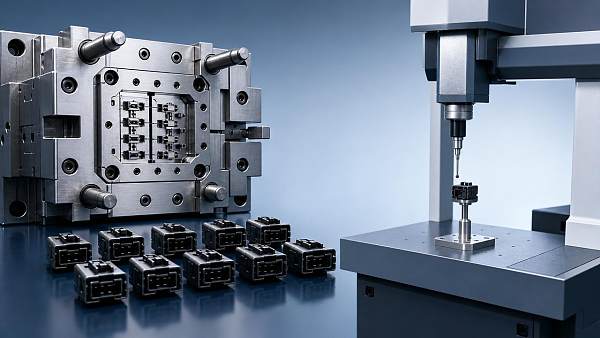
Tight tolerances in molded parts mean allowable dimensional variation is narrow relative to part geometry, material shrinkage, and functional requirements.
The exact threshold depends on part size, wall thickness, resin family, gate design, and downstream assembly sensitivity.
For one injection molding manufacturer, a small connector housing may require micron-level consistency at critical interfaces.
Another project may prioritize flatness, concentricity, warpage control, or stable snap-fit dimensions across multiple cavities.
This is why tolerance reviews should separate cosmetic dimensions from functional dimensions and critical-to-quality features.
Key sources of variation
- Material shrink rate variation between resin lots
- Mold steel wear and cavity imbalance
- Machine repeatability and clamp stability
- Cooling channel design and thermal inconsistency
- Measurement method mismatch and gage uncertainty
A reliable injection molding manufacturer treats tolerance control as a system issue, not only a mold machining issue.
Industry Context and Current Evaluation Signals
Global manufacturing increasingly connects molded components with electronics, motion systems, sealing assemblies, and sustainability-critical infrastructure.
As products become lighter, smarter, and more integrated, tolerance windows often become narrower and validation expectations become stricter.
A modern injection molding manufacturer is therefore assessed on technical evidence, traceability, and process discipline.
These signals explain why a qualified injection molding manufacturer must offer more than molding capacity alone.
Core Capabilities to Verify in an Injection Molding Manufacturer
Capability verification should start with process evidence and continue through tooling, metrology, validation, and supply continuity.
Tooling precision
The mold determines cavity geometry, venting quality, gate consistency, and cooling effectiveness.
Ask whether the injection molding manufacturer controls mold design internally or through audited partners.
Review cavity-to-cavity balance strategy, steel selection, maintenance intervals, and mold flow analysis practices.
Process control
Tight tolerance molding depends on stable barrel temperature, injection speed, hold pressure, cooling time, and material drying conditions.
A strong injection molding manufacturer documents validated process windows and monitors drift before defects reach shipment.
Quality systems and standards
Evidence of ISO-based control systems supports consistency, but certificates alone are insufficient.
Look for first article inspection, PPAP familiarity, control plans, MSA discipline, and statistical process control on critical dimensions.
Metrology resources
A capable injection molding manufacturer should match measurement technology to part risk.
That may include CMM inspection, optical measurement, vision systems, pin gages, functional fixtures, and calibrated environmental controls.
Business Value of the Right Supplier Decision
Selecting the right injection molding manufacturer protects more than part dimensions.
It influences assembly uptime, scrap rates, warranty exposure, qualification effort, and inventory strategy.
When molded parts feed automated lines, minor dimensional drift can stop production or cause hidden field failures.
When parts serve environmental systems, dimensional inconsistency can compromise sealing, flow, or maintenance intervals.
A disciplined injection molding manufacturer creates measurable value through lower variation and better production predictability.
- Reduced rework and incoming inspection burden
- Improved fit with mating components
- Faster ramp-up for new programs
- Better support for global dual-source planning
- Stronger traceability during audits and corrective actions
Typical Part Categories and Evaluation Priorities
Tolerance expectations vary widely by molded part type, end-use environment, and functional consequence.
The best injection molding manufacturer will discuss these priorities in relation to the actual use case, not generic capability claims.
Practical Selection Guidelines and Risk Checks
A structured review process improves decision quality and exposes capability gaps early.
- Define critical dimensions, tolerance stack-up, resin grade, and environmental conditions before requesting quotation.
- Ask the injection molding manufacturer for similar part references by size, geometry, and resin family.
- Review DFM feedback quality, not only response speed.
- Confirm validation outputs such as capability studies, FAI reports, and dimensional layouts.
- Evaluate mold maintenance, spare insert planning, and engineering change control.
- Check raw material traceability, drying controls, and regrind policy for critical parts.
- Assess communication discipline during trial runs, deviations, and corrective action cycles.
Common warning signs
- Capability promises without measured data
- Unclear ownership of tooling design revisions
- No distinction between cosmetic and functional tolerances
- Inconsistent measurement methods across samples
- Limited contingency planning for machine downtime or material shortages
These checks help identify whether an injection molding manufacturer can support stable production after initial approval.
Operational Next Steps for Better Supplier Alignment
The most effective next step is to convert tolerance expectations into a documented technical review package.
That package should include drawings, CTQ dimensions, resin requirements, annual volume, validation needs, and target risk controls.
A qualified injection molding manufacturer can then respond with grounded process assumptions and realistic control methods.
Within a cross-sector benchmarking framework such as GIM, supplier comparison becomes more transparent and technically consistent.
That approach supports better sourcing decisions across electronics, mobility, agri-tech, ESG infrastructure, and precision tooling applications.
When tight tolerances matter, choose an injection molding manufacturer based on verified capability, disciplined controls, and repeatable production evidence.

The Archive Newsletter
Critical industrial intelligence delivered every Tuesday. Peer-reviewed summaries of the week's most impactful logistics and market shifts.