Monday, May 22, 2024

Custom Injection Molds: When Higher Tooling Cost Pays Off
by
Published
Views:
For enterprise buyers and manufacturing leaders, custom injection molds can seem expensive at first glance—but the long-term payoff often justifies the investment. When product complexity, quality consistency, and production scale matter, the right tooling strategy reduces defects, shortens cycle times, and strengthens supply chain reliability. Understanding when higher upfront mold costs deliver measurable operational value is essential for smarter industrial decision-making.
Why do custom injection molds cost more, and what are you really paying for?
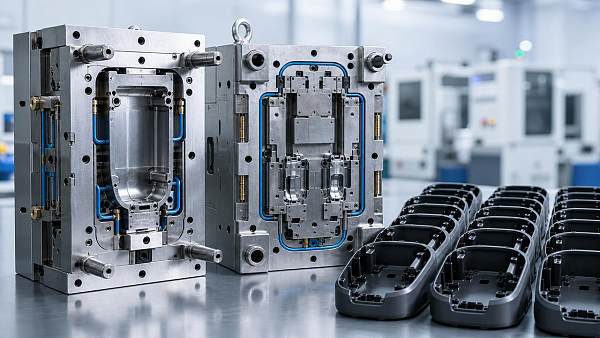
The price gap between basic tooling and custom injection molds is not just about steel weight or machining hours. It usually reflects engineering depth, dimensional tolerance strategy, cavity design, expected tool life, maintenance access, automation compatibility, and the consequences of part failure in the field.
In cross-sector manufacturing, a molded component may sit inside an EV charging assembly, a sensor housing, an irrigation controller, a filtration module, or an electronics enclosure. In these contexts, mold quality influences not only piece-part cost but also line uptime, downstream assembly yield, warranty risk, and qualification stability.
This is why enterprise teams should assess tooling as a production asset rather than a one-time purchase. Higher-cost custom injection molds often include process features that lower total cost over the life of the program.
- Optimized cooling channels that reduce cycle time and improve thermal balance across critical surfaces.
- Better gate, venting, and runner design that reduces burn marks, sink, weld lines, and trapped gas defects.
- Hardened tool steel and wear-resistant inserts for abrasive resins, glass-filled compounds, or high-volume production.
- Serviceable inserts that allow local repair instead of rebuilding the entire mold after damage or engineering changes.
- Design for automation, including stable ejection and repeatable part orientation for robotic handling or inline inspection.
What usually drives tooling cost upward?
The main drivers are rarely mysterious. They are typically linked to part geometry, material demands, expected annual volume, cosmetic requirements, and validation burden. If the part serves a regulated or mission-critical environment, the mold must support tighter process control and more repeatable output.
For enterprise procurement, these factors should be reviewed against lifecycle economics. A lower quote can be misleading if it creates recurring scrap, tool downtime, or unstable dimensional performance after the first production quarter.
When do higher-cost custom injection molds pay off fastest?
The return is strongest when molded parts influence critical business outcomes: launch timing, quality claims, plant efficiency, or supplier resilience. In other words, the mold matters most when part inconsistency causes much larger costs elsewhere in the manufacturing system.
Typical high-value scenarios
- Programs with annual demand high enough that a small cycle-time reduction meaningfully lowers total conversion cost.
- Assemblies where warped or inconsistent parts disrupt automated insertion, sealing, fastening, or electrical alignment.
- Products exposed to thermal stress, vibration, chemicals, UV, moisture, or outdoor service conditions.
- Platforms requiring regional dual-sourcing, where matched tooling behavior helps maintain interchangeability.
- Industries where qualification and PPAP-style documentation efforts make process instability especially expensive.
Cross-industry examples relevant to enterprise buyers
In semiconductor and electronics manufacturing, custom injection molds often support housings, carriers, and connector-related parts that must maintain dimensional consistency for precision fit. A modest tooling upgrade can prevent line jams and reduce field returns linked to misalignment or contamination ingress.
In automotive and mobility, molded parts frequently face stricter durability and traceability demands. Tooling that stabilizes gate balance, fiber orientation, and cooling uniformity can improve mechanical performance and reduce variation across shifts, cavities, or plants.
In smart agri-tech and environmental infrastructure, components may operate outdoors for years. Better mold design helps manage wall thickness, sealing surfaces, and material behavior, limiting cracking, distortion, or leakage in high-UV and variable-temperature environments.
Custom injection molds vs lower-cost tooling: what should decision-makers compare?
A smart sourcing decision compares more than purchase price. It should connect tool architecture to operational KPIs, including scrap, OEE, downtime, maintenance frequency, and change-management flexibility. The table below helps frame a practical comparison for procurement, engineering, and quality teams.
If the part is low-volume, non-critical, and easy to replace, lower-cost tooling may be enough. If the part sits inside a high-value system or repeated quality drift could delay customer shipments, custom injection molds often become the financially safer choice.
How should procurement teams evaluate tooling ROI before awarding the project?
Decision-makers need a disciplined framework that converts mold features into business impact. At GIM, the most useful benchmarking discussions connect tool design variables with production economics, qualification risk, and supply-chain continuity across sectors rather than reviewing tooling in isolation.
A practical evaluation checklist
- Define part criticality. Ask whether failure affects safety, sealing, electrical performance, cosmetic acceptance, or automated assembly yield.
- Estimate volume realistically. Tool ROI changes sharply when annual demand, cavity count, and takt time assumptions change.
- Review material behavior. Filled resins, flame-retardant grades, and engineering thermoplastics can justify stronger steel and tighter thermal control.
- Quantify hidden costs. Include scrap, rework, sorting, delayed launches, field service exposure, and line stoppages.
- Assess change risk. If geometry updates are likely, modular inserts can protect the original tooling investment.
- Check supplier process maturity. A good tool under weak validation discipline still creates execution risk.
Before selecting custom injection molds, many buyers ask for a simple cost model. That model should go beyond tool price and include production assumptions that affect total ownership.
When these inputs are benchmarked across programs, the business case becomes clearer. GIM’s cross-industry lens is especially useful when buyers need to compare tooling decisions affecting electronics, mobility, water systems, or agri-equipment platforms under one sourcing strategy.
Which technical and compliance factors should not be overlooked?
Custom injection molds are only as valuable as the process discipline around them. Tool design, resin selection, inspection plans, and validation methods must align with the end-use environment and the standards expected by the customer or the industry.
Key technical review points
- Dimensional strategy: identify critical-to-function features, datum control, and cavity-to-cavity consistency requirements.
- Thermal management: evaluate cooling layout because uneven heat extraction often drives warpage and extended cycle time.
- Material compatibility: verify resin shrink behavior, filler wear, moisture sensitivity, and flame or chemical exposure requirements.
- Inspection readiness: confirm whether the mold and process can support PPAP, FAI, capability studies, or other customer validation needs.
- Traceability and documentation: ensure tooling revisions, maintenance logs, and process changes are controlled.
Standards and benchmark context
While not every molded part must meet the same documentation depth, enterprise programs often align process expectations with recognized frameworks such as ISO quality management practices, IATF-related automotive discipline, or IPC-linked electronics assembly expectations where dimensional and material consistency affect downstream performance.
For organizations operating across sectors, a unified benchmark matters. GIM helps buyers compare tooling implications in relation to system-level requirements instead of evaluating each project in a vacuum. That is especially valuable when one procurement team supports multiple business units with very different failure modes and compliance burdens.
Common mistakes buyers make with custom injection molds
A frequent mistake is treating all mold quotes as interchangeable. Two suppliers may offer the same part price target while using very different assumptions about steel selection, venting, maintenance access, or validation effort. The gap often appears later as unstable yields or unexpected repair costs.
- Choosing the lowest tool price without asking how cycle time, scrap, and maintenance were modeled.
- Approving tooling before the resin, tolerance stack, and assembly interface are fully aligned.
- Ignoring serviceability, especially for inserts or wear zones likely to degrade under filled materials.
- Underestimating launch risk when part geometry is complex or cosmetic requirements are strict.
- Separating sourcing, engineering, and quality decisions instead of reviewing the mold as a shared operational asset.
The most effective enterprise teams build a cross-functional decision path early. That reduces late engineering changes, tool modifications, and disputes over whether the original quote truly covered long-run production conditions.
FAQ: what do enterprise buyers ask most about custom injection molds?
How do I know whether custom injection molds are justified for my part?
They are usually justified when the molded part is high-volume, function-critical, difficult to replace, or likely to affect automated assembly and warranty risk. If small improvements in scrap or cycle time change annual operating cost in a meaningful way, the tooling upgrade deserves serious review.
Are custom injection molds only for automotive or electronics programs?
No. They are also highly relevant in smart agriculture, industrial ESG infrastructure, water treatment modules, and other applications where parts face outdoor exposure, pressure sealing, chemical contact, or long service intervals. The more demanding the operating environment, the more tooling quality matters.
What should I ask a supplier before approving a higher tooling budget?
Ask about cavity design, steel grade, expected tool life, cooling concept, maintenance access, target cycle time, validation plan, and how future engineering changes would be handled. Also request assumptions behind quoted part cost so procurement can compare offers on the same basis.
Can a better mold really improve supply-chain reliability?
Yes, especially when output stability reduces emergency sorting, reactive maintenance, and quality containment. Better custom injection molds can help plants hold schedule adherence, protect customer delivery windows, and simplify dual-source or regional production planning.
Why choose us when evaluating custom injection molds across complex industrial programs?
Global Industrial Matrix brings a broader decision framework than a single-sector tooling discussion. Because GIM benchmarks manufacturing systems across Semiconductor & Electronics, Automotive & Mobility, Smart Agri-Tech, Industrial ESG & Infrastructure, and Precision Tooling, we help enterprise buyers connect mold strategy to system performance, qualification expectations, and supply-chain resilience.
Our value is not limited to quoting language or generic sourcing advice. We support procurement officers, Tier-1 engineers, and industrial strategists who need cross-sector transparency when comparing custom injection molds, supplier capability assumptions, and lifecycle cost tradeoffs.
What you can discuss with GIM
- Parameter confirmation for part geometry, resin behavior, tolerance sensitivity, and expected production volume.
- Tooling selection support, including whether a higher-spec custom injection mold is justified by cycle time, reject reduction, or maintenance savings.
- Delivery planning, from prototype tooling to production launch timing and change-control implications.
- Compliance and validation alignment for programs influenced by ISO, IATF, IPC, or customer-specific documentation needs.
- Quotation review and benchmarking to compare tooling assumptions, serviceability, and total ownership cost across suppliers.
If your team is deciding whether custom injection molds are worth the higher upfront spend, the right next step is a structured review of part criticality, annual volume, process risk, and long-run economics. Bring your drawings, material targets, forecast volumes, qualification needs, and delivery constraints. With that information, GIM can help you clarify the tooling path, compare alternatives, and reduce decision risk before capital is committed.

The Archive Newsletter
Critical industrial intelligence delivered every Tuesday. Peer-reviewed summaries of the week's most impactful logistics and market shifts.