Monday, May 22, 2024

How Injection Molding is Evolving for Electric Vehicles
by
Published
Views:
How Injection Molding is Evolving for Electric Vehicles
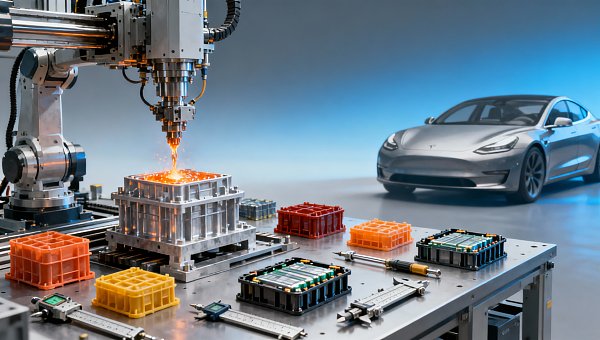
As electric vehicles (EVs) redefine mobility, injection molding technology is undergoing a transformative evolution to meet the demands of advanced electronics, sensors, and semiconductors. This critical manufacturing process now integrates renewable energy considerations while supporting next-gen ADAS systems and automotive engineering breakthroughs. For procurement specialists, engineers, and decision-makers, understanding these innovations is key to optimizing EV supply chains and maintaining competitive advantage in computer parts and precision tooling sectors.
The Shift in Material Science for EV Components
Traditional injection molding materials are being replaced by advanced composites to meet EV-specific requirements. The industry is witnessing a 40% increase in demand for engineering-grade polymers that can withstand higher temperatures (up to 180°C) while maintaining dimensional stability in battery enclosures and power electronics.
Key material innovations include:
- Flame-retardant polyamides for battery modules (UL94 V-0 rated)
- Conductive polymers for EMI shielding in ADAS components
- Bio-based thermoplastics with 30-50% renewable content for interior trims
Material selection now requires balancing 5-7 performance parameters including dielectric strength, creep resistance, and chemical compatibility with coolants. This complexity has increased lead times for material qualification by 2-3 months compared to conventional automotive applications.
Precision Tooling for Next-Gen EV Architectures
The transition to 800V battery systems and integrated drive units demands micron-level precision in molded components. Modern EV injection molding tools now achieve tolerances of ±0.02mm for critical components like:
- Power distribution busbars
- Thermal management system manifolds
- Sensor housings for autonomous driving systems
Tooling costs have increased by 25-40% due to these precision requirements, but the investment pays off through reduced assembly steps and improved component integration. The table below compares traditional vs. EV-specific tooling characteristics:
Four Critical Considerations for EV Tooling
- Conformal cooling channels for uniform thermal management
- Hardened steel inserts (HRC 52-56) for abrasive composites
- Integrated sensors for real-time process monitoring
- Quick-change systems for multi-material applications
Sustainability and Circular Economy Integration
EV manufacturers are pushing for closed-loop material systems in injection molding. Leading OEMs now mandate 15-30% recycled content in non-safety components, driving innovations in:
- Post-industrial regrind purification systems
- Chemical recycling of fiber-reinforced composites
- Blockchain-based material traceability
Energy consumption in molding processes has become a key differentiator, with advanced all-electric presses reducing power usage by 40-60% compared to hydraulic systems. The industry is moving toward ISO 14067-compliant carbon footprint tracking for molded components.
Implementation Roadmap for Procurement Teams
For procurement specialists evaluating injection molding partners, consider this 6-point assessment framework:
- Material science capabilities (3+ years EV-specific experience)
- IATF 16949 certification with VDA 6.3 process audits
- Minimum 50-ton to 3,000-ton press capacity range
- In-house tooling maintenance and repair
- APQP documentation for EV components
- Closed-loop recycling infrastructure
Lead times for complex EV components now average 12-16 weeks from design freeze to first articles, requiring closer collaboration between OEMs and suppliers.
Conclusion and Next Steps
The evolution of injection molding for electric vehicles represents both a technical challenge and strategic opportunity. As the industry moves toward integrated megacastings and structural battery systems, injection molding will continue to play a critical role in precision components and electronic integration.
For technical evaluators and procurement teams, staying ahead requires continuous benchmarking against emerging standards and material innovations. Contact our cross-sector intelligence team to access the latest technical specifications and supplier performance data for EV injection molding applications.

The Archive Newsletter
Critical industrial intelligence delivered every Tuesday. Peer-reviewed summaries of the week's most impactful logistics and market shifts.