Monday, May 22, 2024

Industrial Molds: Costly Design Mistakes to Avoid
by
Published
Views:
Industrial molds can make or break timelines, budgets, and product quality—especially for project leaders managing complex manufacturing programs. From weak DFM validation to material mismatch and poor tolerance planning, costly design mistakes often surface too late. This guide highlights the most critical risks to avoid, helping engineering and project management teams improve tooling decisions, reduce rework, and protect long-term production efficiency.
For project managers working across automotive, electronics, agri-tech, infrastructure, and precision tooling, mold decisions rarely affect only one component. A single design flaw can delay PPAP approval, trigger multiple tool modifications, or destabilize yield for 12 to 36 months of serial production.
That is why industrial molds should be reviewed as strategic assets rather than one-time tooling purchases. In cross-sector manufacturing programs, the real cost is not just the tool price. It includes validation cycles, scrap exposure, maintenance frequency, takt-time disruption, and supplier recovery effort.
Why Industrial Mold Design Mistakes Become Expensive So Quickly
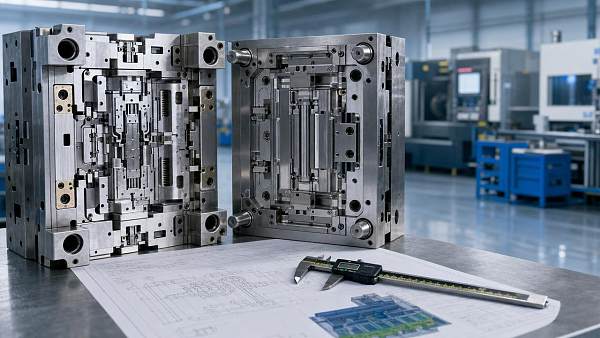
In most programs, the first 20% of mold design choices determine up to 80% of downstream manufacturability constraints. Once steel is cut, even minor geometry issues can add 2 to 6 weeks of rework, especially when cavity balance, cooling paths, or shut-off surfaces are already locked.
For project leaders, the financial impact usually appears in four areas: tooling change orders, delayed launch milestones, unstable quality results, and recurring maintenance downtime. These issues are amplified when industrial molds support multi-cavity production, tight cosmetic standards, or regulated applications.
The Hidden Cost Drivers Behind a “Workable” Tool
A mold can produce parts and still be a poor business decision. If cycle time is 18 seconds instead of the planned 13 seconds, annual output capacity drops sharply. If flash requires manual trimming on every shot, labor cost rises while process repeatability falls.
- Tool modification after T1 or T2 trial
- Excessive scrap during the first 5,000 to 20,000 shots
- Unplanned preventive maintenance every 2 to 4 weeks
- Part deformation that affects downstream assembly or sealing
- Supplier dependence on process adjustments instead of robust design
Typical Failure Points Project Teams Overlook
Industrial molds often fail at the interface between design intent and production reality. CAD may look clean, but resin flow, shrinkage behavior, venting, ejection, or thermal expansion can produce entirely different results on the machine floor.
This is especially common in programs that combine cosmetic surfaces, thin walls below 1.5 mm, inserts, or tolerance windows tighter than ±0.05 mm. In these cases, design decisions must be validated against actual process capability rather than nominal drawing assumptions.
Early Warning Signs Before Tool Release
- DFM feedback is limited to gate location and ignores fill, warp, cooling, and ejection balance.
- Material is selected by cost per kilogram instead of shrink, wear, fiber content, or thermal stability.
- Tolerances are copied from finished-part drawings without checking machine, mold, and process stack-up.
- Maintenance access for inserts, slides, lifters, and vents is not reviewed before fabrication.
The table below shows how common industrial mold design errors typically affect launch timing, cost, and quality stability in B2B production environments.
The main lesson is simple: a mold problem rarely stays inside the tooling department. It expands into procurement, quality assurance, launch planning, line balancing, and customer communication. That is why industrial mold reviews should be tied to the full project timeline, not only to toolmaking milestones.
The Most Costly Industrial Mold Design Mistakes to Avoid
The highest-risk mistakes are usually not dramatic engineering failures. They are manageable-looking compromises accepted too early. Over time, these become chronic production losses. For project managers, the objective is to detect them before PO release, steel cutting, and T1 sampling.
1. Incomplete DFM Validation
Many teams treat DFM as a document checkpoint instead of a technical decision gate. A strong review should cover gate type, weld lines, sink risk, wall variation, venting, cooling efficiency, ejector force, draft angle, and expected shrink range. In practice, at least 8 to 12 review items should be documented.
If DFM is reduced to a few annotated screenshots, industrial molds are likely to enter fabrication with unresolved assumptions. The result is usually more tuning effort at T1, repeated steel-safe changes, and inconsistent dimensional performance between cavities.
2. Material and Mold Steel Mismatch
Resin selection and tool steel selection must be linked. Abrasive materials such as glass-filled polymers can accelerate cavity wear, especially in high-volume production above 300,000 shots. Corrosive resins or flame-retardant compounds may also demand better steel grade or surface treatment.
When this match is ignored, maintenance intervals become shorter and dimensional stability declines earlier than expected. For project teams, that means more downtime, more spare insert cost, and a faster loss of process repeatability.
What to Verify Before Approval
- Resin family, filler percentage, and melt temperature window
- Expected lifetime, such as 100,000, 500,000, or 1,000,000 shots
- Tool steel hardness and wear resistance requirement
- Corrosion risk from additives, moisture, or cleaning chemistry
3. Poor Tolerance Stack-Up Planning
A common mistake in industrial molds is designing the tool to impossible part tolerances without separating critical-to-function dimensions from preferred dimensions. Not every feature requires the same process capability. Trying to hold all features to ±0.02 mm can create unnecessary cost and unstable yield.
Project leaders should classify dimensions into at least 3 groups: critical, controlled, and reference. This helps suppliers align cavity strategy, inspection frequency, and machine-process window with realistic production needs.
4. Weak Cooling and Venting Design
Cooling governs cycle time, warpage, and dimensional repeatability. Venting governs fill quality and surface integrity. Yet these are often treated as secondary details. In reality, poor cooling can reduce output by double-digit percentages, while poor venting can cause short shots even when machine settings look acceptable.
For thin-wall, cosmetic, or large-footprint parts, cooling channel proximity, flow balance, and vent access should be reviewed before manufacturing begins. Correcting them after hard tooling is far more expensive than adjusting them in design.
A Practical Review Framework for Project Managers
Project managers do not need to replace mold engineers, but they do need a repeatable framework for risk control. The most effective approach is to review industrial molds across technical, commercial, and operational layers before approving key milestones.
A 5-Step Gate Before Steel Cut
- Confirm part function, cosmetic class, annual volume, and launch timing.
- Review DFM findings with tooling, process, and quality representatives.
- Validate resin, insert, and mold steel compatibility for target tool life.
- Check tolerance hierarchy against process capability and measurement plan.
- Approve trial criteria for T1, T2, and pre-production run-off.
This 5-step sequence often prevents the most expensive industrial mold surprises. It also improves communication between procurement, engineering, and suppliers, particularly in international programs where the toolmaker, molder, and final assembler are not in the same region.
What to Ask Suppliers During Tooling Review
The right questions can reveal risk faster than a long slide deck. Project teams should request specific answers on cycle assumptions, expected cavity balance, maintenance frequency, spare insert planning, and validation criteria for dimensional acceptance.
The table below provides a structured checklist that procurement and engineering teams can use when evaluating industrial molds during sourcing or design review.
A checklist like this helps teams compare mold suppliers on technical readiness, not just quoted price. In many cases, the lower initial quote becomes more expensive once trial delays, corrective machining, and unstable production are taken into account.
Metrics Worth Tracking After T1
After first sampling, teams should track a focused set of indicators rather than reviewing dozens of disconnected observations. Four metrics are especially useful: cycle time versus target, dimensional pass rate, scrap rate, and corrective action count per trial round.
If the mold requires more than 3 major corrective loops before dimensional stability is reached, the original design review was probably incomplete. If scrap remains above 5% after process stabilization, the issue may be structural rather than purely parameter-based.
Cross-Industry Considerations for Modern Manufacturing Programs
Industrial molds are no longer isolated to one sector logic. Electronics housings, automotive connectors, smart agriculture components, and infrastructure parts all demand different validation priorities, yet they share the same need for traceable design decisions and controlled production windows.
How Requirements Shift by Application
In electronics, thin walls, cosmetic finish, and dimensional consistency for assembly often dominate. In automotive and mobility, long tool life, validated repeatability, and structured APQP-style controls become more important. In agri-tech and infrastructure, UV exposure, chemical resistance, and field durability may drive material and tool choices.
This is where a benchmarking mindset adds value. When teams compare industrial molds against international standards, process expectations, and end-use requirements early, they reduce cross-functional ambiguity and improve sourcing alignment.
Why Data Transparency Matters
For global programs, supplier decisions are stronger when tooling assumptions are documented in measurable terms: cycle target, shot life, tolerance class, resin specification, inspection method, and maintenance intervals. Without that transparency, project managers inherit preventable risks that surface only after launch pressure increases.
Platforms such as Global Industrial Matrix support this approach by connecting tooling choices to wider manufacturing benchmarks across electronics, mobility, sustainable industry, and precision engineering. That cross-sector view is increasingly important when programs share suppliers, materials, and compliance expectations across multiple product lines.
Common Procurement Mistakes
- Selecting mold suppliers primarily on unit price or tool lead time
- Accepting unclear ownership of design changes after T1 and T2 trials
- Failing to define spare parts, maintenance manuals, or acceptance samples
- Overlooking regional differences in standards, validation practice, and reporting discipline
When industrial molds are treated as strategic production systems, not just purchased hardware, teams make better decisions on cost, quality, and launch confidence. That shift is especially relevant for project leaders responsible for supplier coordination and long-term operational resilience.
Avoiding costly industrial mold mistakes starts with earlier validation, tighter supplier questioning, and clearer alignment between part requirements and production reality. Project managers who focus on DFM depth, material-tool compatibility, realistic tolerances, cooling performance, and measurable trial criteria can reduce rework, protect launch schedules, and improve lifetime tooling value.
For organizations managing complex manufacturing across sectors, GIM provides the technical benchmarking perspective needed to evaluate tooling decisions with greater confidence. If you need support comparing industrial molds, validating supplier readiness, or building a more resilient sourcing strategy, contact us to get a tailored solution and explore more cross-industry manufacturing insights.
The Archive Newsletter
Critical industrial intelligence delivered every Tuesday. Peer-reviewed summaries of the week's most impactful logistics and market shifts.