Monday, May 22, 2024

Industrial Molds: When Repair Costs Start Outweighing Replacement
by
Published
Views:
For financial decision-makers, industrial molds are more than production assets—they are long-term capital commitments. When repair expenses begin to rise faster than output reliability, the real question is no longer technical but economic: at what point does replacement deliver better value? This article examines the cost signals, risk factors, and lifecycle benchmarks that help determine when repairing industrial molds stops making financial sense.
Across electronics, automotive components, agricultural equipment, filtration housings, and precision tooling, mold performance directly affects unit cost, scrap rates, lead times, and customer delivery risk. A mold that still “runs” is not always a financially sound asset. For approvers responsible for capex and operating efficiency, the better decision often comes from comparing lifetime economics over the next 12–36 months rather than focusing on the next repair invoice alone.
This is where a cross-sector benchmarking view matters. In high-mix industrial environments, the replacement decision should consider repair frequency, downtime exposure, dimensional drift, quality escapes, spare part availability, and the strategic cost of supply chain disruption. The same industrial molds that once supported profitable output can eventually become a source of hidden margin erosion.
Why the Repair-or-Replace Decision Is Primarily a Financial Question
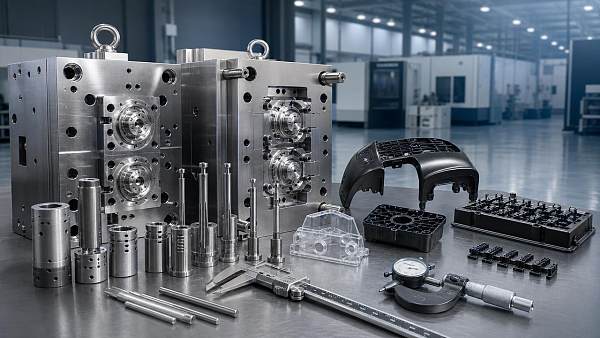
For engineering teams, mold repair is often framed around wear, cracks, flash, gate damage, or cooling inefficiency. For finance leaders, however, the key issue is return on every additional dollar spent. If a repair extends useful life by only 8–12 weeks while causing recurring production stoppages, the real cost is not the maintenance bill but the cumulative impact on throughput and forecast stability.
Industrial molds typically move through three economic phases. In phase one, routine maintenance is predictable and low-cost. In phase two, repairs become more frequent but still preserve acceptable part quality. In phase three, restoration costs accelerate while performance consistency declines. Replacement usually becomes more attractive once the mold enters this third phase, especially in operations with tight tolerances or delivery penalties.
Five cost categories that finance teams should track
Many organizations underestimate the true cost of aging industrial molds because spending is split across maintenance, quality, planning, and production accounts. A sound approval process should consolidate at least 5 categories: direct repair labor, external refurbishment costs, machine downtime, quality losses, and premium logistics caused by schedule slippage.
- Direct repair costs: welding, insert replacement, polishing, machining, and fitting
- Downtime costs: lost machine hours, line balancing disruption, labor idle time
- Quality costs: scrap, rework, containment, inspection escalation, customer returns
- Inventory costs: safety stock increases to buffer unreliable mold output
- Risk costs: late delivery, expediting, and reduced supplier credibility
A practical threshold for escalation
A common review trigger is when cumulative annual repair spending reaches 25%–35% of the cost of a new mold, especially if unplanned downtime rises above 2%–4% of scheduled production hours. In high-volume programs, even a 1.5% increase in scrap can offset the apparent savings of postponing replacement. The threshold may be lower for safety-critical or cosmetically sensitive parts, where defect risk carries downstream liability.
The table below helps translate technical symptoms into capital review signals. It is particularly useful for procurement and finance teams evaluating industrial molds across multiple plants or suppliers.
The key takeaway is that industrial molds rarely fail in a single dramatic event. More often, they deteriorate economically first. By the time quality becomes visibly unstable, the organization may already have absorbed months of hidden cost through inefficiency and schedule protection measures.
Lifecycle Benchmarks That Indicate Replacement Is Gaining Value
Not all aging molds should be replaced immediately. Some can remain profitable with planned refurbishment, especially when annual volumes are falling or product life is close to end-of-program. The goal is to compare expected remaining performance with replacement lead time, future demand, and the risk-adjusted cost of failure.
A disciplined benchmark usually combines 4 dimensions: physical wear, process capability, maintenance trend, and business criticality. A mold used for non-cosmetic utility parts with low monthly volume may tolerate more wear than one producing safety-adjacent electrical housings or automotive sealing features. The same repair history can mean different things depending on the end application.
What “end of economic life” looks like in practice
The end of economic life often arrives before total technical failure. In practical terms, this means the mold can still produce parts, but only with increasing intervention: more setup correction, tighter operator supervision, repeated polishing, cooling imbalance workarounds, or growing dependence on highly experienced technicians. When production stability depends on exceptional effort rather than normal controls, replacement deserves serious capex review.
Common benchmark indicators
- Tool life consumed beyond 80%–90% of its expected shot count or cycle exposure
- Maintenance intervals shortening from every 6 months to every 4–8 weeks
- Cycle time drift increasing by 5%–10% because of cooling or venting degradation
- Capability concerns, such as recurring difficulty maintaining dimensional repeatability
- Longer recovery time after each repair, often 3–7 days including qualification
The comparison below can help finance and sourcing teams categorize whether industrial molds remain good candidates for continued repair or whether replacement planning should begin within the next budgeting cycle.
This framework shows why mold replacement is not simply a maintenance choice. It is a portfolio decision tied to forecast duration, quality risk, and the cost of operational instability. For finance approvers, the strongest case emerges when several indicators move together rather than one metric in isolation.
How to Build a Business Case for Replacing Industrial Molds
Approving a new mold often competes with automation upgrades, line expansions, or inventory investments. To secure funding, the proposal should move beyond technical narratives and show a clear 12-month and 24-month cash impact. This means translating tooling condition into avoided cost, recovered capacity, and reduced commercial risk.
Use a three-layer ROI model
A practical model for industrial molds includes 3 layers. First, calculate direct cost avoidance from reduced repair and lower scrap. Second, estimate recovered output from less downtime and better cycle consistency. Third, assign a conservative value to risk reduction, such as fewer expedites, fewer late shipments, or reduced need for emergency outsourcing.
Inputs that decision-makers should request
- Repair spending for the last 12–24 months, separated into planned and emergency work
- Downtime hours by month, including setup recovery and requalification time
- Scrap and rework trend before and after major repairs
- Forecast volume for the next 2–3 years
- Quoted lead time for replacement, often 8–16 weeks depending on complexity
- Validation cost, sample approval steps, and ramp-up support needs
In many operations, the payback period for replacing an unstable mold falls within 9–18 months once downtime and quality losses are properly included. Where parts support automotive, electronics, water treatment, or other continuity-sensitive systems, the risk premium may justify replacement even earlier. This is especially true when a single mold constrains a bottleneck process or a customer-specific program.
Questions finance teams should ask before approval
- Will the new tool reduce total landed part cost or only restore current output?
- Can inserts, cavities, or modular components lower the initial capex burden?
- Is there a bridge plan for 6–12 weeks of supply continuity during tool build?
- Does the supplier have a documented qualification and dimensional validation process?
- Are there opportunities to standardize tooling design across similar programs?
These questions matter because replacement is not just a purchase event. It is an operational transition. The strongest proposals show not only the cost of the new mold, but also the path to stable launch, process verification, and controlled inventory coverage during changeover.
Risk Controls, Procurement Timing, and Cross-Sector Planning
In a fragmented manufacturing landscape, delayed replacement decisions can create cascading risk. This is particularly relevant for companies operating across multiple industrial sectors where tooling availability, steel selection, cooling design, and quality documentation vary by supplier region. A late decision may convert a manageable capital project into an urgent supply crisis.
When to start procurement planning
A good rule is to begin replacement planning when two conditions are present: first, performance instability is measurable; second, the program still has at least 12–18 months of expected production life remaining. This timing preserves enough runway for design review, sourcing, tool build, trial runs, PPAP or equivalent approval, and safety stock positioning.
Typical implementation sequence
- Condition audit of current mold and cost history review
- Demand forecast validation for the next 24–36 months
- Supplier RFQ with technical scope, tolerances, steel and maintenance expectations
- Commercial comparison including tool price, lead time, validation support, and warranty terms
- Build, sample approval, process qualification, and production cutover
For procurement leaders, the most resilient approach is not vendor selection based on price alone, but a benchmarked decision using delivery confidence, maintainability, documentation discipline, and compatibility with international manufacturing standards. Global Industrial Matrix (GIM) supports this type of evaluation by aligning cross-sector tooling insight with operational benchmarking logic rather than siloed purchasing assumptions.
Common mistakes that inflate lifecycle cost
- Approving repeated short-term repairs without reviewing 12-month cumulative cost
- Ignoring the cost of qualification downtime after each intervention
- Using current scrap averages that mask lot-to-lot instability
- Waiting until the mold becomes the single point of failure in the supply chain
- Comparing new tool price against repair invoices instead of total cost of ownership
Industrial molds should be managed as strategic assets with measurable economic stages, not as indefinite maintenance items. When repair frequency rises, process capability narrows, and program demand remains strong, replacement often provides better financial value than another cycle of corrective work. The right timing can protect margins, stabilize delivery performance, and reduce the operational drag caused by aging tools.
If your team needs a clearer benchmark for repair-versus-replace decisions across electronics, automotive, agri-tech, environmental systems, or precision tooling applications, GIM can help structure the evaluation around cost transparency and technical comparability. Contact us to discuss your tooling scenario, request a tailored assessment framework, or explore broader industrial benchmarking solutions.

The Archive Newsletter
Critical industrial intelligence delivered every Tuesday. Peer-reviewed summaries of the week's most impactful logistics and market shifts.