Monday, May 22, 2024

Injection Molding Supplier: Cost, Tolerance, and Tool Life
by
Published
Views:
Choosing the right injection molding supplier can determine whether a project stays on budget, meets tolerance requirements, and achieves stable long-run output. In complex industrial programs, molded components are rarely isolated parts; they interact with electronics, automotive subsystems, filtration assemblies, tooling interfaces, and structural housings. That makes supplier evaluation more than a pricing exercise. A capable injection molding supplier must control material behavior, process consistency, mold durability, and quality documentation in ways that support both immediate production goals and wider supply chain resilience.
Core Definition of an Injection Molding Supplier
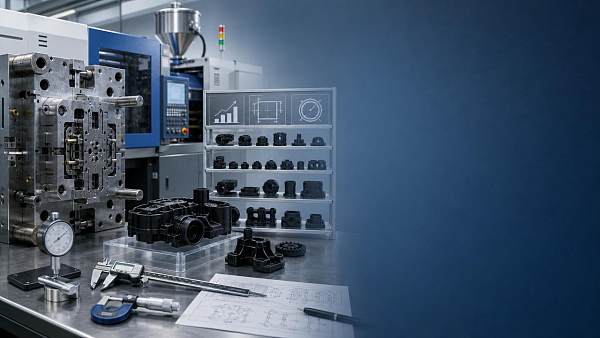
An injection molding supplier is a production partner that transforms thermoplastics or engineered resins into repeatable parts through mold-based manufacturing. In practice, the role often extends beyond molding alone. Many suppliers also support DFM review, mold design coordination, tool maintenance, resin selection, dimensional inspection, secondary operations, and packaging for global shipment. The most reliable partners connect these steps into a controlled system rather than treating them as separate transactions.
For cross-industry applications, supplier capability is usually measured across three technical dimensions: cost, tolerance, and tool life. Cost affects total landed value and design feasibility. Tolerance determines fit, function, and assembly reliability. Tool life influences production continuity, maintenance planning, and long-term unit economics. These factors are interdependent. A low initial quote may hide frequent tool repair, unstable cycle time, or poor dimensional repeatability that raises the true cost of ownership later.
Current Industry Priorities and Sourcing Signals
Across electronics, mobility, agri-tech, environmental infrastructure, and precision tooling, expectations for molded parts have increased. Components must often withstand heat, vibration, chemicals, moisture, UV exposure, and tighter assembly windows. At the same time, global supply networks continue to face material volatility, tooling transfer risk, and compliance pressure. As a result, selecting an injection molding supplier now requires a broader technical and operational review.
Cost Structure Beyond the Quoted Piece Price
The quoted unit price is only one layer of molding economics. A realistic evaluation of an injection molding supplier should include tooling cost, resin consumption, setup time, scrap rate, cycle time, labor content, secondary operations, quality control, packaging, freight, and expected maintenance over the life of the program. In many cases, the supplier with the lowest nominal price is not the lowest total-cost option.
Several variables drive cost sharply upward or downward. Part geometry influences fill balance, sink risk, and ejection difficulty. Resin choice affects material price and process stability. Cavitation strategy changes output rate but may increase tooling complexity. Surface finish, insert molding, overmolding, and tight tolerances can add inspection and process burden. When comparing suppliers, it is useful to request cost assumptions in a transparent format so that differences in quote logic become visible.
- Tooling grade: prototype, bridge, or hardened production mold
- Expected annual volume and lifetime volume
- Material family, regrind policy, and resin traceability
- Cycle time assumptions and cavity count
- Included quality reports, sampling plan, and capability studies
- Maintenance intervals and tool refurbishment responsibility
A disciplined injection molding supplier should be able to explain where cost is created and where it can be reduced through design refinement. Small changes such as increasing draft, simplifying ribs, adjusting nominal wall thickness, or relaxing a nonfunctional cosmetic requirement may reduce cycle time and extend tool life at the same time.
Tolerance Control and Dimensional Reliability
Tolerance is often the hardest performance factor to recover once tooling is built. An injection molding supplier with strong dimensional control understands that plastic parts do not behave like machined metal components. Shrinkage varies by resin type, fiber content, gate location, wall thickness, cooling balance, and molding window. Therefore, tolerance capability depends not only on mold accuracy but also on stable processing and measurement discipline.
Critical dimensions should be separated from general dimensions early in the program. Functional fits, sealing interfaces, clip engagement points, connector locations, and datum-dependent features need dedicated review. For precision applications, it is reasonable to ask the supplier for mold flow analysis references, gauge method details, first article reports, and Cp/Cpk data where appropriate. This creates a factual basis for judging whether the injection molding supplier can maintain consistency across shifts, lots, and tool maintenance cycles.
Tool Life as a Strategic Production Variable
Tool life is often underestimated during sourcing, yet it has direct impact on output continuity, spare capacity, and cumulative part cost. A production mold may be expected to deliver anywhere from tens of thousands to more than a million cycles depending on steel grade, resin abrasiveness, geometry, cooling design, and maintenance quality. The best injection molding supplier does not promise a generic lifespan; it defines expected tool performance under stated production conditions.
Glass-filled materials, flame-retardant compounds, aggressive textures, and high cavitation can accelerate wear. Vent clogging, poor water quality, inadequate lubrication, or delayed maintenance can shorten mold life even when the tool was well built. That is why tool life should be reviewed together with PM schedules, wear component strategy, spare insert policy, and refurbishment timing. In long programs, this information becomes essential for avoiding unexpected downtime and quality drift.
Typical Cross-Industry Application Scenarios
The requirements placed on an injection molding supplier vary by application, but the underlying decision logic remains similar: match part function to process capability, documentation depth, and mold durability. The following examples reflect common industrial use cases.
Practical Evaluation Criteria and Risk Controls
A structured supplier review reduces uncertainty before tooling investment. Instead of relying on broad capability claims, compare evidence in process engineering, quality systems, mold stewardship, and communication discipline. A dependable injection molding supplier should demonstrate how it manages change, documents deviations, and protects dimensional integrity over time.
- Request DFM feedback before tool release, including gate, draft, wall thickness, and ejection comments.
- Confirm the inspection plan for critical dimensions and cosmetic standards.
- Review mold steel, expected shot life, and the maintenance schedule in writing.
- Check whether process parameters, resin lots, and corrective actions are traceable.
- Clarify ownership and transfer conditions for tooling, inserts, and inspection fixtures.
- Validate how the injection molding supplier handles capacity changes and engineering revisions.
These controls are especially important where molded parts support regulated products, safety-relevant assemblies, or global production platforms. The more critical the application, the less acceptable it is to separate commercial evaluation from technical evidence.
Next-Step Framework for Supplier Selection
A strong sourcing decision starts with a clear technical package: 3D model, 2D drawing, resin requirement, annual demand, critical dimensions, cosmetic expectation, and end-use environment. With that baseline, compare each injection molding supplier on total cost logic, achievable tolerance, and realistic tool life rather than headline pricing alone. This approach creates a more durable basis for nomination and reduces downstream correction cost.
For organizations benchmarking suppliers across multiple industrial sectors, the most valuable outcome is not simply a lower quote, but a verified manufacturing partner that can sustain quality under changing demand, material constraints, and product complexity. In that context, a qualified injection molding supplier becomes a measurable contributor to operational resilience, engineering confidence, and long-term production efficiency.

The Archive Newsletter
Critical industrial intelligence delivered every Tuesday. Peer-reviewed summaries of the week's most impactful logistics and market shifts.