Monday, May 22, 2024

Injection Molding Supplier Selection Mistakes
by
Published
Views:
Choosing the right injection molding supplier can determine whether a project stays on schedule, meets quality targets, and controls total cost. Small selection errors often begin quietly, then expand into tooling delays, unstable dimensions, scrap, and avoidable logistics exposure.
Across electronics, automotive, agricultural equipment, filtration systems, and precision tooling, supplier evaluation is changing. A capable injection molding supplier is no longer judged only by price, machine tonnage, or sample speed.
Today, sourcing decisions must connect mold design discipline, resin knowledge, quality systems, traceability, and multi-site resilience. The most expensive mistake is often choosing an injection molding supplier that looks efficient on paper but cannot support the full production lifecycle.
Why injection molding supplier selection is becoming a higher-risk decision
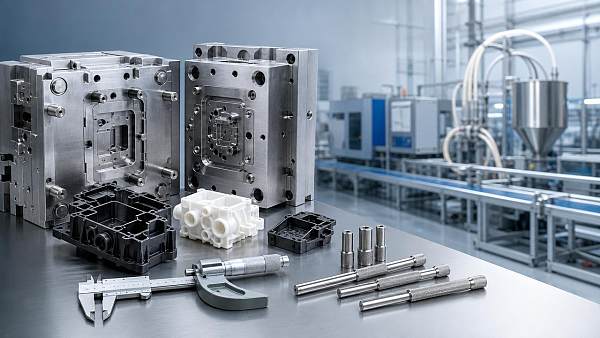
Global manufacturing has become more interconnected and less forgiving. Plastic parts now sit inside advanced assemblies, safety-critical systems, and high-visibility consumer applications where tolerance drift creates downstream failure.
That shift has changed what buyers should expect from an injection molding supplier. The role now includes engineering collaboration, documentation readiness, process control, and risk visibility across materials, tooling, and production transfer.
In sectors tracked by Global Industrial Matrix, demand patterns also move faster. Design revisions, sustainability requirements, and regionalized supply strategies are pushing teams to review supplier capability more deeply before committing tools.
The strongest warning signals appear before tooling starts
Many injection molding supplier problems are visible early, but they are often overlooked during quoting. A low quote, a confident sales response, or a polished presentation can hide technical gaps that later become costly.
The most common mistakes usually involve underestimating capability mismatch rather than simple supplier failure. The wrong injection molding supplier may still produce parts, but not at the quality, speed, or consistency required.
Common selection mistakes that keep repeating
- Choosing mainly on piece price without evaluating total cost.
- Approving a supplier before reviewing mold-flow, DFM, or gating logic.
- Assuming prototype success guarantees mass-production stability.
- Ignoring resin drying, regrind policy, and material traceability controls.
- Overlooking secondary operations, packaging, and shipment protection.
- Failing to verify maintenance discipline for tools and machines.
- Accepting generic quality claims without process evidence.
- Not testing how the injection molding supplier handles engineering changes.
What is driving these supplier risks across industries
The pressure on every injection molding supplier comes from several converging forces. Parts are becoming lighter, thinner, more functional, and more integrated into digital and mechanical systems.
Where the wrong injection molding supplier causes the most damage
Selection mistakes do not impact only molding cost. They spread into launch timing, line uptime, certification progress, warranty exposure, and even redesign cycles. The broader the application, the larger the consequence.
In electronics, poor dimensional repeatability can disrupt connector alignment or enclosure sealing. In mobility programs, unstable molded parts can affect clip retention, vibration performance, and appearance standards.
In agricultural and infrastructure products, material misuse can shorten outdoor life, weaken chemical resistance, or reduce structural reliability. A weak injection molding supplier may pass first articles yet fail under real environmental stress.
Typical business effects of poor supplier selection
- Tool modification costs increase after mold release.
- PPAP or qualification cycles extend beyond launch windows.
- Inventory buffers rise to protect against unstable output.
- Field issues become harder to trace without process records.
- Supplier transition becomes slower because documentation is weak.
How to evaluate an injection molding supplier with more technical clarity
A stronger evaluation method looks beyond quotations and sample parts. It tests whether the injection molding supplier can control variation, protect the tool, manage resin behavior, and communicate technical issues early.
Focus areas worth verifying before nomination
- DFM quality, including wall thickness, gate location, venting, and ejection review.
- Mold ownership terms, maintenance records, and spare component planning.
- Material control, including lot traceability, drying logs, and storage conditions.
- Validation methods such as capability studies, first article reporting, and run-at-rate evidence.
- Quality system alignment with ISO, IATF, IPC-related expectations, or customer-specific controls.
- Secondary process capability for insert molding, ultrasonic welding, printing, or assembly.
- Response speed to nonconformance, containment, and corrective action requests.
The right injection molding supplier should provide process evidence, not only verbal assurance. Documented control plans, cavity balance awareness, and maintenance routines often reveal more than polished commercial messaging.
A practical way to compare injection molding supplier options
A weighted comparison model helps separate low price from real capability. It also reduces bias when several suppliers appear similar during early discussions.
What deserves closer attention over the next sourcing cycle
Future-ready sourcing requires attention to capability depth, not just factory scale. The most dependable injection molding supplier may be the one with stronger process discipline rather than the biggest machine park.
- Check whether material substitutions are formally controlled.
- Review how tooling data is stored and transferred.
- Verify preventive maintenance schedules for both mold and press.
- Confirm packaging standards for cosmetic and precision components.
- Assess whether the supplier can support ramp, transfer, and redesign phases.
- Ask for examples of past recovery from quality or capacity disruption.
These checks matter even more when molded parts support cross-industry platforms. As products combine electrical, mechanical, and environmental functions, the injection molding supplier becomes part of system reliability, not just part production.
A better next step for reducing supplier selection mistakes
Before awarding tooling, build a short technical review gate. Require DFM evidence, material control details, capacity confirmation, quality documentation, and escalation contacts from each injection molding supplier under consideration.
Then compare suppliers using the same scorecard, not separate assumptions. That approach improves transparency, highlights hidden risk, and supports stronger sourcing decisions across electronics, mobility, agri-tech, infrastructure, and precision manufacturing.
For organizations navigating complex global manufacturing, data-backed benchmarking can sharpen this process further. With structured supplier intelligence, an injection molding supplier choice becomes less reactive and far more resilient.

The Archive Newsletter
Critical industrial intelligence delivered every Tuesday. Peer-reviewed summaries of the week's most impactful logistics and market shifts.