Monday, May 22, 2024

Mold Cycle Time Optimization Without Sacrificing Part Quality
by
Published
Views:
For technical evaluators, mold cycle time optimization is never just about shaving seconds off production—it is about balancing throughput, dimensional stability, surface quality, and process reliability. In complex manufacturing environments, the right optimization strategy must connect tooling design, cooling efficiency, material behavior, and quality benchmarks to deliver measurable gains without introducing hidden defects or downstream risk.
Why scenario differences matter in mold cycle time optimization
In practice, mold cycle time optimization rarely succeeds through one universal rule. A packaging supplier producing high-volume thin-wall parts will judge success very differently from an automotive toolroom validating safety-critical housings, or from an electronics manufacturer molding dimension-sensitive connectors. The same two-second reduction may be highly valuable in one program, yet unacceptable in another if it increases warp, sink, flash, or unstable cavity pressure.
That is why technical evaluators need a scenario-based framework. Instead of asking only, “How fast can the mold run?” the better question is, “Under which operating conditions can mold cycle time optimization improve output without eroding quality capability, compliance margins, or cost of poor quality?” At Global Industrial Matrix, this cross-sector view matters because procurement, engineering, and operations teams often compare tooling performance across suppliers, regions, and product classes that do not share identical risk profiles.
Where mold cycle time optimization typically becomes a priority
The strongest demand for mold cycle time optimization appears in programs where capacity, quality, and tooling economics are tightly linked. Technical evaluators usually encounter it in five recurring business scenarios:
- High-volume consumer or industrial parts where output bottlenecks directly limit shipment commitments.
- Automotive and mobility components where cycle reduction must still protect dimensional repeatability, traceability, and PPAP stability.
- Electronics and connector molding where thermal balance affects gate freeze, flash control, and tight-tolerance fit.
- Precision tooling transfer projects where a new tool or new plant must match a proven quality baseline while improving efficiency.
- Sustainability-driven operations where lower cycle time also supports energy reduction, machine utilization, and lower scrap intensity.
Across these scenarios, the objective is similar, but the acceptable path is not. Evaluators should therefore benchmark cooling design, mold steel condition, part geometry sensitivity, resin window, and process monitoring maturity before approving aggressive optimization targets.
Scenario comparison: what changes from one application to another
A useful way to assess mold cycle time optimization is to compare the dominant business constraint in each application. The table below highlights how evaluation criteria shift by scenario.
For evaluators, this comparison prevents a common mistake: applying the same cycle target to tools with very different cavity layouts, resin shrink behavior, or cosmetic requirements. Mold cycle time optimization should always be measured against the actual quality gate of the program, not just the machine timer.
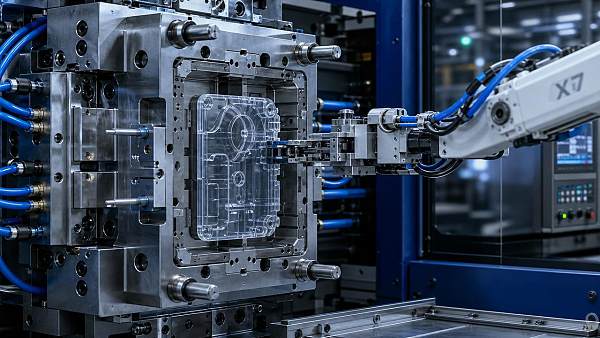
Scenario 1: high-volume parts where capacity pressure is the main driver
In high-volume environments, even a small reduction in cooling or handling time can create major annual output gains. Here, mold cycle time optimization often focuses on heat extraction, automated part removal, and reducing non-value-added dwell time. Technical evaluators should pay close attention to whether the process is already operating near the thermal limit of the part.
If the part leaves the mold too hot, downstream problems may appear after the press, not at the press. These include post-mold shrink variation, stack deformation, assembly instability, and increased reject rates during packaging. In this scenario, the strongest optimization candidates usually include conformal cooling, improved water channel maintenance, lower thermal resistance at inserts, and scientific review of true gate freeze time rather than inherited settings.
Scenario 2: cosmetic or fit-critical parts where quality margins are narrow
For visible surfaces, mating features, or tolerance-critical enclosures, mold cycle time optimization must be more conservative. The issue is not whether the tool can run faster for a short trial, but whether it can do so over long production windows without drift. Evaluators in this scenario should examine part flatness, gloss consistency, weld line visibility, and cavity-to-cavity variation before approving a faster cycle.
A good rule is to separate “machine efficiency” from “released production capability.” If faster demold timing increases scuffing, drag marks, or ejector witness on cosmetic surfaces, the apparent cycle gain is not real. Likewise, reducing hold or cooling too aggressively may pass first-article inspection but fail after environmental conditioning or assembly loading. In these programs, mold cycle time optimization works best when paired with robust DOE studies and objective capability metrics.
Scenario 3: engineering resins and glass-filled materials with tighter process windows
When parts are molded in engineering-grade polymers, especially filled or high-temperature materials, optimization becomes less about simple speed and more about thermal control. These materials often demand stable mold temperature, controlled shear history, and sufficient pack to manage anisotropic shrink. Technical evaluators should be cautious when suppliers promise dramatic cycle reduction without redesigning cooling architecture or reviewing gate strategy.
In this scenario, mold cycle time optimization should prioritize measurable process signatures: cavity pressure profile, part weight consistency, mold surface temperature mapping, and dimensional stability over time. A tool that saves three seconds but increases warpage scatter or fiber-related distortion can create far larger costs during machining, assembly, or warranty screening.
Scenario 4: multi-cavity and family tools where balance is the deciding factor
Multi-cavity molds can deliver exceptional productivity, but they also complicate mold cycle time optimization. A cycle that works for the easiest cavity may still underperform for the slowest-cooling cavity. Family tools make this even harder because part volumes, wall sections, and heat loads differ by design. Evaluators should avoid average-based conclusions and instead analyze cavity-specific behavior.
The most useful review points in these applications include runner balance, localized hot spots, vent effectiveness, ejection synchronization, and cavity-specific reject trends. If one cavity drives most quality escapes, reducing cycle time at the machine level may only conceal the real tool limitation. In many cases, selective insert upgrades or localized cooling improvements deliver better results than broad process compression.
How different stakeholders should evaluate suitability
Mold cycle time optimization is not judged by one department alone. Different decision-makers should apply different filters before approving action:
- Technical evaluators: verify process window, cooling capability, part quality evidence, and repeatability under sustained runs.
- Procurement teams: compare the cost of tooling upgrades against annual capacity gain, scrap reduction, and supply risk mitigation.
- Quality leaders: review whether cycle changes affect validation status, customer approvals, or long-term field performance.
- Operations managers: assess machine uptime, operator burden, automation readiness, and maintenance sensitivity.
This is where a benchmarking platform such as GIM becomes useful. Cross-sector data helps teams compare not just nominal cycle time, but also supporting conditions such as cooling circuit design maturity, resin behavior, tool steel wear, and conformity to standards-driven quality systems.
Common misjudgments that weaken optimization results
Several recurring mistakes lead organizations to overestimate the value of mold cycle time optimization. One is focusing on injection time while ignoring cooling, which is often the true bottleneck. Another is assuming that a successful short trial proves long-run stability. A third is comparing suppliers using inconsistent cycle definitions, where one source includes robot handling and another does not.
Evaluators should also be alert to hidden constraints: poor water quality reducing thermal performance, worn shutoffs increasing flash risk at higher speed, insufficient venting causing burn or trapped gas, and inadequate preventive maintenance masking as process inefficiency. In transfer or dual-sourcing programs, identical mold cycle time targets may be unrealistic if machine response, utilities, or ambient controls differ significantly between plants.
Practical suitability checklist before approving a faster cycle
Before signing off on mold cycle time optimization, technical evaluators should confirm that the application meets several conditions:
- The bottleneck has been identified with data, not assumptions.
- Cooling performance is verified through flow, temperature, and maintenance checks.
- The part’s critical-to-quality features are defined and measured across sustained runs.
- Resin drying, viscosity variation, and regrind policy are controlled.
- Tool condition, venting, and ejection health have been audited.
- Cycle gains are evaluated against scrap, energy, and downstream handling impact.
If these conditions are not in place, any cycle reduction may be temporary, non-repeatable, or misleading from a total cost perspective.
FAQ: scenario-based questions technical evaluators often ask
Is mold cycle time optimization always worth pursuing in legacy tools?
Not always. In older molds, the limiting factor may be tool wear, poor cooling geometry, or unstable venting. Without correcting those issues, faster cycles can amplify defects rather than improve output.
Which applications are best suited for aggressive cycle reduction?
High-volume parts with stable geometry, broad processing windows, reliable automation, and well-maintained cooling systems are usually the best candidates. Precision and cosmetic parts generally require stricter validation.
What is the most overlooked factor in mold cycle time optimization?
Thermal balance. Many teams optimize machine settings before fully understanding where heat is trapped in the tool or how uneven cooling drives later-stage distortion.
A better path: optimize by application, validate by evidence
The most effective mold cycle time optimization strategy is not the fastest one; it is the one that fits the application scenario, the material system, the quality threshold, and the operational maturity of the site. For technical evaluators, the real task is to distinguish healthy optimization from risky compression. That means comparing cycle gains with capability data, cooling performance, defect escape risk, and the cost of instability across the full manufacturing chain.
If your organization is benchmarking suppliers, validating a new tool, or assessing whether a cycle reduction claim is commercially credible, start with a scenario-based review. Define the application, identify the dominant risk, and match optimization actions to measurable evidence. That approach delivers the practical value of mold cycle time optimization without sacrificing part quality or strategic resilience.

The Archive Newsletter
Critical industrial intelligence delivered every Tuesday. Peer-reviewed summaries of the week's most impactful logistics and market shifts.