Monday, May 22, 2024

Saudi East-West Pipeline Damage Disrupts Global Petrochemical Supply
by
Published
Views:
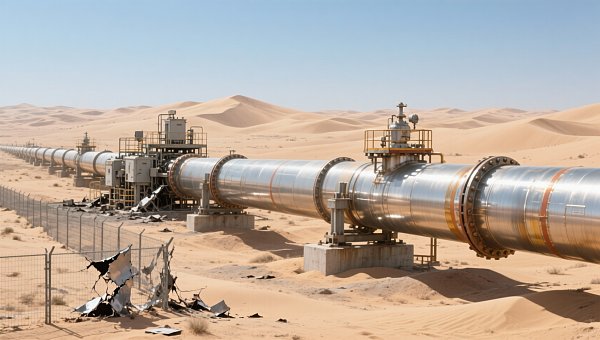
On April 30, 2026, a sabotage incident damaged pump stations along Saudi Arabia’s East-West Crude Oil Pipeline (Petroline), reducing its daily throughput capacity by approximately 700,000 barrels. This event directly affects exports of refined products and liquefied petroleum gas (LPG), and introduces new pressure on global supply chains for industrial fuels, chemical feedstocks, and upstream raw materials for plastic injection molds — with implications for delivery timelines of precision components.
Event Overview
On April 30, 2026, energy infrastructure in Saudi Arabia was targeted, resulting in damage to pump stations on the East-West Crude Oil Pipeline. According to publicly confirmed reports, the pipeline’s operational capacity decreased by roughly 700,000 barrels per day. The incident has impacted shipments of refined petroleum products and LPG. No further technical or operational details have been officially released as of publication.
Industries Affected by Segment
Direct Trading Enterprises
Trading firms handling Middle Eastern crude, refined products, or LPG face immediate exposure to freight volatility and contract re-negotiation risks. Reduced pipeline throughput may trigger spot price spikes and tighter term availability — particularly for cargoes scheduled for May–June delivery windows.
Raw Material Procurement Enterprises
Companies sourcing naphtha, propylene, butadiene, or other petrochemical feedstocks linked to Saudi refining output may encounter delayed allocations or revised pricing terms. Since LPG is a key feedstock for ethylene crackers, procurement teams should monitor downstream derivative pricing signals closely.
Processing & Manufacturing Enterprises
Manufacturers relying on consistent supplies of polymer-grade resins — especially those used in plastic injection molding — may experience extended lead times for critical mold components. Analysis shows that upstream resin cost fluctuations often propagate to precision tooling lead times within 4–8 weeks, depending on regional logistics buffers.
Supply Chain Service Providers
Freight forwarders, customs brokers, and logistics coordinators supporting petrochemical or industrial component trade must reassess routing assumptions. Alternative maritime routes (e.g., via Suez Canal or Cape of Good Hope) may incur longer transit durations and higher demurrage exposure — especially for time-sensitive mold shipments bound for Asia or Europe.
What Relevant Enterprises or Practitioners Should Monitor and Do Now
Track official updates from Saudi Energy Ministry and international energy agencies
Current public statements remain limited to capacity reduction figures. Further disclosures regarding repair timelines, rerouting protocols, or export allocation policies will shape near-term operational decisions — especially for contracts with force majeure clauses tied to infrastructure events.
Monitor price indices and inventory levels for key feedstocks and derivatives
Focus on real-time indicators for LPG (FOB Ras Tanura), naphtha (CIF Japan), and polypropylene homopolymer (North Asia CFR). Observably, even short-term supply constraints can trigger cascading effects across polymer value chains — including secondary impacts on mold design validation cycles.
Distinguish between policy announcements and physical flow adjustments
Some market commentary conflates diplomatic statements with actual cargo movements. From industry perspective, verified vessel tracking data and port discharge reports remain more reliable than high-level assurances — particularly when assessing delivery reliability for time-bound production schedules.
Review and update contingency plans for raw material sourcing and logistics routing
Enterprises with single-source dependencies on Saudi-sourced feedstocks or LPG-derived intermediates should activate alternative supplier assessments now. Similarly, manufacturers scheduling mold deliveries in Q2 2026 should confirm buffer stock levels and revise internal lead-time forecasts accordingly.
Editorial Perspective / Industry Observation
This incident is best understood not as an isolated infrastructure failure, but as a stress test of regional energy logistics resilience. Analysis shows that Petroline’s role extends beyond crude transport: it enables flexible product blending and export timing — functions difficult to replicate quickly via marine alternatives. Observably, the current disruption appears to signal heightened vulnerability in just-in-time industrial supply models reliant on stable Middle Eastern feedstock flows. It does not yet constitute a structural shift, but it does elevate the strategic importance of feedstock diversification and logistics redundancy planning — especially for sectors where mold cycle times tightly couple with polymer availability.
Conclusion
The April 30 damage to Saudi Arabia’s East-West Pipeline is a localized infrastructure event with measurable, near-term ripple effects across petrochemical trading, feedstock procurement, and precision manufacturing supply chains. It does not indicate systemic collapse, but rather underscores how tightly interwoven global industrial inputs have become — and why discrete disruptions now carry outsized implications for delivery predictability and input cost stability. Currently, this is better understood as an operational shock requiring tactical recalibration — not a fundamental restructuring signal.
Source Attribution
Main sources: Official statement from Saudi Ministry of Energy (April 30, 2026); International Energy Agency (IEA) preliminary incident summary (May 1, 2026). Ongoing assessment of repair progress and export reallocation remains pending official updates.
The Archive Newsletter
Critical industrial intelligence delivered every Tuesday. Peer-reviewed summaries of the week's most impactful logistics and market shifts.