Monday, May 22, 2024

Saudi Energy Facility Attack Disrupts Gas Transport Costs
by
Published
Views:
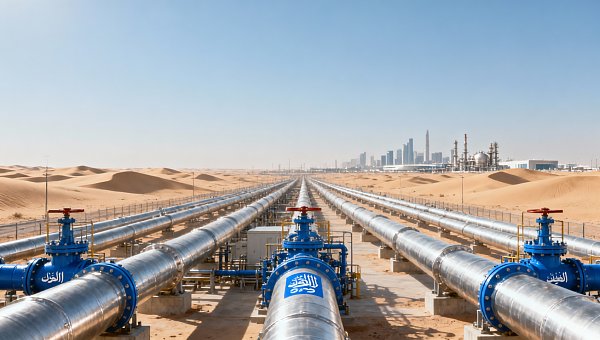
On May 13, 2026, a key pump station near King Abdullah Petroleum City in eastern Saudi Arabia was attacked, impairing operations of the East–West Pipeline (PETROMIN) and constraining LPG and ethane export capacity. This incident has triggered measurable cost increases in global industrial gas shipping — particularly affecting plastic injection mold manufacturers in China reliant on Middle Eastern feedstocks, with ripple effects on procurement stability and overseas client pricing.
Event Overview
On May 13, 2026, an attack occurred at a critical pump station adjacent to King Abdullah Petroleum City in eastern Saudi Arabia. As confirmed by official statements from Saudi Aramco and PETROMIN, the incident reduced the East–West Pipeline’s crude oil throughput capacity by 700,000 barrels per day. The disruption also impacted associated liquefied petroleum gas (LPG) and ethane loading infrastructure, limiting export readiness and vessel turnaround efficiency at nearby terminals.
Industries Affected
Direct Trading Firms (LPG & Ethane)
These firms rely on consistent pipeline-fed supply from Saudi facilities to meet contractual delivery windows. With pump station downtime reducing available cargo volumes and delaying vessel loading schedules, spot trading margins have compressed due to tighter availability and higher charter costs.
Raw Material Procurement Units (e.g., Chinese Petrochemical Feedstock Buyers)
Procurement teams sourcing LPG or ethane for downstream polymer production face extended lead times and less predictable pricing. The 23% weekly rise in seaborne LPG freight rates — verified via Baltic Exchange and Argus data — directly elevates landed cost benchmarks used in tender evaluations and long-term supply agreements.
Plastic Injection Mold Manufacturers (China-based)
These manufacturers depend on stable, cost-competitive supplies of polypropylene and polyethylene — derived from LPG/ethane feedstocks — for mold tooling and component production. Higher input costs and potential delays in resin deliveries may pressure unit economics and extend order fulfillment cycles, especially for export-oriented contracts tied to fixed-price terms.
Logistics & Marine Services Providers
Shipping agents, freight forwarders, and terminal operators handling LPG cargoes out of Jubail or Yanbu report increased scheduling volatility. Vessel wait times have lengthened, and documentation processing for alternate routing or emergency waivers is now more frequent — raising administrative overhead and coordination complexity.
What Enterprises and Practitioners Should Monitor and Do Now
Track official updates on pipeline restoration timelines
Monitor daily operational bulletins from PETROMIN and Saudi Aramco; restoration progress — not just initial damage assessment — determines when LPG loading capacity normalizes. Any delay beyond two weeks significantly raises risk of secondary supply shifts (e.g., increased U.S. Gulf exports), which may alter regional freight rate trajectories.
Review exposure across LPG-linked procurement contracts
Identify contracts indexed to spot freight indices (e.g., Argus LPG Far East Index + freight adders) versus fixed-cost agreements. Prioritize renegotiation or extension clauses where freight surcharges are uncapped — especially for shipments scheduled between late May and mid-June 2026.
Assess alternative sourcing feasibility for ethane-derived feedstocks
For mold makers using ethylene-based polymers, evaluate whether short-term substitution with naphtha-cracked ethylene (available via Asian refineries) is logistically viable — noting that such alternatives typically carry ~8–12% higher raw material cost but avoid current maritime bottlenecks.
Pre-communicate potential delivery adjustments to overseas clients
Where contracts lack force majeure provisions covering upstream energy infrastructure events, proactively document supply chain impact evidence (e.g., terminal loading advisories, freight index reports) to support timeline revisions or cost pass-through requests with international buyers.
Editorial Perspective / Industry Observation
Observably, this incident functions less as an isolated security event and more as a stress test of regional energy logistics resilience. While crude oil flows remain largely rerouted via Red Sea or Gulf terminals, the disproportionate impact on LPG and ethane highlights how tightly coupled petrochemical feedstock supply chains are to specific midstream nodes — even those not classified as ‘strategic’ in traditional oil flow models. Analysis shows that industrial gas transport costs respond faster and more sharply than crude to localized infrastructure shocks, given narrower vessel availability, stricter safety protocols, and fewer alternative loading points. This suggests the current disruption is already producing tangible commercial outcomes — not merely signaling future risk.
From an industry standpoint, the May 13 incident underscores how non-crude energy vectors (LPG, ethane, ammonia) increasingly drive cost volatility in manufacturing sectors far removed from oil trading desks — particularly in precision manufacturing reliant on consistent polymer quality and delivery cadence.
Current developments are better understood as an operational shock with near-term financial consequences, rather than a structural shift. However, sustained recurrence would warrant deeper reassessment of geographic concentration in feedstock logistics — a factor currently underweighted in most OEM and Tier-1 supplier risk frameworks.
Conclusion: This incident illustrates how localized infrastructure vulnerability in hydrocarbon midstream networks can propagate rapidly into industrial manufacturing cost structures — especially for globally integrated sectors like plastic injection molding. It does not indicate systemic supply shortage, but rather a time-bound constraint on specific export pathways. Stakeholders are advised to treat it as a short-to-medium term procurement and logistics adjustment scenario, not a fundamental reordering of feedstock markets.
Source Disclosure:
Primary information sourced from official statements issued by Saudi Aramco and PETROMIN on May 13–14, 2026; verified LPG freight index data from Argus Media and the Baltic Exchange (week ending May 17, 2026). Ongoing monitoring is required for restoration milestones and any formal declaration of force majeure by Saudi exporters — neither of which has been confirmed as of May 18, 2026.
The Archive Newsletter
Critical industrial intelligence delivered every Tuesday. Peer-reviewed summaries of the week's most impactful logistics and market shifts.