Monday, May 22, 2024

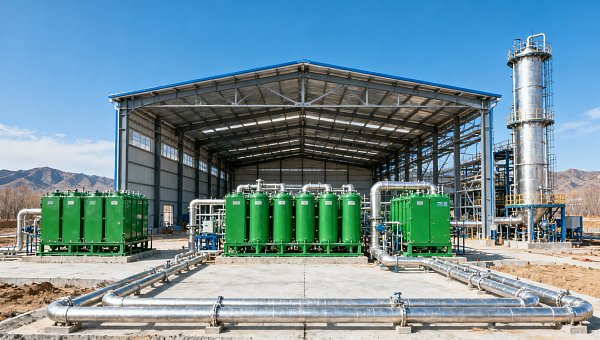
Shenyang 500kt Biomass Green Methanol Project Starts
by
Published
Views:
On April 30, 2026, the 500,000-ton-per-year biomass-based green methanol demonstration project in Shenyang, Liaoning Province, officially broke ground. This development signals material implications for producers of biobased plastic injection molds—particularly those serving automotive lightweighting and precision medical device applications—and warrants attention from upstream raw material suppliers, compounders, and mold manufacturers.
Event Overview
On April 30, 2026, construction commenced on a 500,000-ton annual capacity biomass green methanol project in Shenyang, Liaoning. The facility employs the Xie Heping team’s direct seawater electrolysis hydrogen production technology coupled with CO₂ catalytic hydrogenation. Its output is green methanol intended as feedstock for biobased engineering plastics, including polyoxymethylene (POM) and polylactic acid (PLA).
Industries Affected by This Development
Biobased Polymer Producers (e.g., POM, PLA Manufacturers)
These producers rely on methanol-derived formaldehyde or lactide precursors. A domestic, scalable, low-carbon methanol supply may reduce import dependency and price volatility for key intermediates. Impact manifests primarily in feedstock cost stability, carbon intensity reporting, and qualification timelines for automotive or medical-grade grades.
Plastic Injection Mold Design & Manufacturing Firms
Mold makers serving high-precision sectors—including automotive Tier 1 suppliers and medical device OEMs—require consistent thermal, dimensional, and flow behavior from resins. Reliable access to certified biobased POM/PLA enables tighter process validation and shorter time-to-qualification for new mold-tooling projects. Impact centers on material data sheet reliability, cycle-time predictability, and certification documentation traceability.
Automotive Lightweighting Component Suppliers
Suppliers integrating biobased engineering plastics into structural or semi-structural parts (e.g., fuel system components, interior trim carriers) face tightening OEM sustainability requirements. A stable green methanol supply chain supports volume-scale adoption of lower-carbon POM—potentially influencing material selection decisions in upcoming platform programs launched post-2027.
What Relevant Enterprises or Practitioners Should Monitor and Act On
Track official feedstock certification pathways
Green methanol must meet recognized standards (e.g., ISCC PLUS, RSB) to qualify as ‘biobased’ or ‘renewable’ under regulatory or OEM procurement policies. Companies should monitor announcements from China’s National Development and Reform Commission (NDRC) or Ministry of Ecology and Environment (MEE) regarding certification frameworks for domestically produced green methanol.
Assess timing alignment between project ramp-up and material qualification cycles
The project’s commissioning timeline—currently unspecified beyond ‘construction start’—may not coincide with immediate resin production or mold validation windows. Firms should map their next 12–24-month material qualification calendars against anticipated methanol availability milestones, especially for automotive PPAP or ISO 13485–aligned medical programs.
Review existing supply agreements for green methanol derivatives
Procurement teams should audit current contracts for POM or PLA feedstocks to identify clauses tied to fossil-derived methanol pricing, sustainability certifications, or force majeure triggers linked to feedstock origin. Early engagement with suppliers on dual-sourcing feasibility may mitigate transition risk.
Editorial Perspective / Industry Observation
Observably, this project represents an early-stage infrastructure signal—not yet an operational supply shift. Its significance lies less in immediate tonnage availability and more in validating a technical pathway (seawater-derived H₂ + captured CO₂ → methanol) at commercial scale in Northeast China. Analysis shows that while green methanol volumes remain small relative to total Chinese methanol output (~90 million tons/year), its location in Shenyang—a hub for auto OEMs and tiered mold manufacturing—introduces geographic relevance for regional supply chain decarbonization. From an industry perspective, this is best understood as a policy-aligned pilot with potential spillover effects on resin formulation roadmaps and mold material specification updates—but actual impact depends on verified output quality, certification readiness, and downstream integration pace.
Concluding, the Shenyang green methanol project marks a targeted step toward securing low-carbon feedstocks for biobased engineering plastics—not a near-term market disruption, but a structurally meaningful enabler for mold manufacturers and component suppliers aiming to align with evolving OEM sustainability benchmarks. It is more accurately interpreted as a supply chain resilience signal than a material substitution trigger.
Source: Official commencement announcement (April 30, 2026); project scope and technology description confirmed via publicly released briefing materials. Note: Commercial operation date, certification status, and offtake agreements remain unconfirmed and require ongoing monitoring.
The Archive Newsletter
Critical industrial intelligence delivered every Tuesday. Peer-reviewed summaries of the week's most impactful logistics and market shifts.