Monday, May 22, 2024

Why Do Plastic Injection Molds Wear Out Early?
by
Published
Views:
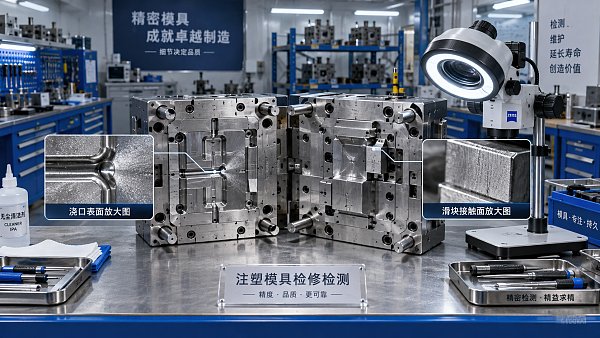
Why do plastic injection molds wear out early? Usually, the mold is experiencing more abrasion, friction, chemical attack, or mechanical stress than its materials and design can tolerate. Cycle count matters, but it does not explain why one gate erodes while the rest of the cavity remains sound, or why a slide starts scoring shortly after production begins.
The first step is to identify the damage mechanism. A worn surface, a cracked insert, and flash caused by poor mold alignment may produce similar quality problems, yet require different repairs. Replacing damaged components without correcting the cause often leads to the same failure again.
Start with the damage pattern, not the shot counter
Premature mold wear often appears as increasing flash, changing dimensions, rougher surfaces, sticking parts, or repeated adjustments to keep production stable. These symptoms deserve investigation, but none proves that the cavity steel has reached the end of its useful life.
Flash can result from worn shutoffs, debris on the parting line, inadequate mold support, excessive cavity pressure, or insufficient effective clamping force. Dimensional drift can come from cooling changes or material variation before measurable steel loss occurs. Increasing clamp force or changing packing pressure may hide a symptom while allowing the underlying problem to continue.
Map the defect to its location in the mold. Damage concentrated near a gate suggests a different cause from scratches along a slide or rust across a cavity after storage.
These patterns guide inspection; they are not a diagnosis by themselves. Several mechanisms can overlap. Corrosion can roughen a surface, for example, making subsequent friction and abrasion more damaging.
The resin may be harder on the mold than expected
Glass fibers, mineral fillers, and other solid additives can abrade mold surfaces as the melt flows through gates, around corners, and across narrow sections. The polymer name alone is therefore a poor basis for tooling selection. An unfilled resin and a reinforced grade from the same polymer family can place very different demands on the mold.
Wear is often concentrated where flow velocity and particle contact are high. Small gates, abrupt changes in direction, and restrictive passages can create local problems even when most of the cavity shows little deterioration. Increasing injection speed to overcome a filling problem may intensify wear at those locations.
The practical response is to review the complete material specification alongside the flow path. Consider filler type and content, gate location, local steel selection, and whether an exposed feature should use a replaceable insert. Reducing speed is useful only if the part still fills correctly within a stable process window.
Chemical attack requires a different response. Certain resin systems and additives can expose tooling to corrosive compounds, particularly when material degrades through excessive temperature or residence time. Persistent deposits or pitting should prompt a review of processing conditions, venting, and steel compatibility rather than repeated polishing alone.
Recycled content and regrind also need defined controls. Changes in contamination, filler distribution, or processing history can affect consistency. Their use does not automatically cause early mold failure, but a material change should trigger a tooling and process review.
Tool steel must match the failure mechanism
Choosing steel only by hardness leaves important questions unanswered. Hardness can improve resistance to abrasive wear, while toughness helps resist cracking and chipping. Corrosion resistance matters when moisture or aggressive residues are present. The appropriate balance depends on what each component actually experiences.
A cavity carrying a heavily filled melt may need different properties from a slender core, an interlocking shutoff, or a slide exposed to repeated contact. Specifying the same material for every component can simplify purchasing while creating weaknesses in demanding locations.
Heat treatment matters as much as the grade designation. Inappropriate treatment can leave steel too soft, too brittle, distorted, or carrying harmful residual stress. Thin edges, sharp internal corners, and unsupported inserts make these weaknesses more consequential because they concentrate loads.
Surface treatments and coatings can help when selected for a defined purpose, such as resisting abrasion or reducing friction. Their performance depends on substrate support, preparation, adhesion, and operating conditions. A coating cannot correct poor alignment, and a hard surface layer cannot prevent an inadequately supported edge from deforming.
For an existing mold, establish whether the damage is surface loss, deformation, or fracture before choosing an upgrade. A harder insert may help with abrasion but perform poorly if impact or bending caused the original failure. Sometimes the better repair is improved support or revised geometry.
Misalignment and friction can destroy otherwise suitable tooling
Moving components often fail before the main cavity does. Slides, lifters, ejector pins, guide elements, and shutoffs experience repeated contact. When alignment deteriorates, loads become concentrated on smaller areas, increasing friction and local stress.
Galling occurs when contacting metal surfaces adhere locally and tear during movement. It can leave scoring, transferred metal, and eventually seized components. Suitable material pairings, controlled clearances, sound guidance, and appropriate lubrication help prevent it. Simply polishing away the marks may remove evidence without correcting the contact problem.
Inspect for uneven contact patterns, bent or binding ejectors, loose wear plates, and witness marks showing unintended contact. Check mold mounting and support as well. Platen condition, installation, and mold-base deflection can affect alignment even when individual inserts are correctly manufactured.
Lubrication needs location-specific control. Too little can accelerate sliding wear; excessive or unsuitable lubricant can collect contamination or migrate into the cavity. Use a lubricant compatible with the temperature and application, following the tooling design requirements.
Closing on a retained part, runner, or foreign object can damage a parting line in a single event. That is impact damage rather than gradual wear, although it may later appear as persistent flash. Mold protection settings and reliable part-removal detection deserve attention whenever unexplained dents or chipped shutoffs appear.
Cooling problems create uneven expansion and repeated stress
Cooling affects more than cycle time. Uneven mold temperatures create unequal thermal expansion, which can change clearances and contact conditions as production progresses. A slide that moves freely during a cold inspection may bind once the mold reaches operating temperature.
Restricted cooling channels, scale, leaks, and unbalanced flow can create hot regions. Repeated temperature changes can contribute to fatigue in vulnerable features, while uneven cooling can increase part distortion and ejection resistance. Higher ejection loads then place additional stress on pins, lifters, and thin cores.
Inspect circuit flow and pressure behavior, inlet and outlet temperatures, and the mold’s temperature distribution. A temperature-controller setpoint does not show whether every circuit receives adequate flow. Cooling passages also need sufficient surrounding steel to preserve structural support.
If sticking parts coincide with slower cooling or a hotter region, restore the cooling condition before increasing ejection force. More force may release the part while accelerating damage elsewhere.
Process adjustments can conceal the original problem
A mold that gradually needs more pressure, longer packing, or stronger ejection is sending a useful warning. Those adjustments may compensate for blocked vents, cooling deterioration, resin changes, or mechanical resistance. Treating them as routine settings changes can allow damage to accumulate.
Injection and packing pressure should follow the part’s filling and dimensional requirements. Excessive cavity pressure can promote flash and increase loading on vulnerable tooling, but reducing pressure indiscriminately may cause short shots or inadequate packing. Compare current settings and process behavior with the last stable production condition.
Venting belongs in this investigation. Deposits can restrict gas escape, causing burns, filling problems, and localized heating. Increasing pressure to overcome a venting problem leaves the restriction in place. Cleaning and assessing the vents addresses the cause; vent dimensions must still suit the resin and tooling.
Also examine release geometry. Insufficient draft, rough surfaces, undercuts, or poor ejection balance can cause repeated dragging and excessive release loads. Polishing may help a surface problem, but it will not correct geometry that mechanically resists release.
Repair the cause before returning the mold to production
A useful investigation combines physical inspection with production history. The sequence should narrow the cause before major steel modifications are made.
- Record the failure location and progression. Photograph damage, retain representative defective parts, and establish whether deterioration was gradual or followed a specific event.
- Review recent changes. Check resin grade, filler content, regrind practice, machine assignment, settings, cleaning methods, and previous repairs.
- Inspect mechanical and thermal conditions. Examine alignment, shutoff contact, moving components, mold support, cooling performance, and vent cleanliness.
- Match the remedy to the mechanism. Address abrasion, corrosion, friction, deflection, or impact with the relevant material, design, maintenance, or process change.
- Validate under normal operating conditions. Confirm part quality and component movement after thermal stabilization, then inspect the repaired area again after an appropriate production interval.
Stop operation when continued cycling risks propagating cracks, breaking a core, or seizing a moving component. Minor surface wear may allow a planned repair, but structural damage needs a different decision.
Repair quality also affects future life. Welding, machining, polishing, and recoating can change local hardness, geometry, finish, or residual stress. After repair, verify critical dimensions and contact conditions rather than judging success solely by appearance.
Make mold-life expectations specific enough to be useful
A promised shot count has limited value unless it is tied to the intended resin, part geometry, processing conditions, maintenance, and acceptance criteria. A mold may remain operational while no longer holding the required dimensions or finish. Another may need routine replacement of wear components while its main cavities remain serviceable.
Define which components are consumable or replaceable, what deterioration triggers intervention, and what maintenance is assumed. Retain material specifications, heat-treatment records, approved process settings, inspection results, and repair history. These records make recurring problems easier to diagnose and tooling options easier to compare.
When localized wear is predictable, accessible inserts and serviceable moving components can reduce repair disruption. Their joints and support still require careful design; replaceability is valuable only when the component remains stable during molding.
Before authorizing another repair, answer three questions: where is material being lost or damaged, what operating condition explains that pattern, and what change will remove the cause? Those answers provide a stronger basis for extending mold life than cycle count alone.

The Archive Newsletter
Critical industrial intelligence delivered every Tuesday. Peer-reviewed summaries of the week's most impactful logistics and market shifts.