Monday, May 22, 2024

25 Chinese CNC Tool Makers Gain DMG MORI Verification
by
Published
Views:
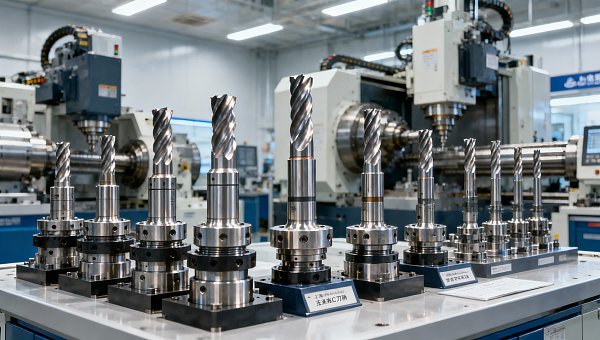
At the close of the WOD Manufacturing Digitalization Expo in Shanghai on June 5, 2026, a new development drew attention across the CNC tooling and precision manufacturing supply chain: DMG MORI and the China Machine Tool & Tool Builders' Association launched the Global Tooling Partnership, and the first 25 Chinese CNC machining tool companies were authorized to use the “DMG MORI Verified” label after passing a globally unified precision and service-life verification system. For tooling suppliers, procurement teams, and automotive and aerospace secondary suppliers serving Europe, the announcement is worth watching because it links product qualification more directly to future sourcing access.
What was confirmed at the Shanghai event
According to the event announcement released as the WOD Manufacturing Digitalization Expo concluded, DMG MORI and the China Machine Tool & Tool Builders' Association jointly initiated the Global Tooling Partnership. The first group includes 25 Chinese CNC machining tool companies.
The verified product scope mentioned in the event summary covers five-axis linked tool magazines, shrink-fit toolholders, and micron-level clamping systems. These companies passed a globally unified verification framework focused on precision and service life, and were granted authorization to use the “DMG MORI Verified” mark.
The same announcement stated that this certification will serve as a procurement whitelist reference for European automotive and aerospace secondary suppliers.
Where the market impact may appear first
Procurement screening may become more structured
From an industry perspective, procurement teams connected to European automotive and aerospace supplier networks may be among the first to feel the effect. The reason is straightforward: once a verification mark is tied to whitelist-based sourcing, supplier comparison may shift from general capability claims toward documented qualification status. What deserves closer attention is how purchasing discussions, approved vendor lists, and RFQ filtering could increasingly reference this type of verification.
Tooling manufacturers face a clearer qualification divide
For CNC tooling manufacturers, the announcement may create a more visible distinction between companies already inside a recognized verification framework and those still relying mainly on bilateral customer validation. The impact is likely to appear in customer communication, sample evaluation, and cross-border business development rather than in an immediate market-wide change. Companies in related categories will need to watch whether customers start asking more specifically about precision verification, service-life validation, and authorized labeling.
Secondary suppliers in automotive and aerospace may adjust sourcing logic
Observably, automotive and aerospace secondary suppliers that purchase tooling for process stability and repeatability may interpret this announcement as a signal to refine sourcing criteria. The effect is less about end-market demand and more about internal procurement compliance, vendor qualification, and documentation readiness. This is especially relevant where supplier onboarding depends on whether a product can be aligned with an accepted whitelist reference.
Channel and supply-chain service firms may see higher documentation demands
Distributors, sourcing intermediaries, and supply-chain service providers may also be affected because qualification claims often need to be translated into usable sales and delivery documents. If customers begin asking whether a tool product falls within the verified scope, service providers will need to pay closer attention to product traceability, authorization status, and the consistency of technical and commercial communication.
What companies should watch next
Follow any clarification on verification scope
Analysis shows that one immediate point of attention is whether future official communication further clarifies how the verification applies across product lines, models, or delivery configurations. The current information confirms the covered categories and the existence of a unified verification system, but companies should avoid assuming that all related products automatically carry the same status without checking the exact scope.
Prepare customer-facing qualification materials
For suppliers and service partners, a practical priority is to organize qualification-related materials in a way that procurement and engineering teams can quickly review. Since the announcement connects verification with procurement whitelist reference use, the business issue is not only whether a company is verified, but also whether that status can be clearly communicated during supplier onboarding, tendering, and technical review.
Separate market signal from immediate order conversion
What deserves closer attention is the difference between a sourcing signal and a guaranteed commercial result. The announcement confirms recognition within a verification framework and its relevance to whitelist-based procurement reference, but it does not by itself confirm order volumes, contract awards, or broad market replacement. Companies should therefore treat customer engagement, quotation strategy, and delivery planning with measured expectations.
Watch the Europe-facing business link carefully
For companies targeting Europe-linked automotive and aerospace supply chains, this development should be tracked at the level of actual procurement workflow. That includes whether customers begin referencing the verification more explicitly in qualification requests, supplier reviews, or commercial discussions. The key issue is how a formal mark becomes operational in real sourcing behavior.
Why this looks more like a supply-chain signal than a finished outcome
In editorial observation, this announcement currently reads less like a completed reshaping of the tooling market and more like a structured signal about how qualification standards may influence sourcing access. The most concrete part is not the branding itself, but the stated link between verification and procurement whitelist reference for European automotive and aerospace secondary suppliers.
It is more appropriate to understand this as an early-stage industry marker with practical implications, rather than as proof of immediate market transformation. The reason the sector should keep watching is that verification frameworks matter most when they begin to affect day-to-day procurement decisions, supplier admission, and customer confidence across borders.
How this development is best understood for now
Based on the confirmed information, the announcement points to a tighter connection between tooling verification and procurement accessibility in Europe-facing industrial supply chains. For Chinese CNC tooling makers, it highlights the growing importance of standardized proof around precision and service life. For buyers and supply-chain intermediaries, it suggests that supplier qualification may become more document-driven in specific segments.
At this stage, the most balanced reading is that the development represents a meaningful industry signal with possible downstream sourcing effects, while its broader commercial consequences still require continued observation.
Basis of this article and what still needs verification
This article is based on the user-provided news title, event date, and event summary concerning the June 5, 2026 close of the WOD Manufacturing Digitalization Expo in Shanghai and the related Global Tooling Partnership announcement.
For this type of industry update, commonly relevant source categories may include official event announcements, company statements, industry association releases, authoritative trade media reporting, and technical or standards-related documents. A specific official source link was not provided in the input, so further verification remains necessary.
Areas worth continued monitoring include whether additional official wording clarifies the verification scope, how the whitelist reference is applied in actual procurement practice, and whether follow-up disclosures provide more operational detail for suppliers and buyers.
The Archive Newsletter
Critical industrial intelligence delivered every Tuesday. Peer-reviewed summaries of the week's most impactful logistics and market shifts.