Monday, May 22, 2024

BIS Adds AI CNC Control Modules to ECCN 2B001
by
Published
Views:
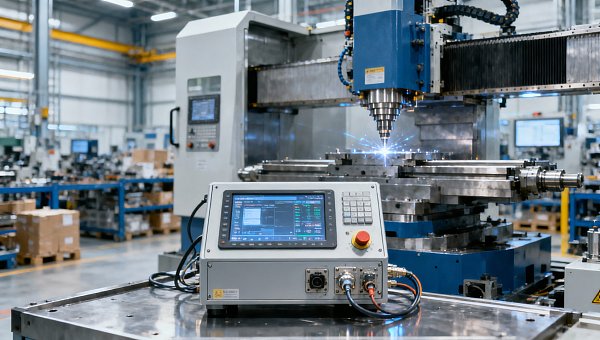
On July 7, 2026, the U.S. Department of Commerce's Bureau of Industry and Security (BIS) updated the EAR control list through an interim final rule, bringing AI-driven CNC machining control modules with real-time cutting-force feedback and autonomous process-parameter optimization under ECCN 2B001. For companies involved in advanced five-axis machine delivery, China-bound exports, and overseas OEM cooperation tied to U.S. technology, this is a development worth close attention because it directly affects licensing requirements, delivery timing, and the operating assumptions behind existing supply arrangements.
What the Rule Change Explicitly Covers
According to the information provided, BIS issued an interim final rule identified as 81 FR 44278 on July 7, 2026. The rule places intelligent CNC machine control modules under ECCN 2B001 when those modules include both real-time cutting-force feedback and the ability to optimize process parameters on their own.
The confirmed regulatory consequence in the provided information is that exports of these items to China now require a license. The same source information also states that this change is expected to lengthen delivery cycles for customers relying on U.S.-linked technology in the high-end five-axis machine segment and to affect the overseas OEM cooperation model used by Chinese CNC tool exporters.
Where the Immediate Pressure May Appear
For exporters handling China-bound machine tool business
From an industry perspective, the first area of impact is the export transaction itself. Where a CNC machining system depends on the newly controlled intelligent module, the business process may now involve license preparation and additional compliance review. The practical issue to watch is whether the controlled module is embedded in a larger machine configuration, because that can affect delivery scheduling and order confirmation workflows.
For manufacturers serving high-end five-axis customers
Analysis shows that manufacturers supplying advanced five-axis equipment to customers with U.S. technology dependencies may face longer fulfillment timelines. The likely pressure point is not only hardware shipment, but also production planning, configuration locking, and acceptance timing where the intelligent control module is part of the final machine capability.
For Chinese CNC tool exporters working with overseas OEM partners
Observably, the rule matters beyond direct shipment control because the provided information indicates that overseas OEM cooperation models may be affected. For these companies, the issue is whether existing cooperation structures rely on controlled U.S.-related intelligent modules or related technical arrangements. What deserves closer attention is how partner coordination, model selection, and contract execution may need to be adjusted if the controlled function is central to the OEM product package.
For procurement and supply-chain coordination roles
Procurement teams and supply-chain service providers may also be affected where orders involve controlled configurations. The business impact is likely to appear in supplier confirmation, shipping readiness, documentation flow, and customer communication about revised timelines. In this case, close attention is needed on which part of the bill of materials or control stack triggers licensing exposure.
What Companies Should Watch Now
Monitor how the rule is described in follow-up official language
Analysis shows that the immediate headline is clear, but practical execution often depends on how controlled functions are described in official language and transaction documents. Companies should focus on whether their relevant modules clearly match the described features of real-time cutting-force feedback and autonomous process optimization.
Check which product configurations are exposed first
What deserves closer attention is not every CNC-related shipment, but the specific configurations that include the newly controlled intelligent module. For machine builders, exporters, and OEM partners, the key task is to identify where these functions are present in current orders, pipeline projects, or standard product offerings.
Separate policy signal from operational implementation
Observably, the rule sends a clear policy signal, but the operational effect on each company will depend on actual product composition and export pathways. Firms should avoid treating every related product as automatically identical in risk, while also avoiding the opposite mistake of assuming business can proceed unchanged where controlled functions are involved.
Prepare for longer delivery and more demanding customer communication
From an industry perspective, the provided information already points to extended delivery cycles for certain high-end five-axis customers. That means sales, project management, and supply-chain teams should be ready to revisit promised lead times, required supporting documents, and customer explanations around possible delays linked to licensing requirements.
Why This Looks Like More Than a Short-Term Delay
As an editorial observation, this development is more appropriately understood as both an immediate compliance change and a broader signal about where control attention is moving within CNC machining technology. The rule is not framed here as a general restriction on all CNC tools; rather, the focus in the provided information is on intelligent control capability tied to feedback-driven and self-optimizing machining functions.
Analysis shows that the industry should not rush to overstate the outcome. The confirmed facts support caution around delivery cycles and OEM cooperation models, but they do not by themselves establish every downstream commercial result. It is more appropriate to understand this as a targeted regulatory shift that warrants continued observation, especially where smart control functionality is central to product value.
How to Read the Development at This Stage
At this stage, the most balanced reading is that BIS has introduced a concrete new licensing constraint on a specific class of AI-driven CNC control modules, with visible relevance for advanced machine delivery and China-related OEM arrangements. The short-term effect is likely to be operational, particularly around licensing and lead times. The longer-term significance depends on how widely these controlled functions appear in commercial machine configurations and how companies adjust their sourcing and cooperation structures.
For industry participants, this is less a standalone news item than a practical compliance and supply-chain issue that now deserves closer tracking in ongoing orders, partner coordination, and technology-dependent delivery planning.
Basis of This Article and What Still Needs Verification
This article is based on the user-provided news title, event date, and event summary. The analysis above is limited to those provided facts and does not add unverified company names, market data, transaction cases, or regulatory details beyond the input.
For this type of development, relevant source categories usually include official government notices, company disclosures, industry association updates, authoritative media reporting, and standards-related documents. The specific official source link was not provided in the input, so continued verification is still needed. The next points worth monitoring are any further official wording around the rule, how companies classify affected modules in practice, and whether delivery or OEM cooperation arrangements are adjusted as implementation proceeds.
The Archive Newsletter
Critical industrial intelligence delivered every Tuesday. Peer-reviewed summaries of the week's most impactful logistics and market shifts.