Monday, May 22, 2024

Beijing-Tianjin Cross-City Commuter Bus Launches with CNC-Made Parts
by
Published
Views:
On April 20, 2026, the first cross-city commuter bus line between Beijing and Tianjin commenced operations — featuring a 5G-V2X–enabled intelligent dispatch system and 100% domestically produced high-precision structural components, including rigid lightweight steering knuckle brackets and brake caliper housings developed by Chinese CNC machining tools enterprises. This project signals emerging opportunities for China’s precision manufacturing and industrial software sectors in overseas smart public transport infrastructure markets — particularly in Southeast Asia.
Event Overview
On April 20, 2026, the Beijing–Tianjin cross-city commuter bus line officially entered operation. The route employs a 5G-V2X–based intelligent dispatch system. All steering knuckle brackets and brake caliper housings used are high-rigidity, lightweight structural parts manufactured via CNC machining tools — achieving full domestic substitution. A delegation from Singapore’s Land Transport Authority (LTA) has visited Beijing to discuss potential collaboration, following this demonstration project.
Industries Affected
Direct Exporters of Precision Structural Components
These enterprises supply high-accuracy, safety-critical mechanical parts (e.g.,转向节支架, 制动卡钳壳体) for intelligent transportation systems. The successful deployment confirms technical readiness for export-grade certification requirements — especially where functional safety, material traceability, and dimensional repeatability are mandated.
Industrial Software Providers (Dispatch & Fleet Management Systems)
Firms developing or integrating intelligent scheduling software — particularly those supporting V2X communication protocols and real-time fleet optimization — now face heightened visibility in overseas transit authority procurement pipelines. The Beijing–Tianjin case serves as a reference implementation for interoperability testing and system validation in new markets.
CNC Machine Tool System Integrators & Component OEMs
Manufacturers supplying turnkey CNC machining solutions — including custom tooling, fixturing, and process validation support — are positioned to support downstream exporters scaling production for international bids. Their role shifts from component supplier to certified process enabler in regulated mobility applications.
Supply Chain Service Providers (Certification, Logistics, Compliance Support)
Third-party service providers specializing in ISO/IEC 15408 (Common Criteria), UN ECE R155/R156 (cybersecurity management), or ASEAN-specific type-approval pathways may see increased demand. The Singapore LTA engagement implies early-stage alignment on conformity assessment frameworks — not just product delivery.
What Enterprises and Practitioners Should Monitor and Act On
Track official follow-up statements from Singapore’s LTA and China’s Ministry of Transport
The LTA delegation’s visit is an exploratory step — not a procurement commitment. Subsequent announcements regarding pilot scope, timeline, or technical specification harmonization (e.g., alignment with ISO 21434 or SAE J3061) will indicate whether this remains a policy signal or advances toward formal tender preparation.
Monitor ASEAN national transit authorities’ upcoming infrastructure tenders for explicit references to ‘intelligent dispatch’, ‘V2X integration’, or ‘domestically certified structural components’
Early tender language often reflects underlying technical prerequisites. Inclusion of such terms — especially alongside requirements for local assembly, cybersecurity documentation, or lifecycle maintenance support — would confirm market readiness beyond demonstration projects.
Distinguish between demonstration-level adoption and serial production readiness
The Beijing–Tianjin line uses custom-developed parts. Export scalability depends on whether these components meet international series-production standards (e.g., IATF 16949, EN 15085 for rail-related welding). Firms should verify if their current quality management systems cover applicable automotive or rail-derived certifications — not just general ISO 9001.
Prepare cross-functional coordination between hardware, software, and compliance teams ahead of bid cycles
Overseas smart transit tenders increasingly require joint submissions — e.g., a CNC part supplier + dispatch software vendor + local system integrator. Companies should pre-align on interface definitions (e.g., CAN FD message mapping), data ownership models, and liability allocation before responding to RFPs.
Editorial Observation / Industry Perspective
From industry perspective, this event is best understood as a convergence signal — not yet a commercial inflection point. It reflects growing institutional recognition that smart mobility infrastructure requires tightly coupled hardware-software supply chains, rather than isolated technology imports. Analysis来看, the Singapore LTA’s engagement suggests ASEAN agencies are moving beyond conceptual evaluation into technical due diligence — but procurement timelines remain uncertain. Current more suitable interpretation is that this marks the start of qualification cycles, not immediate order volume. Sustained attention is warranted because regulatory alignment — not just product capability — now determines export viability.
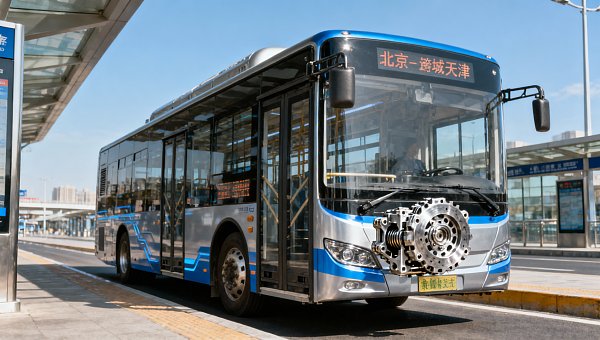
Conclusion: The Beijing–Tianjin cross-city bus launch demonstrates the operational feasibility of integrated domestic CNC structural parts and intelligent dispatch systems in regulated public transport environments. Its significance lies less in immediate scale and more in validating a co-export model — one that links high-precision manufacturing with industrial software in internationally auditable deployments. For stakeholders, it is currently more accurate to view this as a procedural milestone in global market access preparation than as evidence of near-term revenue acceleration.
Source: Official announcement of Beijing–Tianjin cross-city commuter bus launch (April 20, 2026); confirmed visit by Singapore Land Transport Authority (LTA) delegation; publicly reported use of domestically developed CNC-machined structural components and 5G-V2X dispatch system. Note: Tender timelines, certification pathways, and commercial terms under discussion with LTA remain unconfirmed and subject to ongoing observation.
The Archive Newsletter
Critical industrial intelligence delivered every Tuesday. Peer-reviewed summaries of the week's most impactful logistics and market shifts.