Monday, May 22, 2024

CNC Cutting Equipment Selection for Thick Metals
by
Published
Views:
Selecting the right CNC cutting equipment for thick metals requires more than comparing speed or price. For demanding fabrication lines, the decision affects edge integrity, heat distortion, consumable life, downstream machining, and production uptime. A structured evaluation method helps reduce technical risk and supports better alignment between cutting capability, material behavior, and long-term operating efficiency across diverse industrial applications.
Why a Checklist Matters for Thick-Metal CNC Cutting Equipment
Thick plate cutting introduces different constraints than sheet processing. Energy density, kerf control, slag formation, bevel angle, and thermal load become more difficult to manage as thickness increases.
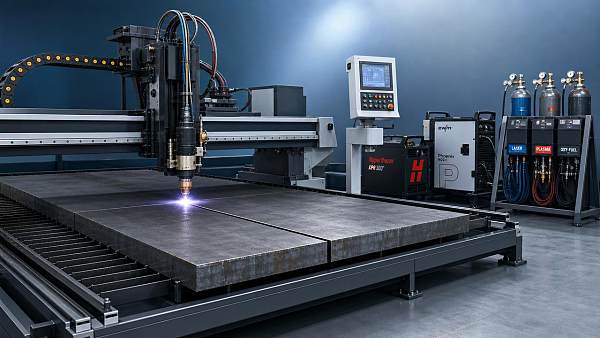
A checklist prevents decisions based on a single metric. Fast cutting may still create poor edges, unstable tolerances, or excessive secondary grinding. Low capital cost may hide higher gas use, lower nozzle life, or weak automation compatibility.
For cross-sector manufacturing, CNC cutting equipment should be assessed as part of a broader process chain. The machine must fit material grade, production mix, quality targets, inspection standards, and environmental controls.
Core Selection Checklist for CNC Cutting Equipment
- Define material thickness, alloy family, plate flatness, and required cut profile before comparing any machine platform or power source.
- Match the cutting process to the metal behavior, using laser, plasma, oxy-fuel, or waterjet according to thickness and thermal sensitivity.
- Verify achievable edge quality, taper, dross level, and heat-affected zone against downstream welding, bending, or machining requirements.
- Check positional accuracy, repeatability, and gantry rigidity under full-load duty cycles, not only under ideal showroom conditions.
- Review piercing performance on thick sections, because slow or unstable piercing often limits throughput more than rated cutting speed.
- Measure total operating cost, including gases, abrasives, electrodes, nozzles, energy, filtration, preventive maintenance, and operator intervention.
- Confirm CNC software compatibility with nesting, MES, traceability, offline programming, and quality data capture workflows.
- Inspect safety systems for fume extraction, spark containment, water management, guarding, and emergency stop response in heavy-duty production.
- Assess service access, spare part availability, remote diagnostics, and calibration support across the planned installation region.
- Request sample cuts on real production material, then compare edge condition, dimensional consistency, and post-processing time objectively.
Process Matching by Thick-Metal Requirement
Laser systems deliver high precision and strong automation value, but performance depends heavily on power level, assist gas strategy, and material reflectivity. For very thick carbon steel, economics may shift quickly.
Plasma-based CNC cutting equipment often provides balanced speed and cost for medium-to-thick plates. Modern high-definition plasma improves edge geometry, yet heat input and consumable stability still require close review.
Oxy-fuel remains practical for thick carbon steel where cut speed is less critical than low equipment cost and deep-section capability. It is less suitable for stainless steel or aluminum.
Waterjet supports heat-free cutting for materials sensitive to metallurgical change. However, slower throughput, abrasive management, and pump maintenance must be weighed against the quality advantage.
Application Notes Across Industrial Scenarios
Structural Steel and Heavy Fabrication
Brackets, base frames, pressure supports, and large welded assemblies usually prioritize thickness capacity, cut consistency, and low rework. Here, CNC cutting equipment must maintain reliable performance over long duty cycles.
Edge squareness and bevel preparation matter because poor cut geometry increases fit-up time. Machines with stable height control, effective plate mapping, and strong gantry stiffness often perform better in this environment.
Automotive Tooling and Precision Components
Thick metals in tooling plates, fixtures, and prototype structures require tighter tolerances and cleaner edges. Secondary milling can correct defects, but excessive thermal distortion adds cost and slows validation cycles.
In these cases, machine accuracy, contour control, and software integration deserve equal attention. The best CNC cutting equipment is often the system that reduces downstream correction, not the fastest cutter alone.
Energy, Infrastructure, and Environmental Systems
Components used in tanks, filtration frames, transport skids, and infrastructure modules often involve stainless steel or mixed-material builds. Corrosion resistance can be compromised if thermal input is poorly controlled.
Selection should include metallurgical impact, oxide formation, and cleanup effort before coating or welding. This is especially important when documentation and quality verification must support regulated projects.
Commonly Overlooked Risks
Ignoring the Full Cost per Cut
A low purchase price can hide high gas flow, rapid nozzle wear, unstable consumables, or frequent downtime. Compare cost per usable part, not cost per machine.
Overrating Nameplate Thickness Capacity
Maximum cut thickness is not equal to production-grade thickness. Some CNC cutting equipment can technically pierce a plate but cannot sustain acceptable edge quality at useful throughput.
Undervaluing Thermal Effects
Heat-affected zones, warping, and hardened edges can complicate forming and welding. Thick metals amplify these effects, especially on high-strength alloys and stainless materials.
Missing Digital Integration Requirements
Even capable machines can create bottlenecks if programs, nesting files, and job data cannot move cleanly across ERP, MES, or quality documentation systems.
Testing on the Wrong Sample Material
Demonstration cuts on clean, standard plates may not reflect actual production conditions. Use real grades, real thickness ranges, and representative hole patterns during evaluation.
Practical Execution Steps
- Build a comparison matrix with thickness range, material type, tolerance, edge quality, and target cost per part.
- Rank process priorities, separating must-have requirements from preferred features such as bevel heads or automated loading.
- Run controlled sample trials and record pierce time, cut speed, kerf width, taper, and post-cut cleanup time.
- Review maintenance intervals and confirm who supplies consumables, field service, and software support locally.
- Validate electrical, ventilation, water, gas, and floor-loading needs before approving the final equipment layout.
Conclusion and Next Action
The best CNC cutting equipment for thick metals is the system that consistently meets production quality, process compatibility, and lifecycle cost targets. Selection should be based on verified cut results, realistic operating conditions, and fit with the wider manufacturing system.
Start with a documented checklist, test on representative materials, and compare total process outcomes rather than isolated machine specifications. That approach delivers stronger technical confidence and more resilient industrial performance.

The Archive Newsletter
Critical industrial intelligence delivered every Tuesday. Peer-reviewed summaries of the week's most impactful logistics and market shifts.