Monday, May 22, 2024

China Eastern Logistics Launches New Western Supply Chain Co. in Chongqing
by
Published
Views:
On May 21, 2026, China Eastern Logistics established China Eastern Western Supply Chain (Chongqing) Co., Ltd., signaling a strategic reinforcement of the Chengdu–Chongqing region as a freight hub linking western China to Belt and Road Initiative markets. This development is particularly relevant for enterprises involved in CNC machining tools, hardware components, and plastic injection molds—sectors where air freight responsiveness and delivery flexibility to Central Asia, Southeast Asia, and the Middle East are now materially enhanced.
Event Overview
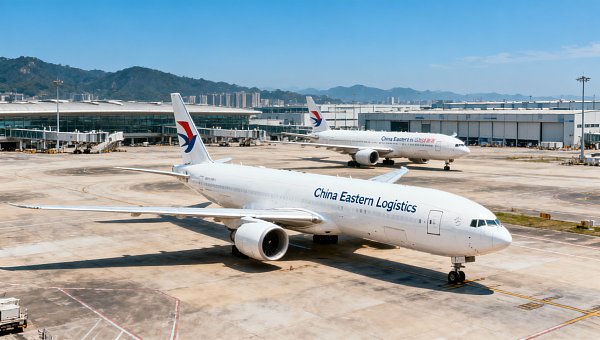
China Eastern Western Supply Chain (Chongqing) Co., Ltd. was officially incorporated on May 21, 2026. The new entity integrates Boeing 777F full-cargo aircraft capacity—serving 20 overseas destinations—with belly-hold capacity across China Eastern’s passenger fleet, which reaches nearly 1,000 global destinations.
Industries Affected
Manufacturers of Precision Industrial Components
Companies producing CNC machining tools, hardware components, and plastic injection molds are directly affected. These goods often require time-sensitive, high-value air transport due to tight tolerances, low batch volumes, or urgent after-sales support needs. The new supply chain company expands dedicated air freight access from western China to key emerging markets—reducing reliance on transshipment via eastern hubs like Shanghai or Guangzhou.
Export-Oriented Trading Enterprises
Trading firms sourcing from Sichuan, Chongqing, Shaanxi, and other western provinces face revised logistics lead times and routing options. With direct 777F coverage to 20 overseas points—and broader reach via passenger belly capacity—exporters may now align shipment schedules more closely with buyer demand cycles in Central Asia and the Middle East, rather than defaulting to consolidated sea-air or multi-leg air routings.
Supply Chain Service Providers
Third-party logistics providers, freight forwarders, and customs brokers operating in the western region must reassess their service portfolios. The availability of integrated cargo aircraft + belly-hold capacity under one operational umbrella introduces new coordination touchpoints—including slot booking protocols, documentation standards, and last-mile handover procedures—that differ from legacy arrangements with standalone carriers or charter operators.
What Relevant Enterprises Should Monitor and Do Now
Track official service launch timelines and initial route allocations
The company’s incorporation date is confirmed, but commercial operations—including first scheduled 777F departures, published frequency, and eligible origin/destination pairs beyond the stated 20 points—are not yet public. Enterprises should monitor announcements from China Eastern Logistics and Chongqing airport authorities for verified service commencement dates and early-adopter eligibility criteria.
Assess air freight cost and transit time differentials for priority SKUs
For high-margin, low-weight items such as precision tooling spares or mold prototypes, even marginal reductions in door-to-door time or handling steps can improve customer satisfaction and reduce working capital lockup. Companies should request preliminary rate cards and estimated end-to-end timelines—not just for listed 20 destinations, but also for common secondary points reachable via connecting flights from those hubs.
Review current export documentation and compliance workflows
Consolidated operations under a single supply chain entity may introduce updated customs declaration requirements, especially for dual-use industrial goods subject to export controls. Firms should verify whether the new company applies centralized or decentralized customs clearance models—and whether it supports electronic data interchange (EDI) integration with existing ERP or TMS platforms.
Map dependencies on existing inland haulage and warehousing partners
The new company’s operational scope begins at Chongqing airport. Manufacturers and traders outside Chongqing (e.g., in Chengdu or Xi’an) must confirm whether the entity offers coordinated ground transportation, bonded consolidation, or pre-clearance services. Absent those, regional shippers may need to adjust pickup windows, storage agreements, or cross-province transfer protocols to meet new cutoff times.
Editorial Perspective / Industry Observation
Observably, this move is less about immediate capacity expansion and more about structural repositioning: it signals an institutional commitment to treat the western corridor—not just as a manufacturing hinterland, but as a sovereign logistics node with direct international reach. Analysis shows the integration of dedicated freighter and belly-hold resources under one legal entity lowers coordination friction, though actual throughput gains will depend on aircraft utilization rates and slot allocation fairness. From an industry perspective, this is best understood not as a completed infrastructure milestone, but as a policy-aligned signal—one that invites scrutiny of how regional trade facilitation mechanisms (e.g., bonded logistics parks, single-window customs) evolve alongside it. Continued attention is warranted on whether similar models emerge in other inland gateway cities.
In summary, the establishment of China Eastern Western Supply Chain (Chongqing) Co., Ltd. reflects a deliberate recalibration of air cargo infrastructure in western China—not merely adding flights, but embedding supply chain governance closer to production clusters. Its near-term significance lies less in volume shifts and more in reshaping expectations around responsiveness, control, and regional autonomy in outbound industrial logistics. Currently, it is more accurately interpreted as an enabling framework than an operational outcome; its real-world impact will be measured over the next 6–12 months through published service metrics and adoption patterns among precision manufacturing exporters.
Source: Official incorporation record (Chongqing Market Supervision Administration), China Eastern Logistics public announcement dated May 21, 2026.
Note: Commercial service rollout details, route-specific frequencies, and pricing structures remain unconfirmed and are subject to ongoing observation.

The Archive Newsletter
Critical industrial intelligence delivered every Tuesday. Peer-reviewed summaries of the week's most impactful logistics and market shifts.