Monday, May 22, 2024

Excavators vs Mini Excavators: Which Cuts Project Costs Better?
by
Published
Views:
Excavators vs Mini Excavators: Which Cuts Project Costs Better?
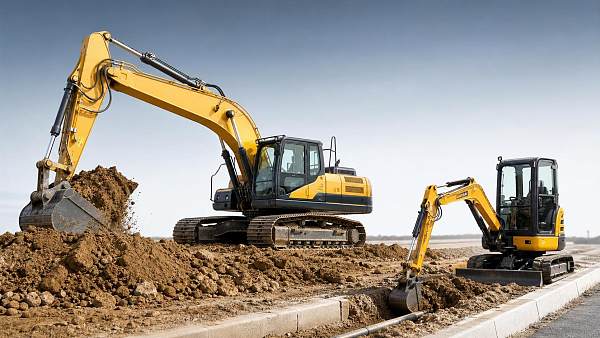
Choosing between excavators and mini excavators can change project economics faster than many teams expect. Machine size affects access, fuel use, haul routes, crew balance, and schedule reliability.
That is why the decision is rarely about horsepower alone. It is really about matching production capacity to site limits, material volume, and daily operating rhythm.
For cost control, the better machine is the one that reduces total ownership and operating friction. In some jobs, standard excavators clearly win. In others, mini excavators protect margins.
From GIM’s cross-industry benchmarking perspective, good equipment selection starts with measurable constraints. Access width, dig depth, cycle time, and idle hours often reveal the real answer.
What Really Drives Cost on Earthmoving Jobs
Many project teams compare rental rates first. That is useful, but it is not enough. The lowest daily rate does not always deliver the lowest finished cost.
A standard excavator usually brings more reach, lift capacity, and bucket volume. That can reduce cycle count and shorten excavation time on open sites.
A mini excavator usually lowers transport complexity, site disturbance, and fuel burn. It can also work closer to structures where larger excavators lose efficiency.
In real operations, total cost often comes from six drivers:
- Equipment transport, mobilization, and setup time
- Fuel consumption and engine idle hours
- Crew size and support equipment needs
- Rework caused by poor access or over-excavation
- Surface restoration after trenching or grading
- Schedule risk when space limits machine movement
This also means a larger machine can become expensive if it waits, swings inefficiently, or forces traffic management changes. Productivity on paper is not the same as productivity on site.
Where Standard Excavators Usually Cut Costs Better
Standard excavators often perform best on projects with high material volume and open working envelopes. Their advantage grows when cycle speed matters more than maneuverability.
Examples include foundation excavation, bulk trenching, pond shaping, road preparation, and heavy loading operations. In these cases, fewer passes can outweigh higher hourly cost.
A full-size excavator also pairs better with larger trucks. Better bucket matching reduces waiting time across the loading chain and improves hourly output.
Cost benefits usually appear when these conditions are present:
- Daily excavation targets are high
- Haul trucks need fast loading
- Dig depth exceeds mini excavator comfort range
- Ground conditions require stronger breakout force
- The site has enough swing radius and travel room
More importantly, excavators become a cost-saving choice when schedule compression matters. Finishing two days earlier can save more than the rate difference between machine classes.
Typical Cost Trade-Off
A larger excavator costs more per hour. Yet cost per cubic meter can be lower if utilization stays high. That is the metric worth tracking during selection.
Where Mini Excavators Protect Budget and Margin
Mini excavators shine when the jobsite is constrained, delicate, or highly segmented. Their value is not just smaller size. It is the ability to keep work moving with less disruption.
Urban utility work is a good example. Tight alleys, sidewalks, landscaping, and nearby structures quickly reduce the efficiency of larger excavators.
Mini excavators also help when jobs require frequent repositioning. A machine that moves easily between short tasks can lower unproductive minutes across the day.
They often cut costs in these settings:
- Residential or commercial retrofit work
- Narrow trenching near utilities
- Landscaping, drainage, and light grading
- Indoor demolition or enclosed-site excavation
- Projects with strict ground pressure limits
Another clear advantage is transport simplicity. Many mini excavators are easier to mobilize, which reduces downtime between jobs and supports tighter fleet scheduling.
In practice, this can matter more than raw digging power. A machine that arrives faster and starts sooner often creates better weekly utilization.
Hidden Savings That Teams Sometimes Miss
Mini excavators can reduce restoration expense around paving, lawns, curbs, and finished surfaces. They also lower the chance of access-related damage and post-work repairs.
Excavators vs Mini Excavators: Side-by-Side Cost Factors
A direct comparison helps move the discussion from preference to evidence. The table below highlights how excavators and mini excavators usually perform on cost-related factors.
The pattern is clear. Excavators win when output per hour dominates the decision. Mini excavators win when access, flexibility, and low-disruption execution shape the budget.
How to Choose the Right Machine for Better ROI
A practical selection process keeps teams from overbuying or underpowering. The best approach is to estimate total job cost, not machine cost alone.
- Measure access points, turning space, and spoil placement distance.
- Estimate excavation volume and required completion window.
- Check soil conditions, depth requirements, and nearby utility risk.
- Add fuel, transport, operator time, and restoration cost.
- Compare cost per finished task, not just hourly rate.
If access is uncertain, a mini excavator often reduces operational risk. If volume is certain and space is open, excavators usually deliver stronger unit economics.
There is also a middle ground. Some fleets use mini excavators for prep and utility-sensitive zones, then bring in excavators for mass removal. That blended model can be highly efficient.
Common Mistakes in Excavator Selection
One common mistake is choosing excavators based only on maximum capability. Excess capacity sounds safe, but it often creates avoidable idle cost.
Another mistake is using mini excavators on jobs with aggressive production targets. The lower rate can look attractive until schedule slippage starts affecting labor and subcontractor timing.
Teams also underestimate attachment strategy. Buckets, breakers, thumbs, and couplers can shift the cost advantage between excavators and mini excavators quickly.
A final issue is poor utilization tracking. Without data on cycle time, fuel burn, and idle periods, selection decisions repeat old habits instead of improving project economics.
Final Take: Which Option Cuts Project Costs Better?
There is no universal winner between excavators and mini excavators. The lower-cost choice depends on whether your main constraint is volume, space, sensitivity, or schedule.
Choose excavators when the job rewards faster bulk movement, stronger digging force, and fewer loading cycles. Choose mini excavators when access, mobilization, and site protection matter more.
The most reliable decision comes from comparing finished-task cost across realistic site conditions. When teams measure that carefully, equipment choice becomes clearer and ROI improves.
If you are reviewing upcoming projects, start with a simple matrix: access, volume, depth, restoration risk, and deadline pressure. That framework usually reveals whether excavators or mini excavators cut costs better.
The Archive Newsletter
Critical industrial intelligence delivered every Tuesday. Peer-reviewed summaries of the week's most impactful logistics and market shifts.