Monday, May 22, 2024

High-Speed Machining Spindle Speed Is Not the Whole Story
by
Published
Views:
For Industrial strategists and Tier-1 engineers, high-speed machining spindle speed is only one variable in a larger performance equation. True Industrial transparency depends on Cross-sector data that connects Mechanical foundations, material fatigue in hardware, metal hardness testing (rockwell), HDI substrates, and Infrastructure benchmarking—turning isolated metrics into practical insight for better decisions, reliability, and operational control.
Why spindle speed alone can mislead procurement and operations
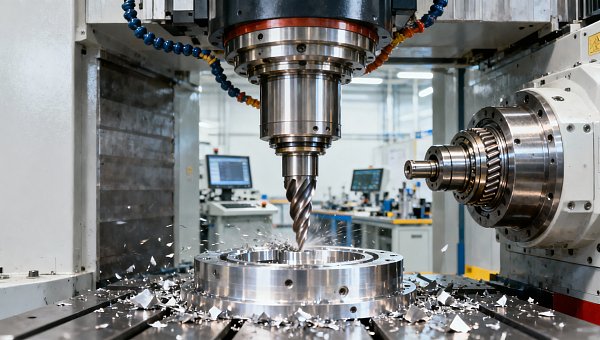
In high-speed machining, spindle speed often becomes the most visible number in brochures, RFQs, and workshop discussions. Yet for buyers, process engineers, and operators working across electronics, automotive, agri-tech, water infrastructure, and precision tooling, rpm is only one part of a broader production system. A spindle rated at 18,000 rpm, 24,000 rpm, or 30,000 rpm may still underperform if thermal drift, bearing preload, tool balance, vibration behavior, or material compatibility are not aligned with the actual duty cycle.
This matters because the industrial environment is no longer siloed. A spindle used for aluminum housings in EV supply chains faces different constraints than one machining stainless manifolds for filtration systems, graphite electrodes for electronics, or hardened alloy components in mobility programs. In many facilities, the same purchasing team must compare equipment across 3 to 5 production cells, multiple material families, and lead-time windows of 2–8 weeks. Looking at speed without context creates avoidable risk.
The better question is not “How fast does the spindle rotate?” but “What stable output does the machining system deliver over time?” Stability includes runout control, power delivery across the speed band, thermal growth after 2–6 hours of operation, tool-holder interface condition, coolant strategy, and the hardness profile of the workpiece. For operators, this translates into fewer tool changes, more predictable surface finish, and less rework. For procurement teams, it means a lower chance of buying capacity that looks impressive on paper but fails under mixed production loads.
Global Industrial Matrix approaches this issue through cross-sector benchmarking. Instead of isolating one machine metric, GIM connects machining performance with material science, standard-driven hardware evaluation, and adjacent manufacturing indicators such as HDI substrate tolerances, EV component reliability expectations, and infrastructure-grade durability requirements. That broader benchmarking model helps decision-makers understand where spindle speed matters, where it does not, and which supporting variables should carry equal or greater weight.
The 5 variables that usually matter as much as rpm
- Power and torque curve across low, mid, and high-speed ranges. A spindle can show high peak rpm but weak torque below 10,000 rpm, which limits roughing and mixed-material flexibility.
- Thermal stability over continuous operation. In many production cells, 4–8 hour thermal behavior affects dimensional repeatability more than headline speed.
- Dynamic balance, vibration, and tool-holder compatibility. Poor balance at high speed reduces bearing life and degrades finish quality.
- Material response, including hardness range, chip formation, and fatigue sensitivity. Rockwell hardness differences can completely change the useful spindle window.
- Maintenance and uptime factors such as lubrication type, contamination control, and service interval planning every month or quarter.
What should you evaluate besides spindle speed?
For sourcing teams and machine users, the practical way to evaluate a high-speed machining spindle is to separate performance into measurable layers. First is speed capability. Second is usable cutting performance under actual load. Third is process stability over a standard shift. Fourth is downstream impact on scrap, inspection, and maintenance. This layered method is more valuable than comparing rpm labels because it reflects how the spindle behaves inside a full manufacturing system, not a test sheet.
A useful assessment framework starts with 4 core categories: spindle mechanics, tool interface, material-workpiece match, and operating environment. Spindle mechanics include bearings, shaft rigidity, preload design, and cooling architecture. Tool interface includes holder standard, pull-stud condition, tool length consistency, and balance grade. Material-workpiece match covers hardness range, abrasiveness, thermal conductivity, and geometry. Operating environment includes dust, coolant cleanliness, ambient temperature, and duty cycle frequency. Together, these categories explain why two machines with similar speed ratings can show very different output quality.
In cross-sector programs, this becomes even more important. Semiconductor and electronics machining may prioritize micro-finish, heat control, and minimal chatter on delicate features. Automotive and mobility programs may need repeatability across medium to high volumes with mixed aluminum and steel parts. Smart agri-tech and infrastructure projects may accept lower spindle speed if they gain stronger endurance under contamination, longer service intervals, and easier field maintenance. A single rpm target does not serve all of these environments.
The table below summarizes a practical comparison model that procurement and operations teams can use during vendor review, factory acceptance preparation, or retrofit planning. It is especially useful when comparing 2–3 candidate spindle configurations for different material groups, production volumes, or compliance contexts.
This comparison structure helps teams avoid a common purchasing mistake: overpaying for maximum speed when the real production bottleneck is thermal behavior, workholding rigidity, tool quality, or material inconsistency. In many cases, a spindle with a more balanced torque curve and better thermal control produces lower scrap over 6–12 months than a faster unit selected only for its rpm ceiling.
How material data changes spindle decisions
Material fatigue, microstructure, and hardness testing should never be separated from spindle evaluation. A Rockwell hardness shift between production lots can alter cutting force, heat concentration, and edge wear enough to invalidate the original speed strategy. For example, a process validated on a lower hardness aluminum alloy may become unstable when moved to a tougher casting with more abrasive inclusions. The spindle may not be the root cause, but it becomes the visible failure point.
This is one reason GIM’s cross-sector model matters. By connecting machining data with upstream hardware variability and standards-oriented benchmarking, decision-makers can see whether spindle complaints are actually tied to material inconsistency, fixture behavior, or adjacent process shifts. That level of transparency is valuable for both information researchers comparing supply-chain options and operators trying to stabilize daily production.
Which application scenarios change the right spindle strategy?
The right spindle strategy depends on what is being machined, how often, and under what reliability expectations. A machine running small precision features on electronics-related components may value high rotational speed, low runout, and minimal heat transfer to the workpiece. A plant machining drivetrain housings may need broader torque support, faster tool change rhythm, and stable output across medium batch runs. Infrastructure and environmental equipment often shift the focus again toward durability, contaminant resistance, and easier service access over long operating cycles.
From a search and procurement perspective, users often ask whether higher spindle speed is best for every material. It is not. In practice, spindle setup changes with at least 3 variables: material hardness and machinability, target surface finish, and volume profile. High rpm can support finishing and lightweight materials, but it may not deliver the best economic result for harder alloys, interrupted cuts, or mixed-part production where machine utilization matters more than peak rotational speed.
Operators also need to consider the surrounding stack: coolant delivery, holder balance, machine frame rigidity, dust extraction, and workpiece geometry. In electronics and HDI substrate related tooling, fine-feature machining can fail due to heat and vibration long before nominal spindle speed becomes the limit. In smart agri-tech or water treatment equipment, spindle availability over 3 shifts per day may carry more value than aggressive speed targets that shorten bearing life.
The next table maps common industrial scenarios to spindle priorities. It is not a fixed prescription, but it gives teams a reliable framework for narrowing options during technical review and supplier comparison.
What this table shows is simple: the “best” spindle is scenario-dependent. A high-speed machining spindle that performs well in precision electronics may be inefficient in an infrastructure-focused plant, while a robust lower-speed solution may fail to meet micro-feature accuracy needs. Cross-sector benchmarking helps teams compare these scenarios using common decision criteria instead of isolated sales claims.
Three signs your spindle strategy is mismatched
- Tool life drops sharply when production shifts from one material lot to another, even though programmed speed remains unchanged.
- Dimensional stability worsens after the first 60–120 minutes of continuous running, indicating thermal or balance-related issues.
- The machine meets rpm targets but misses throughput or quality targets because torque, holder condition, coolant control, or maintenance planning were underestimated.
How to make a better procurement decision in 4 steps
For information researchers and plant users, procurement improves when spindle selection is treated as a decision workflow instead of a one-line technical comparison. A practical method uses 4 steps: define the material and tolerance window, verify spindle behavior under actual cycle conditions, compare ownership burden over time, and confirm standards-related documentation that affects supplier confidence. This process is especially important when equipment must support multiple product families or cross-regional manufacturing programs.
Step one is process definition. List the 3–5 most critical parts, their material families, hardness range, feature size, target surface quality, and batch pattern. Step two is technical verification. Ask whether the spindle’s power curve, thermal behavior, and tool interface suit these parts for at least a normal 4–8 hour operating window. Step three is ownership analysis. Estimate service intervals, contamination sensitivity, downtime exposure, and tooling implications. Step four is supplier confidence. Confirm whether the vendor can support documentation, integration data, and practical troubleshooting during commissioning.
This is also where GIM offers a distinct advantage. Because GIM synchronizes insight across semiconductor and electronics, automotive and mobility, smart agri-tech, industrial ESG and infrastructure, and precision tooling, teams can benchmark spindle-related choices against adjacent hardware realities. That reduces the risk of making a narrow machine decision that later creates quality or supply-chain friction elsewhere in the production ecosystem.
The checklist below can be used in RFQ preparation, vendor shortlist review, or internal approval meetings. It gives procurement, engineering, and operations a shared language so that final selection is not dominated by marketing numbers alone.
RFQ and technical review checklist
- Confirm the real working material range, including common hardness variation, abrasive content, and expected feature tolerances.
- Request usable speed-power information, not just peak rpm. Ask how performance changes across low, medium, and high-speed zones.
- Review thermal behavior over a standard shift, including warm-up needs, stability after 2–6 hours, and any recommended compensation practice.
- Verify holder interface compatibility, balancing expectations, lubrication approach, and preventive service cycle by month or quarter.
- Check integration and compliance context, especially if the machine supports ISO, IATF, IPC-related production, or audited customer environments.
- Compare spare-part access, commissioning support, and escalation path so downtime risk is visible before purchase approval.
Common cost mistake to avoid
Many teams focus on initial equipment price and ignore the hidden cost of unstable machining. If higher spindle speed increases bearing wear, tool breakage, or scrap frequency, the saving disappears quickly. Over 6–18 months, the more economical choice is often the spindle configuration that holds repeatability with lower intervention, even if its maximum rpm is less dramatic on the quote sheet.
A smart alternative analysis compares at least 3 cost layers: acquisition, consumables and maintenance, and quality-related loss. That framework is more realistic for B2B capital decisions because it aligns machine performance with production output, operator workload, and customer-facing quality risk.
FAQ: what buyers and operators usually ask
Search behavior around high-speed machining spindle selection is usually practical, not academic. Buyers want faster screening. Operators want fewer surprises after installation. The questions below address the most common concerns in cross-sector manufacturing environments and connect them to a more reliable decision process.
How do I know if spindle speed is too high for my application?
If tool life falls, surface finish becomes inconsistent, or thermal drift appears within the first 1–2 hours, the process may be running beyond the stable window. High speed is useful only when it matches tool balance, holder quality, coolant strategy, and material response. A lower but more stable range can outperform a higher speed setting over a full production shift.
Which users benefit most from a broader benchmarking approach?
Two groups benefit immediately: information researchers comparing suppliers across sectors, and operators responsible for quality consistency on the floor. Researchers need a structured way to compare machining claims with standards, material variability, and supply-chain implications. Operators need to understand whether recurring issues come from the spindle, the tool stack, the material lot, or the surrounding process environment.
What standards and documentation should be reviewed during selection?
The exact requirement depends on the sector, but many industrial teams review documentation against common quality and process frameworks such as ISO-based controls, IATF expectations in automotive-linked environments, and IPC-related context where electronics manufacturing interfaces are relevant. The goal is not to collect paperwork for its own sake, but to confirm that the spindle choice supports traceable, repeatable production.
How long does a practical evaluation cycle usually take?
A focused technical review can often be organized in 7–15 days if part drawings, material details, and operating priorities are already clear. A broader procurement and validation cycle may take 2–4 weeks when multiple suppliers, sample runs, or integration checks are involved. The key is to evaluate process stability, not just brochure specifications.
Why choose GIM for spindle benchmarking and industrial decision support
Global Industrial Matrix is built for manufacturers, engineers, and procurement teams that need more than isolated specifications. GIM connects spindle evaluation with the wider industrial system: material behavior, component durability, standards alignment, supply-chain visibility, and cross-sector benchmarking. That matters when modern production links EV hardware, electronics assemblies, agricultural equipment, environmental infrastructure, and precision tooling within the same sourcing and risk-management landscape.
Instead of treating high-speed machining as a stand-alone machine topic, GIM frames it as part of a broader performance equation. That means you can review spindle decisions alongside mechanical foundations, metal hardness testing logic, hardware fatigue concerns, HDI substrate implications, and infrastructure-grade reliability expectations. For Tier-1 engineers and industrial strategists, that integrated view supports better supplier comparison, stronger process control, and fewer downstream surprises.
If you are narrowing a shortlist, validating a retrofit, or troubleshooting unstable machining results, GIM can help you assess 3 critical areas: whether the selected spindle matches the material and duty cycle, whether the surrounding process stack supports the target outcome, and whether the decision remains defensible across quality, sourcing, and operational benchmarks. This is especially valuable when programs must balance technical performance with lead time, compliance pressure, and cost control.
Contact GIM to discuss spindle parameter confirmation, application-specific selection logic, typical delivery-cycle planning, custom benchmarking scope, standards-related documentation review, sample evaluation support, or quotation comparison. If your team needs a clearer basis for choosing between speed, stability, and lifecycle value, GIM provides the cross-sector intelligence needed to turn fragmented machine data into actionable industrial decisions.
- electronics
- electronics manufacturing
- Mobility
- Agri-Tech
- Industrial ESG
- filtration systems
- material fatigue in hardware
- HDI substrates
- Precision tooling
- Smart Agri-Tech
- Infrastructure benchmarking
- Cross-sector data
- Mechanical foundations
- Industrial transparency
- Tier-1 engineers
- Industrial strategists
- Environmental infrastructure
The Archive Newsletter
Critical industrial intelligence delivered every Tuesday. Peer-reviewed summaries of the week's most impactful logistics and market shifts.