Monday, May 22, 2024

How to Compare Precision Machining Suppliers on Tolerance
by
Published
Views:
Choosing a precision machining supplier requires more than comparing quoted prices. Tolerance capability affects fit, function, scrap rate, warranty exposure, and delivery reliability across complex industrial programs.
In global manufacturing, even a small deviation can disrupt assemblies, calibration, sealing, or downstream automation. A structured comparison helps separate true process control from optimistic claims.
For organizations evaluating a precision machining supplier, the real question is consistency. The best source can repeatedly meet drawings, standards, volumes, and timelines under changing production conditions.
Tolerance as the Core Benchmark in Supplier Comparison
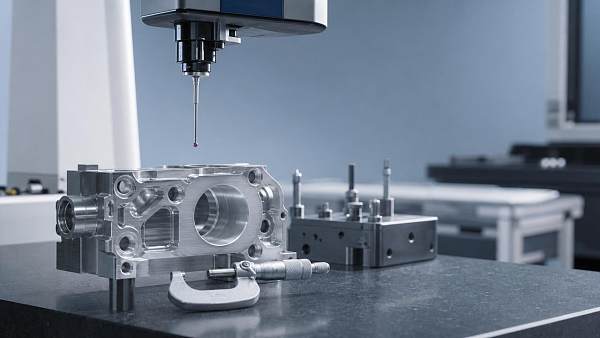
Tolerance defines the allowable dimensional variation of a feature. In precision machining, it reflects whether a part will assemble correctly, perform reliably, and remain stable across batches.
A capable precision machining supplier does not only hit nominal dimensions once. It maintains repeatability across machines, operators, materials, tool wear, and environmental changes.
Tolerance comparison should include three layers: stated capability, measured performance, and evidence of sustained control. Without all three, quoted precision may not translate into production reality.
What should be reviewed first
- Drawing tolerance ranges and critical-to-function dimensions
- Material behavior, including thermal movement and hardness variation
- Process route, including turning, milling, grinding, EDM, or secondary finishing
- Inspection method, gauge resolution, and traceability of measurement records
This baseline prevents unfair comparisons between shops handling simple ±0.05 mm work and those controlling micron-level geometric tolerances on critical interfaces.
Industry Context and Current Signals Affecting Tolerance Decisions
Across electronics, mobility, agriculture equipment, filtration systems, and tooling, tighter tolerance requirements now intersect with shorter launch cycles and higher traceability expectations.
That shift makes precision machining supplier selection a cross-functional risk decision, not only a sourcing task. Technical transparency increasingly determines long-term supply resilience.
In this environment, a precision machining supplier must show not just machining skill, but disciplined quality systems, revision control, and measurable tolerance stability.
How to Evaluate a Precision Machining Supplier Beyond Stated Tolerance
Quoted tolerance ranges often look similar on paper. The meaningful differences appear in capability validation, process discipline, and how deviations are prevented before parts ship.
1. Review process capability evidence
Ask for capability studies on dimensions similar to your critical features. Cp and Cpk data are more useful than general statements about “high precision” production.
A strong precision machining supplier can explain sample size, machine condition, material lot, and control limits used during the study.
2. Check machine and metrology alignment
Machine accuracy alone is insufficient. Inspection capability must exceed the tolerance requirement with appropriate gauge repeatability, calibration control, and environmental stability.
Look for CMM usage, in-process probing, surface measurement, roundness checking, and gauge management procedures matched to part complexity.
3. Examine first article and production records
First article reports reveal how a precision machining supplier interprets drawings, dimensions key features, and records actual values. Production records show whether control survives beyond the first batch.
4. Compare reaction plans for nonconformance
When a process drifts, speed and discipline matter. Review containment steps, root cause methods, corrective action timelines, and lot traceability depth.
5. Validate change control
Tooling changes, subcontract finishing, new machines, and alternate raw materials can shift dimensions. A qualified precision machining supplier documents these changes before shipment risk grows.
Business Value of Strong Tolerance Control
Tolerance performance directly influences total cost. Lower scrap, fewer line stoppages, reduced sorting, and smoother assembly usually outweigh a slightly lower quoted piece price.
A reliable precision machining supplier also supports faster qualification cycles. Better dimensional consistency reduces repeated sampling, engineering review loops, and emergency corrective actions.
This matters across mixed industries. In electronics, connector alignment and thermal interfaces depend on precision. In mobility, sealing faces and bearing seats require stable geometry.
In agricultural machinery, heavy-duty components still need controlled fits for durability. In environmental infrastructure, pump, valve, and filtration assemblies rely on repeatable machined interfaces.
- Improves interchangeability across suppliers and sites
- Reduces hidden quality costs after receiving inspection
- Supports compliance with ISO, IATF, and customer-specific standards
- Protects brand performance in field conditions
Typical Supplier Categories and Comparison Focus
Not every precision machining supplier serves the same technical profile. Comparing peers within similar capability bands produces more accurate sourcing decisions.
This classification helps align sourcing expectations. A precision machining supplier that excels in prototyping may not always offer the strongest long-run statistical control.
Practical Comparison Checklist for Tolerance Capability
A practical framework keeps evaluation consistent across regions and commodity groups. The points below can be used for RFQ review, audits, and technical benchmarking.
- Map critical dimensions by function, not only by drawing note.
- Request actual capability data on comparable materials and features.
- Confirm inspection methods for size, form, position, and surface finish.
- Review first article format and raw measurement availability.
- Check whether subcontract processes can influence tolerance stack-up.
- Evaluate lot traceability, calibration records, and revision history.
- Score reaction plans for drift, scrap, and customer notification timing.
- Compare on total cost of quality, not unit price alone.
Using this method reveals whether a precision machining supplier can support stable launches, scalable production, and lower downstream disruption.
A Data-Led Next Step for Supplier Shortlisting
The best comparison process combines drawings, capability records, inspection evidence, and risk review into one decision matrix. This improves consistency across technical and commercial evaluation.
Global Industrial Matrix supports this approach by aligning cross-sector benchmarking with recognized industrial standards and verifiable manufacturing data. That makes supplier screening more transparent and technically grounded.
When selecting a precision machining supplier, start with tolerance-critical features, request objective process evidence, and compare suppliers by repeatable control. Precision is valuable only when it remains stable in production.
A disciplined shortlist based on tolerance capability, inspection maturity, and change control will reduce sourcing risk and support stronger long-term manufacturing performance.
The Archive Newsletter
Critical industrial intelligence delivered every Tuesday. Peer-reviewed summaries of the week's most impactful logistics and market shifts.