Monday, May 22, 2024

How to Evaluate a CNC Milling Machines Manufacturer
by
Published
Views:
How to Evaluate a CNC Milling Machines Manufacturer
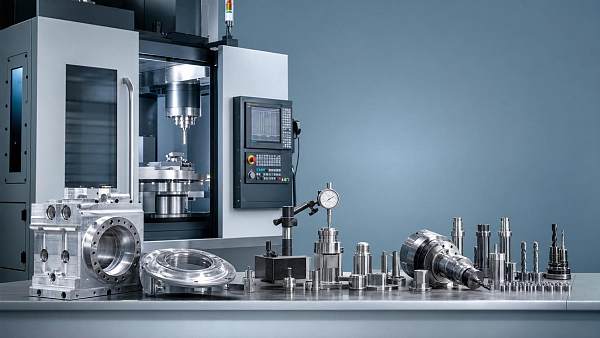
Choosing the right CNC milling machines manufacturer can directly impact quality, lead times, and long-term procurement efficiency.
For global sourcing teams, the task goes beyond reading a brochure or comparing spindle speed.
A capable CNC milling machines manufacturer must prove process control, engineering depth, and stable delivery under real production conditions.
That is where many sourcing decisions become difficult.
Two suppliers may offer similar machine envelopes, controller brands, and pricing.
Yet their factory discipline, service response, and long-term reliability can differ sharply.
In practice, the better decision comes from structured evaluation.
This guide explains how to assess a CNC milling machines manufacturer with a clear procurement lens.
Start with Manufacturing Capability, Not Marketing Claims
The first question is simple.
Can the CNC milling machines manufacturer actually build machines that match your application, tolerance targets, and production volume?
This sounds obvious, but it is often skipped too early.
A supplier may be strong in entry-level vertical machining centers.
That does not mean the same supplier is ready for aerospace parts, medical alloys, or heavy-duty steel cutting.
Look at machine categories, not only headline products.
- 3-axis, 4-axis, or 5-axis milling capability
- Travel range, table load, and workpiece size fit
- Spindle power, torque curve, and speed range
- Controller options such as FANUC, Siemens, or Mitsubishi
- ATC capacity, probing, coolant systems, and automation readiness
Ask for evidence tied to similar projects.
A reliable CNC milling machines manufacturer should provide case references, sample part data, and performance benchmarks.
If the response stays generic, that is an early warning sign.
Check Quality Systems and Process Control
A strong CNC milling machines manufacturer should show how quality is built into production, not inspected only at the end.
This is especially important for global procurement programs with repeat orders.
Start with formal systems.
ISO 9001 is common, but certification alone is not enough.
You need to understand how the factory controls alignment, casting quality, assembly accuracy, and final calibration.
Useful questions include the following.
- How are key components inspected before assembly?
- What geometric accuracy tests are performed on finished machines?
- How is thermal stability validated during test runs?
- What traceability exists for spindles, guideways, ballscrews, and controls?
- How are nonconformities recorded and corrected?
A mature CNC milling machines manufacturer will answer with records, procedures, and measurable criteria.
That is more credible than broad statements about “strict quality management.”
Evaluate Engineering Depth and Customization Ability
Many projects need more than a standard catalog machine.
That is why engineering support matters almost as much as machine hardware.
A capable CNC milling machines manufacturer should be able to discuss your materials, cycle times, fixturing, and downstream process flow.
More importantly, they should translate those needs into practical machine configuration.
Look for real engineering signals.
- Fixture integration support
- Tooling and chip evacuation advice
- Automation interface options
- Power, voltage, and plant layout adaptation
- Special guarding or coolant filtration for demanding materials
This matters even more when sourcing across regions.
A CNC milling machines manufacturer may offer attractive pricing, but limited engineering dialogue usually leads to integration delays later.
From a total cost perspective, that is rarely a good trade.
Review Supply Chain Stability and Key Component Sourcing
Recent market shifts have made supply chain visibility much more important.
A CNC milling machines manufacturer may assemble machines well, yet still face delivery risk from unstable component sourcing.
This is where procurement should dig deeper.
Ask which suppliers provide spindles, linear guides, ballscrews, servo motors, controls, bearings, and castings.
Then assess whether those sources are consistent, qualified, and replaceable.
Key points to verify include lead time resilience, alternate sourcing plans, and inventory policy for long-lead parts.
This also affects spare parts support after installation.
If a CNC milling machines manufacturer cannot support replacement parts quickly, downtime costs can erase any initial savings.
In real sourcing decisions, this issue is often underestimated.
Compare Service, Installation, and After-Sales Response
A CNC milling machines manufacturer should not disappear after shipment.
For many buyers, after-sales support becomes the deciding factor once the machine enters production.
Review the full support model before signing.
- Pre-shipment acceptance testing
- Installation and commissioning scope
- Operator and maintenance training
- Remote diagnostics capability
- Field service coverage in your region
- Warranty terms and response time commitments
The strongest CNC milling machines manufacturer will define service levels in writing.
That includes contacts, escalation paths, and spare parts availability.
A slow support structure may be manageable for prototype work.
It becomes expensive in high-utilization production environments.
Use a Structured Supplier Evaluation Matrix
When several suppliers look similar, a scoring matrix keeps decisions objective.
This helps compare each CNC milling machines manufacturer on commercial and technical grounds.
A structured matrix also makes internal approval easier.
More importantly, it reduces the chance of choosing a CNC milling machines manufacturer based only on price.
Watch for Common Risk Signals Before Final Selection
Some warning signs appear early if you know where to look.
These should trigger deeper review before approving any CNC milling machines manufacturer.
- Specifications change often without explanation
- No clear acceptance test standard is offered
- Technical questions are routed only through sales staff
- Lead times seem unusually short for the proposed configuration
- Spare parts planning is vague or undocumented
- Reference customers cannot be verified
None of these issues automatically disqualify a supplier.
Still, each one raises execution risk.
In a multi-site sourcing program, small gaps often become expensive delays.
Make the Final Decision on Total Value
The best CNC milling machines manufacturer is rarely the one with the lowest quote.
The better choice is the supplier that balances machine performance, process reliability, service support, and long-term operating cost.
That balance is what drives real procurement efficiency.
Before awarding business, confirm technical alignment, factory capability, component sourcing, and after-sales readiness.
Then document acceptance criteria, service expectations, and spare parts commitments in the contract.
That final step turns a promising CNC milling machines manufacturer into a manageable, accountable supply partner.
For sourcing teams making high-impact equipment decisions, disciplined evaluation is still the most practical path to a confident result.
The Archive Newsletter
Critical industrial intelligence delivered every Tuesday. Peer-reviewed summaries of the week's most impactful logistics and market shifts.